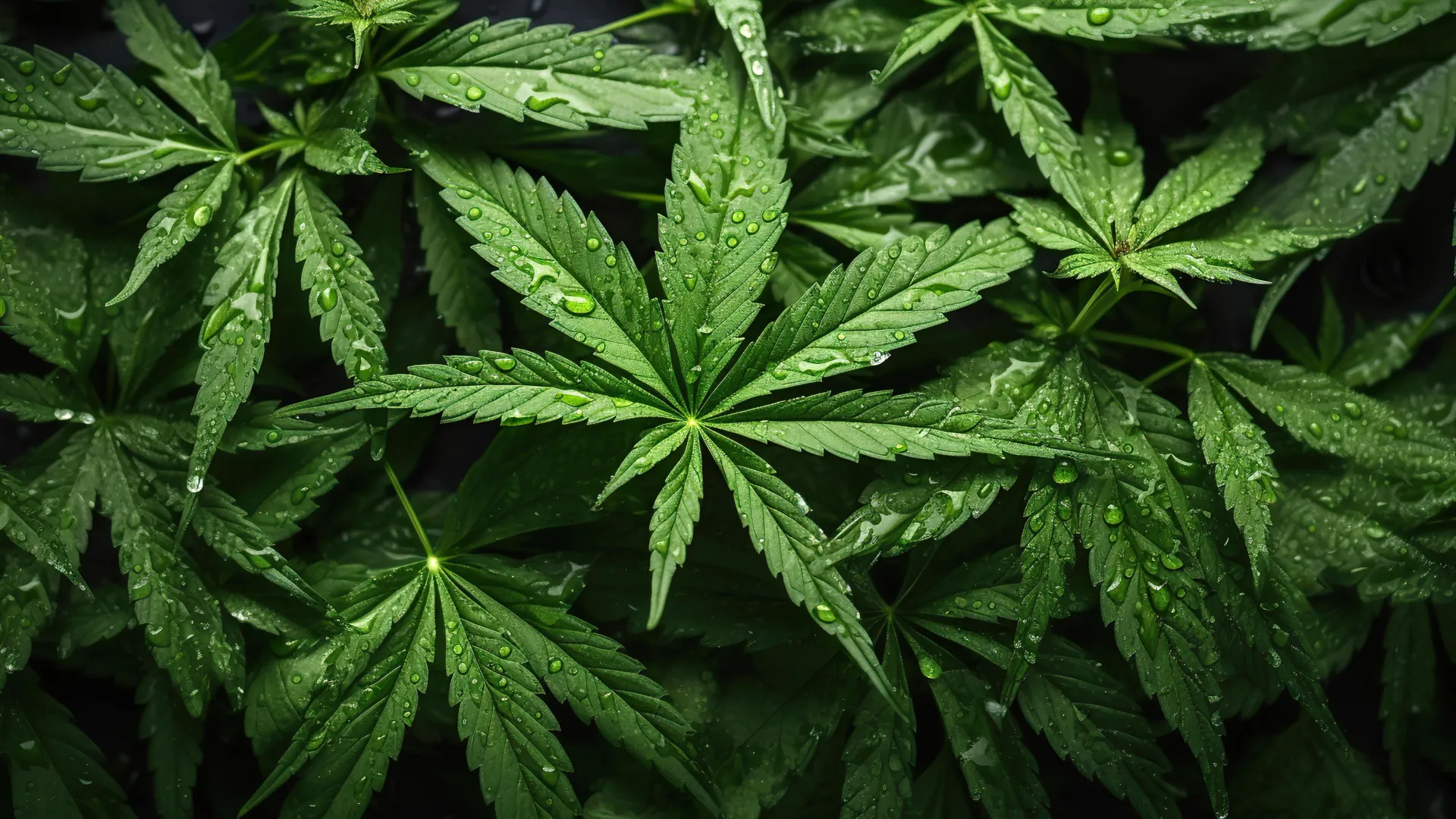
For decades, the global scientific community’s fascination with Cannabis sativa has been locked in a narrow focus: the cannabinoids. From the psychoactive potency of tetrahydrocannabinol (THC) to the therapeutic promise of cannabidiol (CBD), the vast majority of research has centered on the molecules that interact directly with the human endocannabinoid system.
However, a groundbreaking study emerging from Stellenbosch University (SU) in South Africa is now challenging this limited perspective. Analytical chemists have successfully identified a group of rare, naturally occurring compounds known as flavoalkaloids within the leaves of the cannabis plant—a discovery that marks the first time these substances have been documented in the species. This finding, published in the Journal of Chromatography A, suggests that the plant’s biological profile is significantly more complex than previously imagined, and that its "waste" material may hold untapped pharmaceutical value.
The Hidden Chemistry: Unmasking Flavoalkaloids
The study, led by Dr. Magriet Muller and Professor André de Villiers of SU’s Department of Chemistry and Polymer Science, involved an exhaustive analysis of three commercially grown South African cannabis strains. Utilizing state-of-the-art analytical techniques, the team mapped the phenolic profile of the plants, identifying 79 distinct phenolic compounds.
Phenolic compounds are a vast family of plant-derived chemicals known for their roles in plant pigmentation, structural defense, and protection against environmental stressors. Among these, the flavonoid subgroup is widely studied for its potent antioxidant, anti-inflammatory, and anti-carcinogenic properties. Flavoalkaloids, however, are a much rarer hybrid—a distinct chemical subset that is seldom found in nature.
Of the 79 compounds detected by the researchers, 25 were entirely new to the scientific record for Cannabis. Most significantly, 16 of these were identified as flavoalkaloids. Perhaps most intriguing is the variation between strains: the researchers observed that the majority of these rare flavoalkaloids were present in only one of the three tested strains, suggesting that the chemical "fingerprint" of the cannabis plant is highly susceptible to genetic or environmental influence.
Chronology of Discovery: From Rooibos to Cannabis
The path to this discovery was not linear; it was the result of years of refinement in analytical methodology. Dr. Magriet Muller, the first author of the paper, developed the core techniques during her postgraduate studies at the Central Analytical Facility (CAF).
The Evolution of the Method
Before turning their attention to cannabis, Muller and her team successfully validated their techniques on notoriously complex plant matrices, including rooibos tea, grapes, and wine. These previous successes provided the blueprint for tackling the "chemical jungle" that is the cannabis plant.
- Phase 1: Method Development: Muller refined techniques combining comprehensive two-dimensional liquid chromatography (2D-LC) with high-resolution mass spectrometry.
- Phase 2: The Challenge of Complexity: The team sought a difficult, uncharacterized sample to test the limits of their system. Cannabis was the logical choice, given its status as a plant with over 750 known metabolites.
- Phase 3: The Analytical Breakthrough: By applying the 2D-LC method, the researchers achieved a level of separation that traditional, one-dimensional techniques could not reach.
- Phase 4: Publication and Peer Review: Following the successful identification of the flavoalkaloids, the findings were subjected to rigorous scrutiny and subsequently published in the Journal of Chromatography A.
Supporting Data: Why Modern Technology Matters
The difficulty of this research lies in the "needle in a haystack" problem of plant chemistry. Cannabis is a biological powerhouse, producing hundreds of small molecules through various metabolic pathways. When analyzing such a mixture, highly abundant compounds—such as common flavonoids or cannabinoids—often "mask" or obscure the presence of rarer substances that exist in minute concentrations.
The Power of Two-Dimensional Liquid Chromatography
The core of the team’s success was the use of 2D-LC. In standard liquid chromatography, compounds are separated based on one chemical property. In two-dimensional chromatography, the sample is passed through two different separation columns, allowing for significantly higher resolution.
This technique acted like a high-powered microscope for chemicals. It allowed the researchers to isolate the rare flavoalkaloids from the much more abundant, standard flavonoids that were drowning out the signal. Following this separation, high-resolution mass spectrometry provided the final verification, measuring the molecular mass of each compound with extreme precision to confirm its chemical identity.
Without this advanced technological marriage, the flavoalkaloids would likely have remained hidden, buried under the "noise" of the plant’s more common metabolic components.
Official Responses: Insights from the Research Team
The team at Stellenbosch University views this discovery as a paradigm shift in how we categorize cannabis plant material.
Dr. Magriet Muller expressed her surprise at the sheer diversity of the chemical profiles across just three strains. "We know that Cannabis is extremely complex—it contains more than 750 metabolites—but we did not expect such high variation in phenolic profiles between only three strains, nor to detect so many compounds for the first time in the species," she remarked.
Professor André de Villiers, who leads the analytical chemistry research group, emphasized the importance of the methodology. "The excellent performance of two-dimensional liquid chromatography allowed separation of the flavoalkaloids from the much more abundant flavonoids," he noted.
For De Villiers, the excitement is not just in the chemistry itself, but in the implications for how we treat the plant. "Our analysis again highlights the medicinal potential of Cannabis plant material, currently regarded as waste. Cannabis exhibits a rich and unique non-cannabinoid phenolic profile, which could be relevant from a biomedical research perspective."
Implications: Rethinking "Waste" and Future Medicine
The discovery of flavoalkaloids in cannabis leaves shifts the narrative surrounding the plant’s utility. Currently, the cannabis industry is largely focused on the floral components (the buds) for extraction of cannabinoids. The leaves, stalks, and other biomass are frequently treated as industrial waste, discarded, or composted after the primary harvest.
However, if these leaves contain high concentrations of rare phenolic compounds, they may represent a significant, untapped source of bioactive ingredients for the pharmaceutical, nutraceutical, and cosmetic industries.
1. New Biomedical Avenues
If flavoalkaloids, which are known to have specific biological activities, can be harvested from cannabis leaves, they could potentially be used in new drug formulations. This opens the door to creating standardized, non-psychoactive extracts that leverage the plant’s broader phenolic profile rather than relying solely on cannabinoids.
2. Genetic and Agricultural Optimization
The fact that these compounds varied wildly between the three strains suggests that the presence of these chemicals is genetically driven. This discovery could encourage breeders to select for specific "phenolic profiles" rather than just high THC or CBD content, potentially leading to "designer" cannabis strains bred specifically for the production of rare, beneficial compounds.
3. A Call for Further Characterization
This research serves as a stark reminder of how much of the plant kingdom remains a "black box." If a plant as widely studied as Cannabis can still hide such significant chemical secrets, the implications for other, less-studied flora are profound. The team’s work underscores the need for more sophisticated analytical surveys of natural products to ensure that we are not discarding valuable resources.
Conclusion
The findings from Stellenbosch University represent more than just a list of new chemical compounds; they represent a fundamental change in the methodology of natural product research. By moving beyond the obsession with cannabinoids and applying high-resolution analytical techniques to the "waste" components of the plant, scientists have uncovered a new layer of biological complexity. As researchers continue to map the unique phenolic profiles of Cannabis, the leaves once destined for the compost bin may well become the next frontier in natural medicine and biochemical discovery. The "green" plant, it seems, has far more to offer than we ever dared to imagine.