Main Facts: A National Tragedy and a Renewed Commitment
In a profound demonstration of environmental stewardship and national unity, French President Emmanuel Macron has formally pledged to oversee the comprehensive restoration of the historic Fontainebleau Forest. Located just south of Paris, this sprawling 20,000-hectare domain—a site of immense ecological, historical, and cultural significance—has been left scarred by a series of devastating wildfires that have decimated at least 10% of its total landmass.
The fires, which necessitated the emergency evacuation of 1,000 residents and threatened the delicate balance of the forest’s unique ecosystem, have been largely contained. However, officials warn that the embers remain a latent threat, with complete extinguishment expected to take several weeks. Speaking from the site of the blaze, President Macron framed the restoration not merely as an administrative task, but as a moral imperative. "Your forest is our forest because it is a treasure," the President declared, emphasizing that the site serves as both a vital sanctuary for biodiversity and a beloved retreat for millions of hikers, climbers, and nature enthusiasts.
To facilitate this recovery, the French government, in partnership with the Fontainebleau municipality, the National Forest Office (ONF), and the Fondation du Patrimoine, has launched an extensive national fundraising campaign. This initiative mirrors the high-profile efforts to restore Notre-Dame Cathedral, signaling that the French state views the preservation of its natural heritage with the same urgency as its architectural masterpieces.
Chronology of the Crisis: From Smolder to State Emergency
The disaster began with a series of ignition points that rapidly escalated due to severe drought conditions and unusually high temperatures. The following chronology outlines the progression of the crisis:
- The Initial Outbreak: The fire was first reported by local emergency services, who were immediately met with challenging terrain and shifting winds that allowed the flames to jump firebreaks.
- The Escalation: Within 48 hours, the fire grew exponentially. Local authorities issued emergency alerts, and approximately 1,000 residents from surrounding communities were forced to evacuate as smoke blanketed the region.
- Containment Efforts: Thousands of firefighters, supported by aerial tankers, engaged in a grueling battle against the elements. The proximity of the forest to urban infrastructure required a precise tactical response to prevent the blaze from reaching residential sectors.
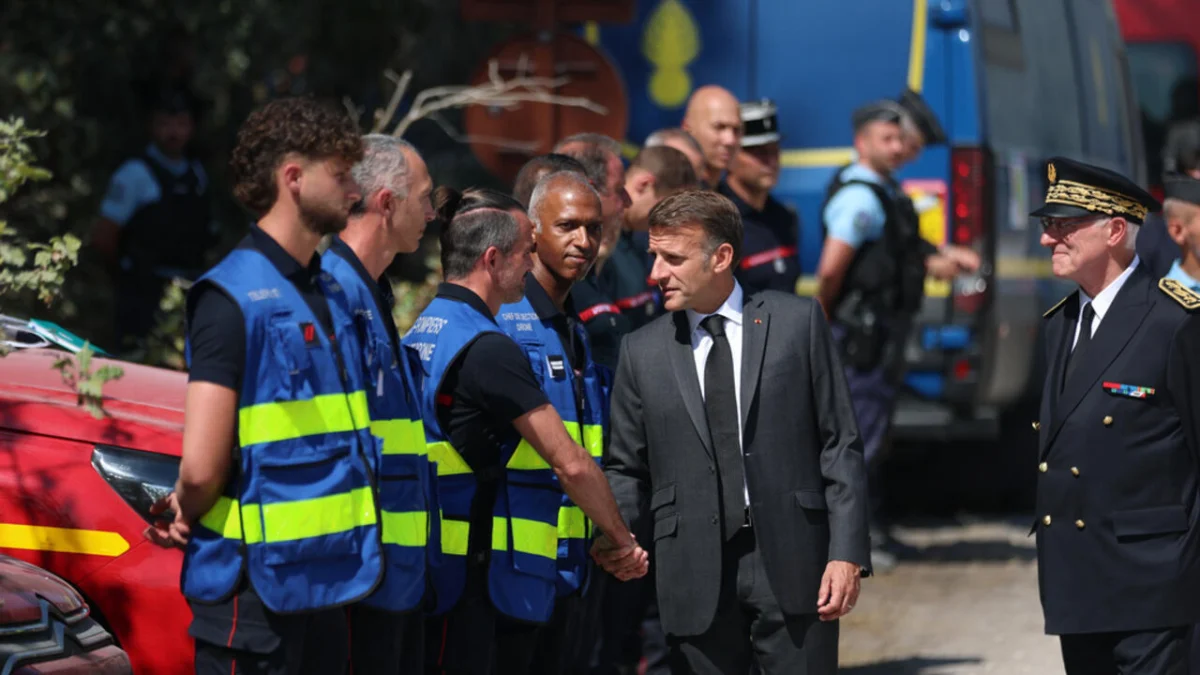
- Presidential Site Visit: President Macron arrived in Fontainebleau shortly after the fire was brought under control to assess the environmental damage. During this visit, he met with local mayors and forestry experts to discuss the long-term reforestation strategy.
- The Investigation Phase: As the embers smoldered, French police launched a formal investigation into suspected arson. Reports suggest that the synchronized nature of the initial ignition points points toward human interference, potentially by pyromaniacs, a theory currently being vetted by forensic teams.
Supporting Data: The Ecological and Economic Toll
Fontainebleau is not merely a collection of trees; it is a complex, living archive of European natural history. The forest spans 20,000 hectares, characterized by its iconic sandstone boulders and diverse flora.
The Scale of Destruction
- Land Loss: 10% of the forest—roughly 2,000 hectares—has been scorched. While some areas are expected to regenerate naturally, significant portions require human intervention to ensure the survival of native species.
- Biodiversity Impact: The forest is home to protected species of fungi, insects, and rare birds. The loss of canopy cover and the destruction of ground-level undergrowth have disrupted the food chain, creating a crisis that environmental biologists expect will take decades to fully resolve.
- Carbon Sequestration: The loss of 2,000 hectares of mature trees represents a significant blow to the region’s carbon capture capabilities, complicating France’s local climate goals.
The Economic Significance
Fontainebleau is a major engine for regional tourism. Every year, millions of visitors contribute millions of euros to the local economy through climbing, hiking, and historical tourism. The fire has forced the closure of several world-famous bouldering circuits, which are magnets for international athletes, further highlighting the economic urgency of the restoration project.
Official Responses: A Call for Collective Action
The response to the Fontainebleau fire has been characterized by a high degree of inter-agency cooperation. President Macron’s announcement of a fundraising campaign is designed to tap into both public patriotism and private philanthropy.
The Government’s Stance
"This forest is a treasure for welcoming people and for biodiversity," Macron stated. His administration has promised to prioritize the restoration, ensuring that the replanting efforts adhere to modern ecological standards, utilizing species that are more resilient to the changing climate while maintaining the historic aesthetic of the landscape.
Institutional Collaboration
- The National Forest Office (ONF): The ONF has taken the lead on the technical side, conducting soil analysis to determine which tree species will be most effective at preventing future erosion and promoting biodiversity.
- Fondation du Patrimoine: As a private organization dedicated to preserving French heritage, the foundation is managing the financial transparency of the donations. They have expressed optimism that the French public, and international admirers of the forest, will respond with the same generosity seen during the Notre-Dame rebuilding project.
- Local Municipality: The Mayor of Fontainebleau has lauded the government’s support, noting that without state intervention, the cost of reforestation would have been an insurmountable burden for the local community.
Implications: A New Era for French Forestry
The Fontainebleau fire serves as a sobering reminder of the volatility of the French landscape in an era of climate change. The implications of this disaster extend far beyond the immediate region.
The Shadow of Notre-Dame
Comparisons to the 2019 Notre-Dame cathedral fire are inevitable. When Notre-Dame burned, the world watched as a gothic gem was nearly lost; by 2024, the cathedral had reopened, supported by nearly €900 million in private and corporate donations. President Macron is clearly leveraging this precedent to instill confidence in the public. The restoration of Fontainebleau will likely become a benchmark for how France manages "cultural-natural" heritage in the 21st century.
Security and Surveillance
The investigation into suspected arsonists has prompted a debate on security within protected natural zones. Given that the forest is vast and porous, authorities are now considering implementing more sophisticated surveillance, including thermal imaging drones and AI-driven smoke detection systems, to prevent a repeat of this tragedy.
Climate Resilience
The replanting strategy is not a return to the past, but an preparation for the future. Forestry experts are debating the introduction of "climate-adapted" tree species that can withstand the hotter, drier summers that are becoming the norm in the Paris region. This represents a significant shift in forestry philosophy—moving away from merely replacing what was lost, and toward building an ecosystem that can survive the climatic pressures of the coming century.
The Cultural Legacy
Fontainebleau holds a unique place in the French consciousness. From the kings who hunted its game to the Impressionist painters like Claude Monet and Pierre-Auguste Renoir who captured its light and boulders on canvas, the forest is a symbol of French identity. Its restoration is therefore a matter of national pride. By pledging to replant it, Macron is reaffirming the state’s commitment to preserving the physical landscape that has inspired generations of artists, thinkers, and citizens.
Conclusion: A Path Toward Reforestation
As the smoke clears and the long, arduous process of restoration begins, the Fontainebleau Forest stands at a crossroads. The fire has caused undeniable damage, yet it has also galvanized a movement to protect and sustain this historic landscape for future generations. With the funding mechanisms in place, a clear directive from the Elysée Palace, and a robust plan for scientific reforestation, the path forward is one of recovery.
The challenge ahead is immense, but if the history of the French people—and their track record with the restoration of their most cherished symbols—is any indicator, the Fontainebleau Forest will not only be restored but will emerge as a model for modern, climate-resilient conservation. The forest was once a royal hunting ground; today, it is a global treasure, and its rebirth will be a defining project for the nation.