A consortium of scholars operating under the name "Uncivil" has launched a high-stakes challenge to the burgeoning infrastructure of "civil discourse" and "viewpoint diversity" programs currently sweeping across American higher education. In a sweeping investigation titled the Civility Files, the group argues that these initiatives are not the neutral, nonpartisan efforts they claim to be, but rather a coordinated, donor-driven project designed to suppress progressive activism and shield pro-Israel and conservative narratives from dissent.
The release of these dossiers, which catalog 37 different entities—ranging from universities and nonprofits to the U.S. Department of Education—has ignited a fierce debate about the intersection of private philanthropy, political ideology, and the future of campus speech.
The Chronology of a Campus Shift
The rise of the "civility" movement is not a historical accident, but a phenomenon that has accelerated rapidly in response to geopolitical turbulence. While institutional interest in dialogue programs existed previously, the Oct. 7, 2023, Hamas attack on Israel and the subsequent onset of the war in Gaza served as a critical turning point.
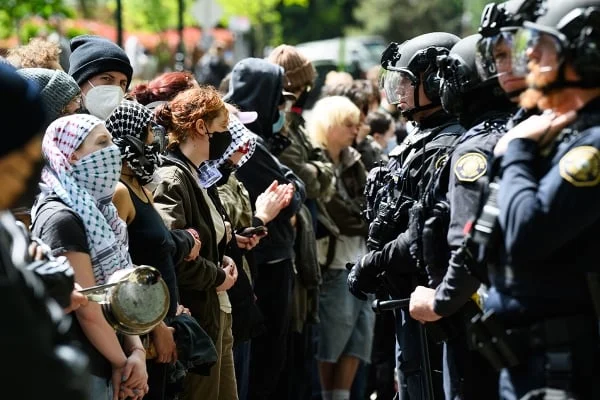
As pro-Palestinian protests erupted on campuses across the United States, administrators and donors found themselves facing a dual challenge: the rise of intense student activism and the legal scrutiny regarding how colleges manage controversial speech. In the wake of these events, universities ramped up funding and institutional support for programs advertised as mechanisms to improve students’ ability to debate contentious issues.
For Uncivil, this surge was not a spontaneous response to a breakdown in communication, but a tactical deployment. The group contends that the "civility" movement is a reactionary response intended to reframe anti-racist and pro-Palestinian advocacy as "intolerant" or "threatening," thereby providing a justification for administrative crackdowns on student dissent.
Supporting Data and the "Civility Industrial Complex"
The Civility Files expand upon a June research report produced by the consortium, which attempted to map the financial arteries of what the authors call the "Civility Industrial Complex." By analyzing five years of grant data, the scholars identified what they termed the "top 23 funders" of discourse initiatives.
The report claims that approximately $82.3 million was funneled to "Civility Providers" during the studied period. A central pillar of Uncivil’s argument is that 97 percent of that total—$80.1 million—originated from foundations with deep-seated ties to conservative causes or pro-Israel advocacy networks.
However, the methodology behind these figures has become a primary point of contention. To arrive at their "top 23" list, the researchers applied a filter: they excluded foundations that gave to fewer than three entities, donated less than $25,000, or provided less than 1 percent of their total charitable giving to these programs.
Critics, including Michael J. Murray, president of the Arthur Vining Davis Foundations (AVDF), argue that these criteria are inherently biased. By filtering out large donors who happen to spread their capital across diverse causes, the researchers excluded significant sums—such as $39.8 million from the Lilly Endowment and $7.4 million from the Foundation to Promote Open Society—that might have challenged the narrative of a monolithic, right-leaning funding stream.
Uncivil stands by its findings, asserting that even if a funder supports a broad array of causes, their specific contributions to "civility" initiatives often function within a pattern of political influence that favors specific ideological outcomes.
Targeted Entities and Organizational Responses
The Civility Files function as a series of dossiers, each detailing the "notable" funders, affiliated personnel, and political alignments of 37 entities. The report makes no claim to be a comprehensive inventory, but it explicitly tags several high-profile organizations as "conservative and pro-Israel advocacy groups."
The Heterodox Academy Controversy
Heterodox Academy (HxA), a prominent organization advocating for viewpoint diversity, was categorized alongside groups like the Heritage Foundation—the architects of the "Project 2025" policy blueprint. The Civility Files highlight HxA’s $5 million pledge from the Mike and Sofia Segal Foundation and its president John Tomasi’s previous work at Brown University’s Political Theory Project, which received substantial funding from the Koch network.
Tomasi pushed back against the characterization, asserting, "Heterodox Academy is an ideologically diverse organization, with members, staff, and financial supporters of all political stripes. Our members’ most common self-description is centrist or moderate."
The ACTA Defense
The American Council of Trustees and Alumni (ACTA), also labeled as a conservative advocacy group, saw its leadership defend the organization’s independence. President Michael Poliakoff noted that ACTA formally severed ties with the Heritage Foundation last year over concerns regarding the latter’s associations with figures like Tucker Carlson and Nick Fuentes. Poliakoff characterized the Uncivil report as a "temper tantrum" against the restoration of intellectual rigor.
BridgeUSA and the "Money vs. Intentionality" Debate
Manu Meel, co-founder of BridgeUSA, addressed the accusations by acknowledging his own past internship at the American Enterprise Institute. Meel argued that such professional history is a standard byproduct of early career networking in Washington, not evidence of a deep-state conspiracy. "Money does not change intentionality," Meel stated. "We are calling for temperamental moderation, not ideological moderation."
Official Responses and Methodology Disputes
The most stinging critique of the Civility Files is that the researchers utilize the very habits of argument they claim to oppose: "guilt by association," "circumstantial ad hominem," and "unsupported insinuations."
Michael Murray of the Arthur Vining Davis Foundations highlighted the danger of these tactics. He noted that while his foundation supports Hillel International and Tablet magazine—two organizations identified by Uncivil as part of a pro-Israel, anti-BDS alignment—the motivations for those grants were specific and narrow: promoting interfaith dialogue and supporting journalists who cover non-Jewish religious groups.
"When you look at the efforts to try to tie individuals and organizations to these causes as motivations for doing what they’re doing, you only get insinuation," Murray said.
In response, Uncivil argued that systemic patterns matter as much as individual intent. "AVDF’s officers can believe in the work they fund, and those grants can still sit inside a funding pattern with political effects nobody at AVDF had to intend," the group stated.
The Implications for Higher Education
The conflict between Uncivil and the organizations it targets suggests that "civil discourse" has become a contested battleground in the broader American "culture war."
For the scholars behind Uncivil, the proliferation of these centers represents a "privatization" of campus speech, where wealthy donors can effectively curate the boundaries of acceptable debate. They argue that by framing the discourse around "civility," these groups create an environment where the status quo is protected, and radical or systemic critique is pathologized as "uncivil."
Conversely, the targets of these reports, such as Maury Giles of Braver Angels, argue that Uncivil is engaging in "conflict entrepreneurialism." Giles suggests that by attempting to categorize and discredit dialogue-based organizations, the consortium is merely fueling the "industrial outrage complex" that it claims to oppose.
A Fractured Landscape
As colleges continue to grapple with the tension between academic freedom, institutional neutrality, and student safety, the Civility Files have raised an uncomfortable question for the sector: Can a program truly be neutral if its primary benefactors hold strong, publicly stated political convictions?
The debate is unlikely to resolve soon. As both sides dig in, the "Civility Industry" faces a future defined by increased scrutiny. Whether the Civility Files act as a necessary investigative tool for transparency or as a partisan weapon to stifle the very dialogue they claim to seek, the discourse on American campuses remains as polarized as ever. The challenge for universities will be to discern which, if any, of these programs can bridge the divide, and which are merely tools in a much larger, and far less civil, national struggle.