For generations, the path to a four-year university degree has been paved with assumptions—namely, that students in rural communities either lack the academic inclination or the financial resources to pursue higher education. At Polk County High School, situated in a remote pocket of Tennessee near the Georgia border, this narrative has long been an accepted reality. For many of the school’s 400 students, the prospect of attending a flagship institution like the University of Tennessee at Knoxville (UT) felt less like a potential future and more like an impossible dream.
"Most of our students saw a four-year college as fundamentally unaffordable," says Rachel Lowe, principal of Polk County High School. "Even I used to believe that UT wasn’t the most financially responsible choice for them."
However, a shifting tide in higher education strategy is beginning to challenge these long-standing perceptions. Universities across the United States are moving away from the traditional, urban-centric recruitment model, opting instead to meet students where they live, work, and dream. This transformation is not just a change in geography; it is a fundamental attempt to reshape the culture of rural education.
A New Strategy: Taking the Campus to the County
The change in tone was palpable this September when University of Tennessee System President Randy Boyd visited Polk County High School. While Boyd has made a point of touring high schools annually since taking the helm at UT eight years ago, this year marked a historic departure: his tour was dedicated exclusively to rural institutions.
The goal was simple but profound: to dismantle the belief that higher education is an exclusive club for the urban elite. "While we have some great programs that make college affordable, the message just isn’t getting to the students in rural communities," Boyd said in an interview. "Unfortunately, there is a culture that believes people in this community aren’t supposed to go to college. We have literally had superintendents tell us, ‘Oh, in our district, people don’t go to college. That’s not what we do.’ We had to change that mindset."
The Geography of Opportunity: A Chronology of the Shift
Historically, the recruitment map of American higher education has been heavily skewed toward metropolitan areas. From a logistical standpoint, the logic was sound: a single recruiter stationed in a major city could interface with thousands of students in a single week. Rural areas, by contrast, required massive investments of time and travel, yielding smaller, more dispersed pools of applicants.
However, the economic and demographic realities have shifted. With the total number of high school graduates across the U.S. beginning to plateau or decline, universities are looking to underserved populations to maintain enrollment stability.

- 2023: A coalition of 32 selective private and public institutions, known as the Small Town and Rural Students (STARS) College Network, formally committed to long-term outreach in rural schools.
- September 2026: UT System President Randy Boyd executes a two-week, rural-only high school tour, prioritizing direct engagement over virtual brochures.
- Ongoing: Institutional efforts, such as the North Dakota State University (NDSU) partnership with 4-H clubs, are creating "on-ramps" to higher education that begin long before a student reaches their senior year of high school.
The Data Gap: Why Rural Students Are Being Left Behind
The necessity for this outreach is backed by stark data. According to the National Student Clearinghouse’s High School Benchmarks report, only 53% of rural students enroll in college immediately following graduation. This figure stands in contrast to the fact that rural students actually graduate high school at higher rates than their urban and suburban peers.
The disparity is not one of academic capability, but of "college knowledge" and perceived fit. Rural students often suffer from a "geographical tax"—the high cost of travel to visit campuses, the lack of proximity to admissions officers, and a pervasive, quiet anxiety that they will not "belong" on a campus designed for students from more affluent or populated backgrounds.
Official Responses and Institutional Initiatives
The response from university leadership has been a move toward radical accessibility. It is no longer enough to send a pamphlet; institutions are now focusing on "meaningful touchpoints."
The "Rally" Model
Principal Lowe notes that President Boyd’s visit was far more effective than a traditional campus tour. "A field trip to a campus can only fit 30 or 40 students and must end by 2 p.m. so the buses can return," she explained. "When Boyd visited us, we reached the entire 400-person student body in one afternoon. He wasn’t just talking to the honor roll students; he was talking to everyone."
Boyd’s presentation was carefully calibrated to address the primary barriers to entry: cost and fear. He highlighted that UT graduates have a debt-burden rate of less than 50%, a figure that surprised many in the room. By bringing alumni from the local area to speak to the students, the university turned an abstract institution into a tangible reality.
The "Not a Consolation Prize" Approach
In Louisiana, the Louisiana Community & Technical Colleges (LCTC) system manages 65 campuses, many of which serve rural populations. Queena Grant, the system’s executive director of strategic enrollment management, emphasizes that the biggest hurdle is often the perception of prestige.
"LSU is king here, and everyone wants their kid to go there," Grant says. "But reality is that not everyone meets those requirements. Our job is to show students that they aren’t choosing a ‘consolation prize’ when they choose a two-year college. We are providing a pathway that is just as valid and, often, far more practical."

Integrating with Local Fabric
North Dakota State University has taken a different approach, integrating college-readiness into existing community structures like 4-H. NDSU President Marshall Stewart argues that universities must stop treating rural outreach as a one-off transaction.
"Effective rural outreach starts with listening," Stewart wrote. "Communities want partnerships, not transactions. Students and families are far more likely to engage when universities demonstrate a long-term commitment to their schools and communities."
The Implications for Future Enrollment
The implications of this movement are significant for both the universities and the rural communities they serve. For the institutions, tapping into the rural pipeline is a strategic imperative to combat the "enrollment cliff" that threatens colleges nationwide. For the students, it represents a democratization of opportunity.
As these programs mature, researchers are beginning to document the positive outcomes. Elise Swanson, director of research initiatives for college and career success at Harvard’s Center for Education Policy Research, suggests that while empirical data on executive visits is still emerging, the psychological impact is undeniable.
"These visits help rural students develop a sense of belonging," Swanson says. "They begin to understand how a campus works, what they need to do to get there, and—most importantly—they start to advocate for their own success."
Conclusion: A Shift in Mindset
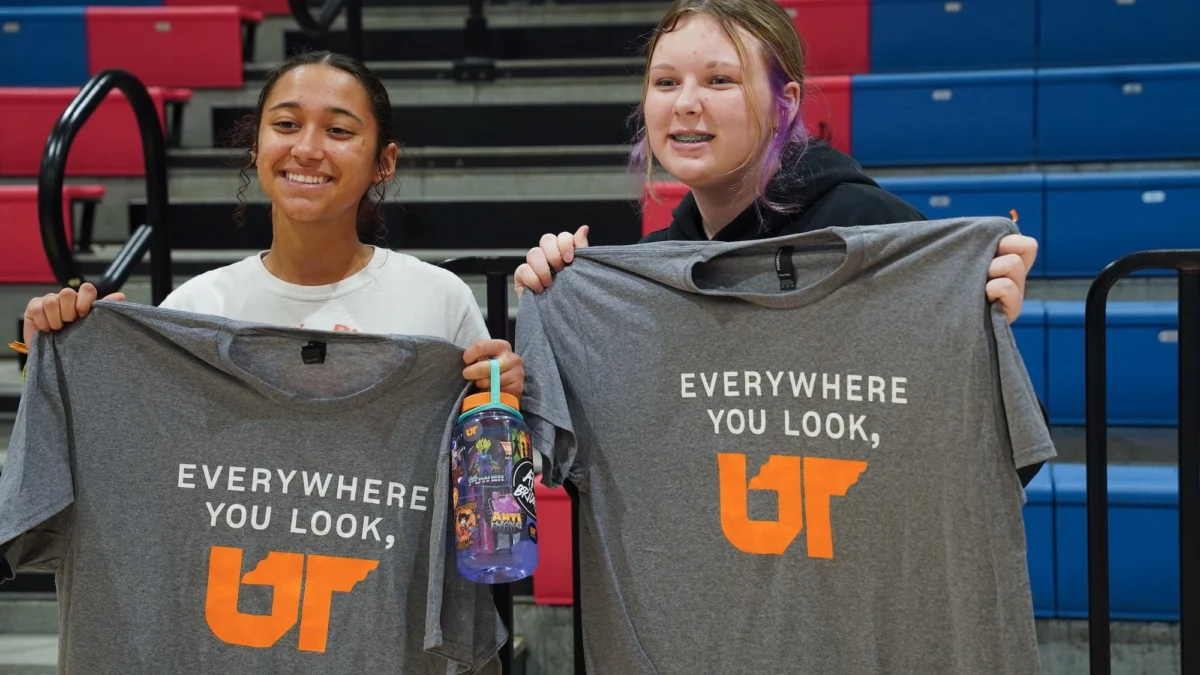
The scene at Polk County High School at the end of President Boyd’s visit offered a glimpse into the potential of this new era. As students donned the grey "Everywhere You Look, UT" t-shirts handed out by the university, the atmosphere in the gymnasium shifted from apathy to aspiration.
The task ahead for universities is immense. They must prove that these visits are not merely a PR tour, but the start of a permanent relationship. They must bridge the gap between rural life and academic ambition, ensuring that a student’s zip code is no longer the primary determinant of their educational trajectory. As Principal Lowe noted, for many of her students, the visit wasn’t just about college—it was about realizing that their future was no longer confined to the county line.