In an industry defined by self-promotion, viral threads on X (formerly Twitter), and a relentless pursuit of the next "thought leader" headline, Deven Parekh stands as a striking outlier. As a co-managing partner at the heavyweight investment firm Insight Partners, Parekh has spent 26 years cultivating a strategy that favors quiet execution over public performance. With $90 billion in assets under management, Insight Partners remains one of the most influential players in global venture capital—yet it rarely seeks the spotlight.
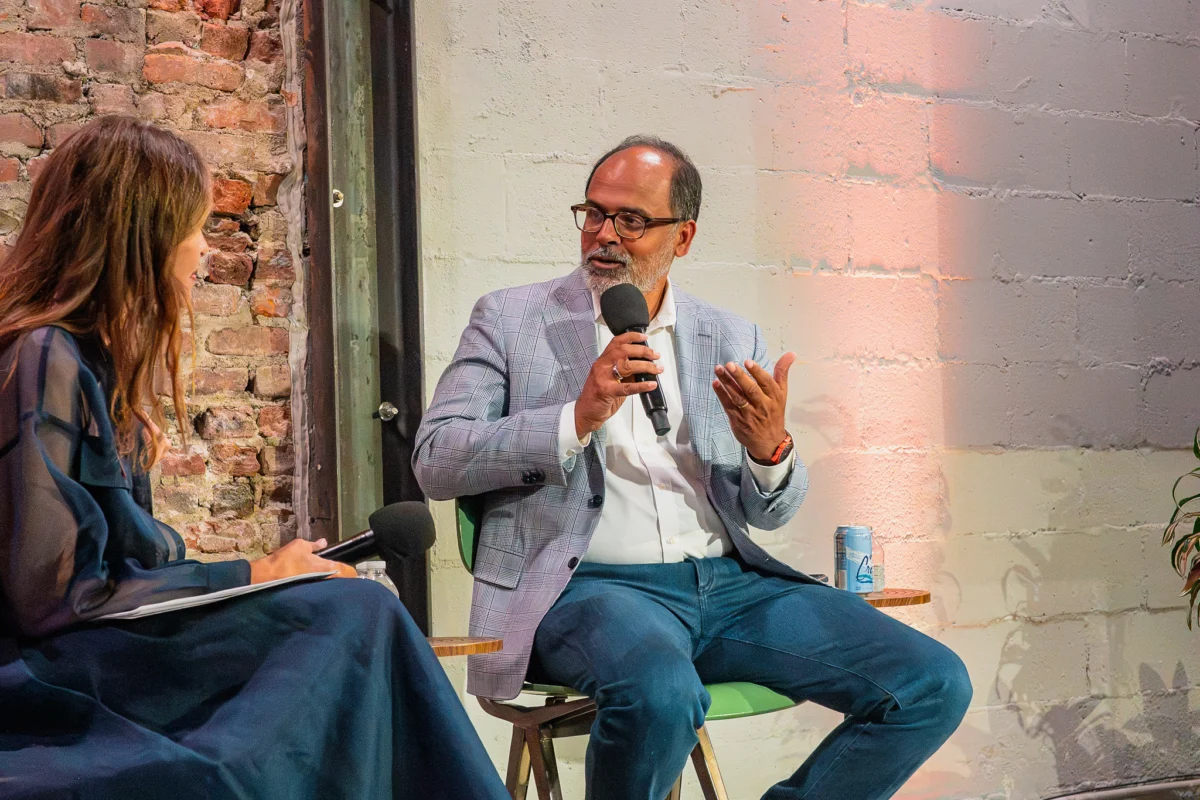
Recently, at the TechCrunch StrictlyVC event in New York, Parekh broke his characteristic silence. In a rare, wide-ranging conversation, he offered a candid look at the inner workings of a firm that has staked its reputation on diversification, the complexities of the AI arms race, and the often-unspoken necessity of returning capital to limited partners (LPs).
Main Facts: A Strategy of Disciplined Diversification
Insight Partners is a behemoth, but its investment philosophy is remarkably nimble. Rather than adhering to a rigid geographic or stage-based allocation, the firm operates on a temporal, opportunistic model. Parekh explains that their strategy is fluid: a look at their last seven funds reveals vastly different mixes of early-stage, growth, and buyout capital.
While the firm has made high-profile bets on AI giants like OpenAI and Anthropic, it has resisted the industry trend of extreme concentration. In an era where some funds are reportedly allocating 40% of their capital into a single AI laboratory, Insight Partners remains committed to a diversified approach. For Parekh, the lesson of the past two decades is clear: venture capital is a long-term game that favors the disciplined.
Chronology of a Shifting Market
The trajectory of the venture market has shifted dramatically over the past four years, moving from the frothy highs of 2021 to the current AI-dominated landscape.
- 2021–2022: The market experienced a valuation explosion. Insight Partners, like many others, observed the rapid inflation of growth-stage companies.
- 2023–2024: As interest rates rose and debt markets tightened, the buyout market for software companies stalled. Insight has not initiated a major buyout since 2024, pivoting its focus instead toward early-stage bets and secondary market opportunities.
- Late 2024–Present: The "AI Gold Rush" has taken center stage. However, Parekh notes a disturbing trend: venture rounds are moving so quickly that there is little time for investors to gather incremental data. Consequently, firms are paying higher prices without a proportional reduction in risk.
Supporting Data: The Case for Liquidity
One of the most pressing issues in the current venture ecosystem is the lack of "DPI"—Distributed to Paid-In capital. Many funds that raised massive amounts of capital between 2021 and 2023 have failed to return liquidity to their investors, creating a bottleneck that threatens their ability to raise future funds.
Parekh is blunt about this: "LPs want to know you can turn positions into cash; that’s the job." Insight Partners has walked the talk, returning over $20 billion to its LPs through strategic sales and IPOs over the last two years.
This philosophy extends to their portfolio management. When a founder receives an offer at a "frothy" valuation, Parekh encourages them to de-risk. "If I could time the market, I’d be on an island managing my own portfolio," he admits. By advising founders to take 10% to 20% off the table, he protects both the founder and the fund from the inevitable market correction.
Official Responses: AI Risk and the "Science Projects"
The conversation turned to the existential fears surrounding AI, particularly in light of recent high-profile resignations at firms like Anthropic. While some prominent investors have dismissed these risks as hysteria, Parekh strikes a more nuanced balance.
On AI Risk
"Sure, there’s a risk some non-state actor gets access to an open-source model and creates a biological weapon," Parekh acknowledges. "But there’s an even higher probability we get a massive decrease in the time it takes to develop new drugs and cure diseases. I’ll take that bet."
As a board member of NYU Langone, Parekh sees the tangible benefits of AI in healthcare, such as predicting cardiac events from massive patient datasets. He views AI as a critical tool for scaling healthcare in the face of an aging global population and a shortage of medical professionals.
On Physical AI
Despite the hype surrounding humanoid robotics and physical intelligence, Parekh remains skeptical of the current timeline. "Physical intelligence companies are still largely science projects," he says. "You’re making a bet on when robotics adoption happens, layered on top of a bet on whether it happens at all." Insight is watching the space closely but has not yet committed significant capital, waiting for the technology to prove its commercial viability.
Implications: The End of the "Hyper-Growth" Era
As OpenAI and Anthropic prepare for what will likely be record-breaking IPOs, the industry is entering a new phase of maturity. Parekh suggests that the public markets will serve as a reality check for the AI sector.
The IPO Threshold
"Eventually, even these companies become normal-growth companies," Parekh notes. When a firm goes from zero to $65 billion in four years, the market expectations for future growth become nearly impossible to satisfy. The next 18 months will likely see a wave of AI-related IPOs, which will force a reset in how public investors value "hyper-growth" relative to sustained performance.
Talent and Geography
While remote work has flattened the playing field, Parekh emphasizes that "talent density" remains a reality. Infrastructure-heavy AI companies are still gravitating toward San Francisco, while vertical-specific AI (such as financial services AI) is flourishing in hubs like New York. Insight’s loss of the Legora deal to General Catalyst serves as a reminder that even a firm of their stature must constantly compete on the strength of its value proposition, not just its name.
Lessons from Armis
Perhaps the most illustrative example of the Insight philosophy is the story of Armis. After initially losing the deal to Sequoia, Insight maintained a relationship with the founders. Eighteen months later, they bought out the entire cap table and eventually sold the company to ServiceNow for $7 billion. This, according to Parekh, is the essence of venture capital: "Sometimes you make money with small checks, sometimes with big ones. The goal is finding the best founders in the best markets."
Conclusion: The Quiet Path to Performance
Deven Parekh’s interview serves as a timely reminder that behind the noise of the venture capital "influencer" culture, there exists a group of investors focused on the fundamentals: portfolio management, liquidity, and long-term value creation.
As the AI industry faces its first major test of public-market legitimacy, the firms that have prioritized diversification and disciplined exits—like Insight Partners—are likely to be the ones left standing. For founders and LPs alike, the takeaway is clear: in a market prone to boom-and-bust cycles, the loudest voice in the room is rarely the one providing the best returns. Insight Partners will continue to lay low, letting its portfolio do the talking, and in doing so, it will likely continue to define the standard for institutional venture success.