By: [Your Name/Journalistic Desk]
Date: September 30, 2026
The NFL is a league defined by its volatility, a place where the distance between a Super Bowl appearance and a chaotic locker room can be measured in a single calendar year. For the New England Patriots, the 2026 season has become a sobering lesson in that fragility. After a meteoric rise that saw them reach Super Bowl LX, the franchise currently finds itself reeling from a 1-2 start, with the team’s offensive rhythm—and specifically the performance of franchise quarterback Drake Maye—at the center of a swirling media firestorm.
The Catalyst: Whispers in the New England Media
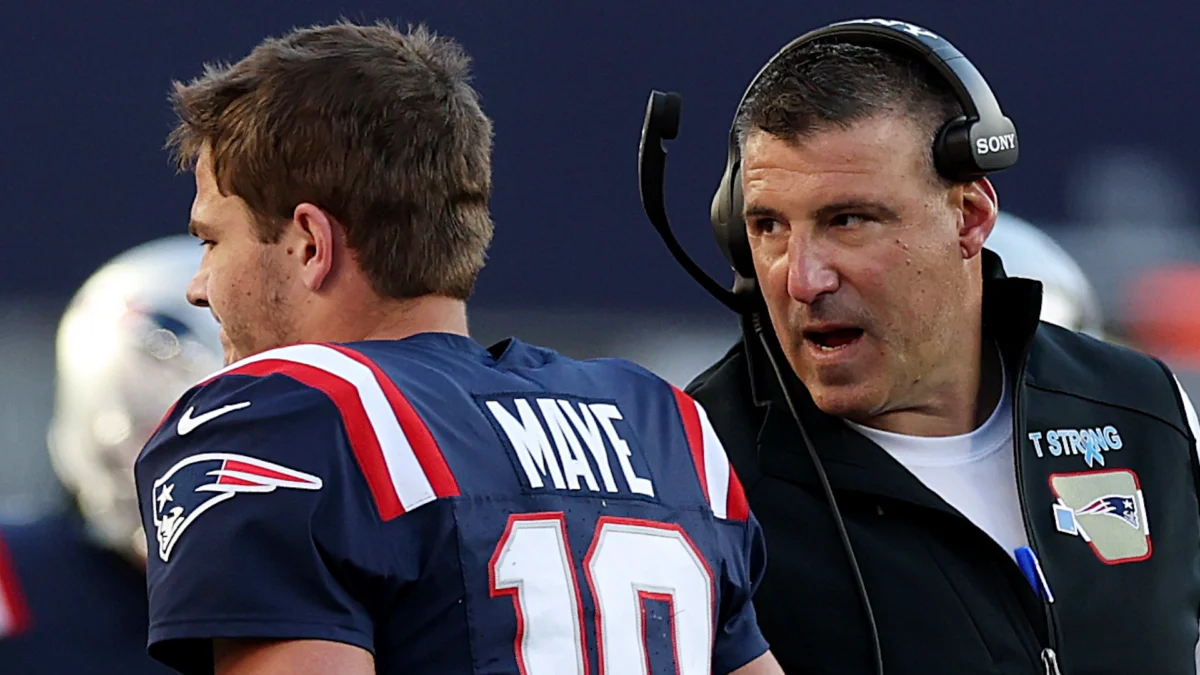
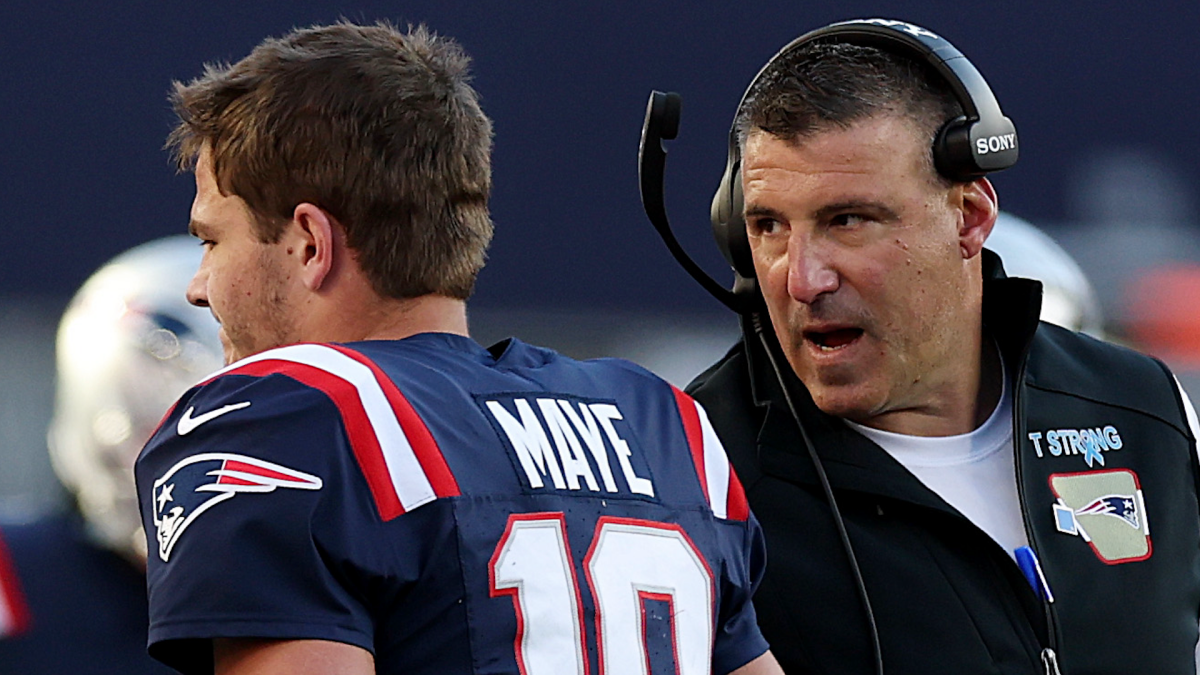
The tension reached a boiling point on Wednesday morning during a broadcast of WEEI’s "The Greg Hill Show." Hosts Greg Hill and former Patriots tight end Jermaine Wiggins introduced a narrative that has since dominated the local sports cycle: the suggestion of a fundamental disconnect between head coach Mike Vrabel and his signal-caller, Drake Maye.
According to Hill and Wiggins, they had been "whispered to" by an individual described as a high-level insider. The crux of the allegation was that the relationship between the two key leaders of the franchise is not merely strained by poor on-field results, but is rooted in a deeper, philosophical mismatch. "Despite what Mike Vrabel may have said publicly, it goes back to Drake Maye not being his guy," Hill relayed, citing the source.
While the report carries the classic hallmarks of a "game of telephone"—relying on anonymous sourcing and second-hand accounts—the timing is significant. In professional sports, losing records often act as a solvent that dissolves the veneer of organizational harmony, bringing long-simmering frustrations to the surface.
A Chronology of a Relationship Under Scrutiny
To understand the gravity of these reports, one must look at the timeline of the Vrabel-Maye partnership. When Mike Vrabel took the helm in Foxborough in 2025, he was a marquee hire, returning to the organization where he won three Super Bowls as a linebacker. At the time of his hiring, the narrative was overwhelmingly positive: a legendary former player returning to lead a rising star in Drake Maye.
- November 2025: Following a decisive Week 11 victory over the New York Jets, Vrabel went on record with Amazon’s Thursday Night Football crew, explicitly stating, "I came here because of the familiarity. I came here because of Drake."
- February 2026: The Patriots conclude a Cinderella season with a Super Bowl LX appearance. At this juncture, the partnership is hailed as one of the most promising in the NFL.
- September 2026 (Pre-Season): Expectations are sky-high, with Maye entering the year as a reigning MVP runner-up.
- September 2026 (Weeks 1-3): The Patriots stumble to a 1-2 start. Maye’s performance metrics collapse, leading to increased scrutiny and, eventually, the rumors of a rift between player and coach.
Analyzing the Statistical Regression
The primary driver of the current "drama" is not merely gossip, but a stark, undeniable decline in production. Drake Maye, who played at an elite level throughout the 2025 campaign, has struggled to find his footing in the early stages of 2026.
Through the first three weeks of the season, the statistics present a grim picture for the Patriots’ offense:
- Turnovers: Maye currently leads the entire NFL with seven turnovers, a number that effectively negates the efficiency of a defense still trying to find its own identity.
- Passer Rating: His rating of 58.6 is currently the lowest in the league among quarterbacks with at least 75 pass attempts.
- Efficiency: The offense has struggled to sustain drives, leading to time-of-possession deficits that have left the Patriots’ defense exhausted by the fourth quarter.
This regression is the "why" behind the panic. Coaches, by nature, are wired to prioritize ball security and decision-making. When a quarterback who was previously a candidate for league MVP begins to turn the ball over at a historic rate, frustration is a natural byproduct. However, whether that frustration has curdled into a personal rift remains the central question.
The Official Response: Vrabel Fires Back
Mike Vrabel is a coach who has built his reputation on accountability and a "no-nonsense" approach to the media. When presented with the WEEI report during his Wednesday press conference, he did not mince words. He treated the inquiry with a mixture of skepticism and dismissiveness, specifically targeting the reliance on anonymous sources.
"[Hill] heard it from who? Those are my favorites. Unnamed sources?" Vrabel retorted. "Let me just tell you why I’m here. I’m here because Drake was their quarterback. Believe it or not, I had choices of where I wanted to coach. I wanted to coach here because Drake was the quarterback."
Vrabel’s defense of the relationship is consistent with his public comments from last season. He has staked his reputation on Maye’s development, and for him to admit a rift would be a concession that his primary reason for taking the job has failed. By doubling down on his commitment to Maye, Vrabel is attempting to insulate his locker room from the external noise, effectively telling the media that the narrative is a fabrication designed to capitalize on the team’s early-season struggles.
Implications: Where Do the Patriots Go From Here?
The implications of this drama are twofold. In the immediate sense, the Patriots must focus on their Week 4 matchup against the Buffalo Bills. An AFC East rivalry game on the road is the worst possible environment for a team dealing with internal distractions. If Maye struggles again, the media will inevitably return to the "rift" narrative, regardless of Vrabel’s protestations.
Secondly, the long-term health of the organization depends on the "Vrabel-Maye" tandem. In the modern NFL, the head coach-quarterback relationship is the most important dynamic in the building. If there is even a modicum of truth to the rumors—if Maye feels he is being scapegoated or if Vrabel has lost faith in his quarterback’s ability to execute the scheme—the Patriots could be looking at a total rebuild of their offensive identity.
However, it is equally possible that this is simply the byproduct of a high-pressure environment in a demanding sports market. When a team loses, fans and analysts look for reasons; when the team is a high-profile, former-Super-Bowl-contending franchise like New England, those reasons are magnified.
Conclusion
As the Patriots head to Buffalo, the "drama" remains exactly that: a narrative born from anonymous whispers and exacerbated by a cold, hard start to the season. While Mike Vrabel has attempted to kill the story with a blunt, direct denial, the truth will ultimately be revealed on the field.
If the Patriots win and Maye returns to his MVP-level form, the talk of a rift will vanish as quickly as it appeared. If the losses continue and the turnovers persist, the whispers will only get louder. For now, the Patriots remain a team in transition, caught between the memory of last year’s success and the reality of this year’s growing pains. Whether the coach and the quarterback are truly at odds is a question only time—and the scoreboard—will answer.