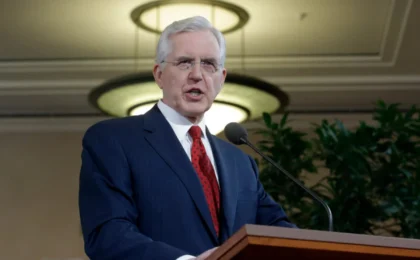
In the rapidly evolving landscape of artificial intelligence, a clear narrative has emerged: white-collar workers in finance, law, and software development are facing an existential threat from automation. However, at a recent media roundtable during the Ford Pro Accelerate event, Ford Motor Company CEO Jim Farley offered a provocative counter-narrative. He argued that for the millions of workers in skilled trades—electricians, mechanics, and factory technicians—AI will not be a job-killer, but a "companion" that enhances human capability and addresses a desperate shortage of technical labor.
Joined by Linda Hubbard, President and CEO of Carhartt, and Chris Nelson, CEO of Stanley Black & Decker, Farley outlined a future where the factory floor becomes a high-tech sanctuary. While routine, screen-based tasks are vulnerable, the "physical-judgment" roles required to keep a modern economy running are becoming more secure, albeit more complex.
Main Facts: The Great Divergence in the AI Era
The central thesis of the Ford Pro roundtable was the distinction between "standardized knowledge work" and "skilled physical labor." Farley was blunt about the risks facing the office-bound workforce. He noted that jobs involving spreadsheets, entry-level programming, and call center operations are in the "first inning" of a massive disruption. These roles, which rely on processing data and following digital protocols, are easily mimicked by Large Language Models (LLMs).
In contrast, Farley argued that skilled trades are both "using AI and protected from it." The protection stems from the inherent complexity of the physical world. An AI can write code, but it cannot yet navigate a cramped engine bay to replace a sensor or troubleshoot a malfunctioning robotic arm on a high-speed assembly line.
Key Takeaways from the Roundtable:
- AI as a "Force Multiplier": Rather than replacing workers, AI is being used to help inexperienced technicians perform expert-level tasks, such as complex engine disassemblies.
- The Skilled Labor Shortage: Executives see AI as the only viable solution to a massive backlog of work in construction and manufacturing that current labor levels cannot meet.
- The Blurring Line: In modern "mega-plants," the distinction between a manufacturing engineer and a skilled-trades worker is disappearing as the work becomes increasingly digital.
- The Trust Factor: The success of AI integration depends entirely on whether workers trust the data or view it as a tool for surveillance and "work intensification."
Chronology: From Mechanical Conveyors to Digital Ecosystems
To understand Farley’s perspective, one must look at the evolution of the automotive factory. For a century, the "skilled trades" at Ford primarily involved maintaining mechanical systems—gears, belts, and conveyors.
The Traditional Era (1913–2010s)
For decades, the UAW (United Auto Workers) skilled-trades segment focused on heavy machinery. Maintenance was reactive or scheduled based on time intervals. Training was passed down through traditional apprenticeships, focusing on mechanical intuition and manual dexterity.
The Transition to Digital (2010s–2023)
As Ford pivoted toward Electric Vehicles (EVs) and advanced driver-assistance systems (ADAS), the factory floor changed. The introduction of more sophisticated robotics required workers to understand basic PLC (Programmable Logic Controller) programming. However, the software and the hardware remained largely separate silos.
The AI Inning (2024 and Beyond)
We are now entering what Farley calls the "first inning" of AI. At Ford’s newer facilities, such as the BlueOval City complex, the work is moving toward repairing robots, handling fiber optics, and maintaining automated battery production equipment. Farley noted that some of this work is now more akin to semiconductor fabrication than traditional auto assembly. The chronology has shifted from "fixing machines" to "optimizing digital-physical systems."
Supporting Data: The Scale of the Transformation
The shift Farley describes is backed by the sheer scale of Ford’s workforce and the broader industrial landscape.
Ford’s Internal Workforce
Ford currently employs approximately 56,000 UAW-represented workers in the United States. Of these, more than 10,000—roughly 20%—are classified as skilled-trades workers. This group represents the vanguard of the AI transition. As the complexity of vehicles increases, the ratio of skilled-trades workers to general assembly workers is expected to shift, as more automation requires more expert human oversight.
The "Super Duty" Case Study
One of the most compelling pieces of data Farley shared involved the repair of the Ford Super Duty truck. Removing an engine from these massive vehicles is a Herculean task that can take an experienced mechanic two full days and involves disassembling a significant portion of the front end.
"A lot of people don’t have that skill," Farley admitted. To bridge this expertise gap, Ford Pro is deploying AI and augmented reality (AR) systems. These tools provide step-by-step, "do this, do that" instructions to mechanics who are talented but have never performed that specific, complex procedure. This effectively turns a novice into an expert overnight, reducing downtime for commercial fleet customers.
The Construction Bottleneck
Chris Nelson of Stanley Black & Decker provided a macro-perspective on the labor shortage. In the construction and infrastructure sectors, companies are currently facing a massive "backlog of future revenue." They have the contracts and the capital, but they lack the human "labor capacity" to execute. Stanley Black & Decker has responded by developing autonomous robots, such as a downward-drilling robot for data centers. These centers require tens of thousands of repetitive holes to be drilled for cabling and racks—a task that is physically grueling and prone to human error. By automating the "drudgery," skilled workers are freed up for higher-level system integration.
Official Responses: Perspectives from the C-Suite
The roundtable participants emphasized that the "AI-as-companion" model is a strategic choice, not an accidental outcome.
Jim Farley, CEO of Ford:
Farley emphasized the necessity of human judgment in high-stakes environments. "I think most of these jobs will be both using AI and also protected from it," he stated. He highlighted that while AI can suggest a diagnosis, a human must still apply "practical judgment" and ensure safety when working around complex physical systems that can be dangerous if mishandled.
Chris Nelson, CEO of Stanley Black & Decker:
Nelson dismissed the idea of a blue-collar backlash against AI. He argued that workers are "all-in" on technology that makes them safer and faster. "They see a backlog… anything that can get them through it is well worth it," Nelson said. He framed the drilling robot not as a replacement, but as a "hand-in-hand" partner that allows a crew to finish a job that would otherwise be impossible due to staffing shortages.
Linda Hubbard, CEO of Carhartt:
Representing the brand most synonymous with the "uniform" of the American tradesperson, Hubbard’s presence underscored the cultural shift. Her perspective focused on the "dignity of work" and how technology can preserve the trades as a viable, high-paying career path for the next generation, rather than a relic of the past.
Implications: Trust, Surveillance, and the New Curriculum
The transition to an AI-augmented blue-collar workforce is not without its risks. Farley was quick to point out the "age-old efficiency tension" that has existed since the dawn of the Industrial Revolution.
The Trust Barrier
Farley recalled his early career performing "time-and-motion studies"—the practice of timing workers to squeeze out seconds of productivity. He noted that workers have a historical, and often justified, fear that "efficiency tools" are actually "surveillance tools."
If workers believe AI data will be used "against them or in a not-so-nice way," Farley warned, "they’re not going to want to use the system. They’ll want to turn it off." For Ford, the implication is clear: the benefits of AI (safety, speed, accuracy) must be shared with the worker, not just the shareholder.
The Educational Shift
The most profound implication is for the future of vocational training. The "new" skilled tradesman needs a curriculum that blends traditional mechanics with data literacy.
- Data as a Tool: Workers must be comfortable using AI as a diagnostic partner.
- Software Proficiency: Maintenance now involves "debugging" as much as "wrenching."
- Continuous Learning: As AI models update, the procedures for repairing a vehicle or a robot may change in real-time, requiring a workforce that is comfortable with constant technical evolution.
Conclusion: The Rebirth of the Technician
Jim Farley’s vision suggests that the "first inning" of AI may actually lead to a renaissance for blue-collar work. By automating the repetitive and guiding the complex, AI could make the skilled trades more accessible, safer, and more productive. In this view, the factory floor is not a place where humans are being phased out, but where they are being leveled up. The "companion" AI may be the very thing that saves the American industrial workforce from its most pressing threat: not the machine, but the shortage of skilled hands to guide it.