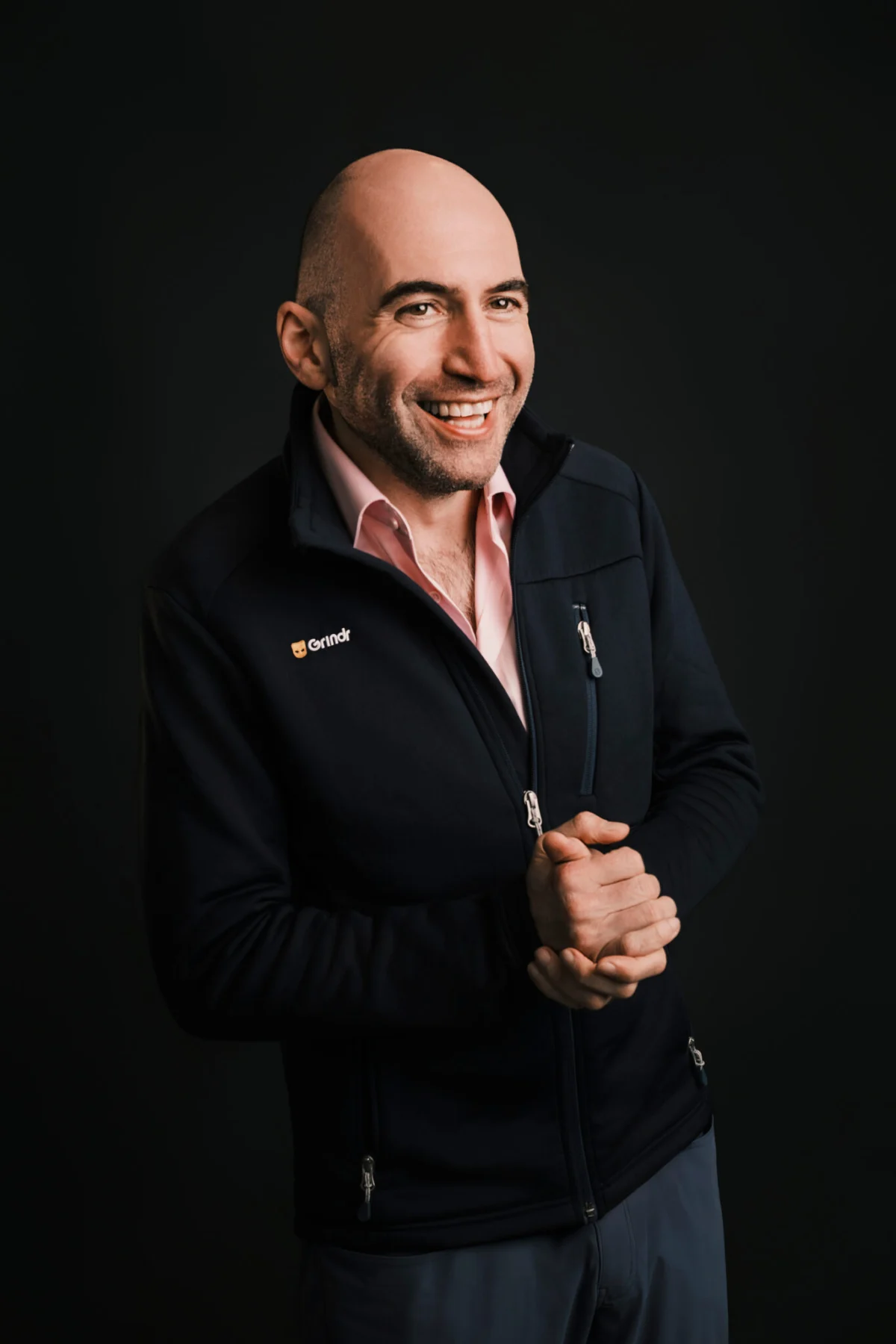
When George Arison stepped into the role of CEO at Grindr in 2022, he didn’t just inherit a dating app; he inherited a corporate enigma. For years, the platform had been a digital nomad of the tech world, passed from Chinese ownership to a forced divestiture following national security concerns, ultimately landing in the hands of private equity. While it was a business that seemed to print money by default, it lacked a coherent product strategy, a long-term roadmap, or a stable identity.
Four years later, the narrative has shifted dramatically. Under Arison’s leadership, Grindr has transformed from a rudderless asset into a high-growth, publicly traded company. With revenue projected to climb from $195 million in 2022 to over $540 million this year—all while maintaining adjusted EBITDA margins above 40%—Arison is attempting to prove that Grindr is not just a relic of the early app era, but a foundational platform for the global LGBTQ+ community.
A Chronology of Transformation
The "Arison Era" at Grindr began with a mandate for radical efficiency. Recognizing that the company had bloated during the pandemic-era hiring boom—where productivity was often compromised by low expectations for in-office output—Arison implemented a controversial return-to-office mandate in 2023.
The move was met with significant internal resistance and public backlash, leading to a massive restructuring. Today, the company operates with a leaner, more focused workforce: approximately 175 employees in the U.S. and a dedicated team in Colombia. Of the pre-2022 staff, only about 25 remain. This cultural pivot was designed to prioritize agility, enabling the company to shift its focus toward product-led growth rather than passive maintenance.
Following this internal cleanup, the company executed a SPAC listing, positioning itself for public scrutiny. Since then, the focus has moved toward driving Average Revenue Per User (ARPU). By shifting from mere user-base expansion to increasing the value extracted from existing customers, Grindr has successfully boosted its pay conversion rate from under 6% to over 9% in the second quarter of this year.
Supporting Data: The Growth Engine
The financial performance of Grindr under the current management has caught the attention of Wall Street. Major institutions, including Morgan Stanley, Goldman Sachs, and Raymond James, have raised their price targets on the stock throughout 2024. Morgan Stanley’s upgrade to "overweight" in July served as a bellwether for investor sentiment, fueled by the anticipation of a new high-end subscription tier and a broader telehealth strategy.
However, the company’s valuation remains a point of contention. Despite a stock price climb of roughly 33% over the past six months, Grindr trades at approximately 11 times its 2027 projected EBITDA. This represents a roughly 35% discount compared to its industry peers. Arison argues that this "Grindr discount" is not a reflection of the company’s fundamentals, but rather a lingering bias against a platform specifically tailored to the gay community.
"I’ve had a consultant decline to work with us over reputational concerns, and even during the Silicon Valley Bank crisis, a bank refused our money," Arison noted in a recent interview. He points out the discrepancy between how Grindr is treated compared to broader dating platforms like Tinder, suggesting that the "controversy" is tied to the identity of its user base rather than the nature of the app itself.
Strategic Vision: The "Everything App"
Arison’s long-term vision is to evolve Grindr into a "gayborhood in your pocket." This philosophy mirrors the "everything app" trend currently dominating consumer tech, where platforms seek to own the entire user lifecycle. For Grindr, this means expanding beyond hookups and dating into three core pillars:
- Healthcare: Through its "Woodwork" line, Grindr is already facilitating cash-pay access to ED medications, GLP-1s, and other health products. Long-term, the company envisions becoming a comprehensive health interface, connecting users with queer-affirming doctors and providing access to HIV prevention and treatment information.
- Travel: The goal is to provide a sense of community for users regardless of their physical location, turning the app into a global guide for gay-friendly social and commercial hubs.
- Advanced Matching (The EDGE Tier): Later this year, Grindr will roll out "EDGE," a premium subscription tier that utilizes artificial intelligence to provide better matchmaking.
The AI Advantage
A surprising factor in Grindr’s current success is its engineering efficiency. Despite having only about 95 technical staff, the company has seen a 2.5x increase in engineering productivity over the last year. Arison credits this to a "mobile-first" AI strategy, where approximately 80% of the company’s code is now generated or assisted by AI tools.
"A large-tech-company CEO once told me AI would let me do with far fewer people what I thought I’d need 300 to 350 for," Arison said. "He was right."
Official Responses and Market Skepticism
The rollout of the "EDGE" tier has not been without controversy. Testing in certain markets revealed price points—some as high as $350–$375 USD per month in Canada—that triggered immediate mockery on social media. Users took to platforms like Reddit to question the value proposition, with many calling for a return to the "2012 era" of the app.
Arison clarifies that these figures were part of an elasticity test, not a finalized price. He emphasizes that Grindr is not "selling AI," but rather selling features derived from the technology—specifically, the ability to surface high-quality matches based on behavioral data rather than sparse, static profiles.
"We think of it like a Tesla Model X or S: a premium flagship now, with the underlying capability rolling down to the broader product over time," Arison explained. He argues that current matching methods are failing, noting that even in hubs like San Francisco, the dating pool is physically limited. By using AI to break geographic constraints and match users based on real intent, he hopes to solve the perennial problem of loneliness that persists even within the LGBTQ+ community.
Future Implications
The question remains: Can a niche dating app successfully pivot into a diversified health and lifestyle conglomerate?
Currently, subscriptions account for 83% of Grindr’s revenue. While this is down from 86% in 2022, it is not due to a decline in subscription growth—which remains robust—but rather the sheer scale of the company’s operations expanding. The non-subscription businesses (ads and healthcare) are still in their infancy, acting as the foundation for a 10-year growth plan.
The stakes are high. If Arison succeeds, he will have proven that "niche" platforms can achieve the same "everything app" utility as tech giants, while simultaneously destigmatizing the investment profile of LGBTQ+-focused companies. If he fails, the company risks alienating its core user base with aggressive pricing and over-expansion.
For now, the markets are leaning toward optimism. With revenue growth exceeding 25% for 16 consecutive quarters and a clear, albeit ambitious, roadmap, Grindr has shed its status as a corporate castaway. Whether the "Grindr discount" will fully evaporate depends on if the company can deliver on the promise of its "gayborhood" ecosystem—transforming from a tool for meeting into a necessity for living.