Between 2.5 and 2 billion years ago, Earth underwent the most profound chemical metamorphosis in its four-and-a-half-billion-year history. As oxygen levels began to climb, the planet transitioned from a stagnant, anaerobic world to an environment capable of supporting the complex life forms—plants and animals—that would eventually dominate the globe half a billion years later.
For decades, geologists have pointed to a specific, unusual carbon-isotope signature preserved in ancient rock as the "smoking gun" of this transition. This signal, known as the Shunga-Francevillian event, was widely interpreted as evidence that the Earth’s global carbon cycle experienced a massive, planetary-scale disruption as oxygen surged. However, a groundbreaking study led by researchers at the California Institute of Technology (Caltech) is now challenging this orthodoxy, suggesting that one of the primary pillars of this theory may be nothing more than a localized geological fluke.
A Historical Context: The Shunga-Francevillian Event
The narrative of Earth’s oxygenation is written in its sedimentary record. As oxygen levels rose for the first time, vast quantities of microbial biomass were buried beneath the seafloor. This burial sequestered carbon into rocks, leaving behind distinct isotopic traces. By analyzing the ratios of heavier and lighter carbon isotopes—which act as a geochemical record similar to the growth rings of a tree—scientists have reconstructed the environmental volatility of the Paleoproterozoic era.
The "Shunga-Francevillian event" refers to an anomalous carbon-isotope signal found in rock formations in Karelia, Russia, and the Francevillian Basin in Gabon. For years, the scientific community viewed this signature as definitive evidence of a global environmental crisis. The theory held that the rapid accumulation of oxygen fundamentally altered the chemistry of the oceans and atmosphere, creating a planetary imbalance.
"Earth, in a way, went ‘crazy’ during that time interval when oxygen appeared in the atmosphere," says Aivo Lepland, a researcher at the Geological Survey of Norway (NGU) and a co-author of the new study. "We are trying to assess the causes and consequences of Earth’s oxygenation, and this information is archived in the rocks. To understand the planet’s history, you have to read that archive correctly."
Challenging the Global Narrative
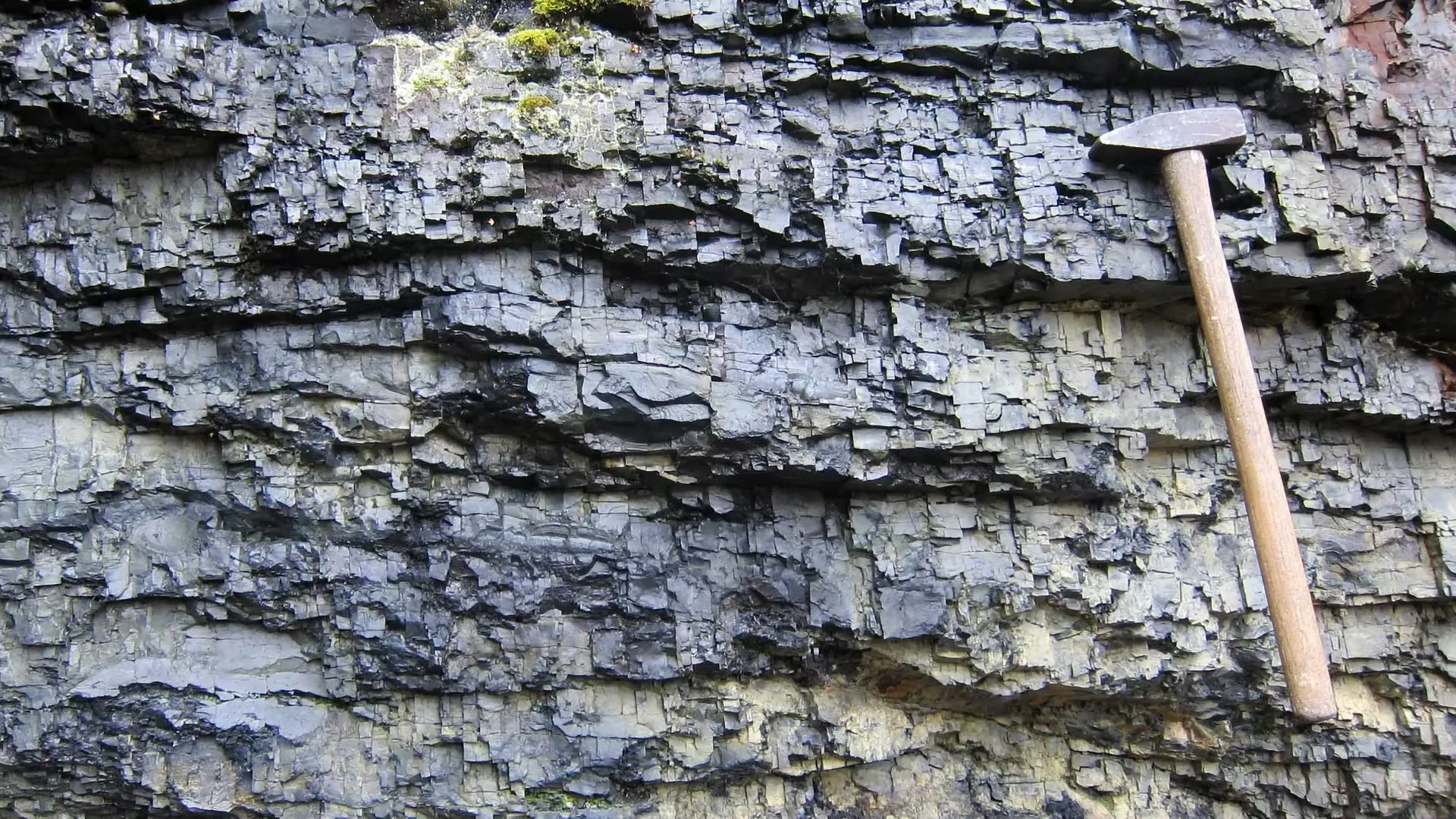
The new study, published in the journal Geology, centers on the Zaonega Formation in Karelia, Russia—a site long considered a "reference location" for the Shunga-Francevillian event. By examining drill cores extracted from this region, the Caltech-led team, headed by senior scientific researcher Nivedita Thiagarajan, has unearthed evidence suggesting the signal might not be global at all.
"One major debate centers on this unusual carbon-isotope signal," Thiagarajan explains. "We studied gases trapped in microscopic pockets within rocks from the Zaonega Formation, one of the world’s oldest known fossil oil fields. We found that the carbon-isotope signal at this key site can be explained by local phenomena that occurred within a several-hundred-square-kilometer sedimentary basin rather than across the entire globe."
By shifting the focus from global climate change to local geological processes, the researchers have opened a significant debate: If the Zaonega signal is local, does the entire Shunga-Francevillian "global event" rest on a misinterpretation of regional data?
The Mechanics of Discovery: Trapped Gases and Deep Heat
The methodology behind this re-evaluation is as innovative as it is meticulous. To investigate the origin of the isotopic signal, the researchers looked at microscopic fluid inclusions—tiny bubbles of ancient fluid and gas sealed inside rock samples for two billion years.
The Zaonega Formation, once a marine sedimentary basin, is rich in pyrobitumen—a solid, insoluble form of organic carbon created when crude oil or kerogen is subjected to intense heat deep underground. By analyzing the chemical composition of gases trapped within these samples, the team reconstructed a precise thermal history of the area.
The researchers propose a compelling alternative to the "global disruption" hypothesis:
- Magmatic Intrusion: A sheet of magma forced its way through marine sediment layers beneath the prehistoric ocean.
- Thermal Cooking: The intense heat from this magma acted as a subterranean stove, warming sediments packed with organic material.
- Hydrocarbon Generation: This heating generated hydrocarbons, including methane and propane, which migrated upward through the sediment.
- Microbial Feast: Upon reaching the seafloor, these gases were consumed by methane-eating microbes.
- Isotopic Signature: The metabolic waste of these microbes created the light carbon-isotope signature that scientists have been observing for decades.
The evidence for this thermal event is stark. The team identified a clear thermal gradient, with temperatures reaching 350 degrees Celsius near the magma intrusion and cooling to roughly 72 degrees Celsius at an ancient seafloor asphalt spill located 300 meters above. This local, heat-driven process perfectly accounts for the unusual isotopic signature without requiring a worldwide environmental catastrophe.
The Role of Interdisciplinary Collaboration
The study is a testament to the power of cross-disciplinary expertise. The project gained momentum when Aivo Lepland brought a new collection of isotope measurements from Zaonega rocks to Caltech during his sabbatical. Simultaneously, Nivedita Thiagarajan and John Eiler—the Robert P. Sharp Professor of Geology and Geochemistry—had just finalized a broader framework for understanding how natural gas forms.
When the two datasets were synthesized, the "global event" theory began to crumble. "It was interesting to see that some of the same signatures that we observe in modern oil and gas basins are also there and preserved in 2-billion-year-old samples," Thiagarajan notes. By applying modern petroleum geochemistry to ancient geology, the team was able to provide a mechanistic explanation for what was previously viewed as an inexplicable global mystery.
Implications for Earth’s History
The implications of these findings are profound. If the Zaonega Formation is indeed a local event driven by magmatic heating, the scientific community must reconsider the evidence for the Shunga-Francevillian event at other sites.
"Because Zaonega is a reference site for the Shunga-Francevillian event, our findings raise important questions about whether it should be considered a worldwide event," Thiagarajan says. The research does not claim that the Shunga-Francevillian event did not happen; rather, it suggests that the "signal" used to define it may be a poor proxy for global change.
This forces a re-examination of how we define "global" versus "local" in the deep geological record. When geologists read the "growth rings" of Earth’s history, they must be increasingly wary of localized thermal anomalies that can mimic the signatures of planetary-scale transitions.
Future Horizons: Testing the Hypothesis in Gabon
The scientific process is iterative, and the team is already looking toward the next phase of the investigation. The goal is to determine if the same local geological processes shaped the rock record in Gabon.
The research will utilize samples from the GOE-DEEP project (Great Oxygenation Event-DEEP), an initiative co-funded by the International Continental Scientific Drilling Program. In the summer of 2025, Aivo Lepland spent four months in Gabon coordinating a complex drilling campaign. These new cores, recovered from the depths of the African continent, arrived at the NGU in February 2025.
Later this year, an international consortium of researchers representing 18 countries will begin sampling these cores. By applying the same geochemical analysis used on the Russian samples, the team hopes to confirm whether the Gabonese record was also influenced by local thermal events or if it reflects a truly global phenomenon.
"Now we can really put things together by doing a similar type of study on the Gabonese rocks to compare the two sites," Lepland says. "This is how science moves forward."
The study, Paleoproterozoic thermogenic hydrocarbon generation, Zaonega Formation, Russia, also features contributions from Florian Eichinger of Hydroisotop GmbH and Anthony Prave of the University of St. Andrews. As the research continues, it serves as a stark reminder that even our most deeply held beliefs about the history of the Earth are subject to revision when new tools, new data, and new perspectives collide. The history of the planet is written in stone, but as this research demonstrates, the interpretation of that text is a living, evolving process.