The dream of selling a home for a record-breaking price in a matter of days—a hallmark of the pandemic-era housing market—has largely evaporated. As we move through the latter half of 2026, the U.S. housing market has settled into a period of stagnation characterized by high costs, economic anxiety, and a distinct power shift toward prospective buyers. For homeowners considering a move, the decision is no longer about simply "listing and winning"; it is about strategic navigation in a landscape defined by volatility.
Main Facts: The Current State of Play
The housing market in 2026 is currently defined by a significant imbalance. With typical monthly housing payments now exceeding $2,600, the barrier to entry for the average American has reached a near-record high. This financial strain, coupled with home prices that have significantly outpaced wage growth since 2020, has effectively sidelined a large segment of the buyer pool.
Key takeaways for today’s sellers include:
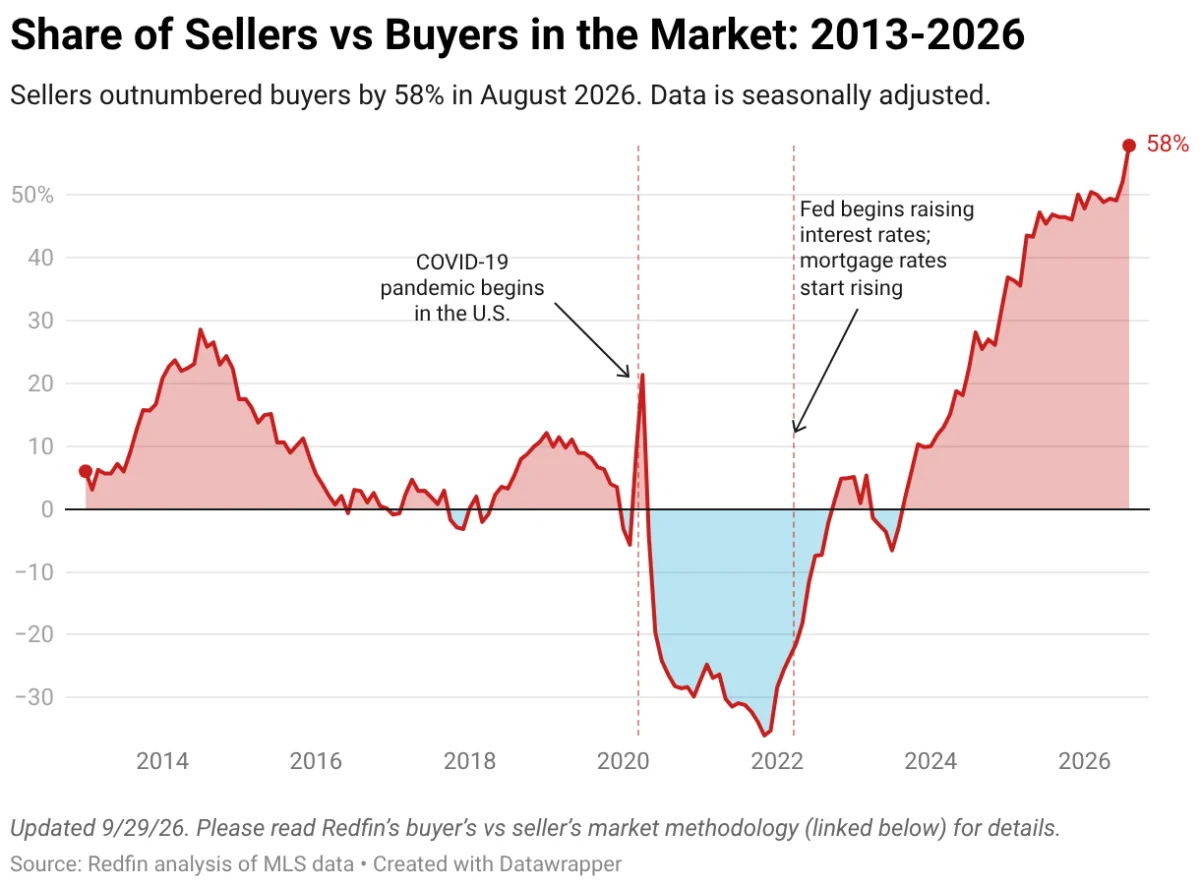
- A Buyer-Friendly Climate: Nationally, there are over 500,000 more homes listed than there are active buyers, creating a surplus that forces sellers to compete for a limited pool of qualified individuals.
- The Affordability Gap: Persistent inflation and elevated interest rates have made homeownership a luxury, causing many potential buyers to adopt a "wait and see" approach.
- Regional Variance: While the national trend leans toward a buyer’s market, regional pockets in the Midwest and Northeast remain stubbornly competitive due to chronic under-supply.
- Extended Timelines: The average time to sell a home has stretched to roughly 50 days—a significant departure from the sub-30-day frenzy of 2022.
A Chronology of Economic Pressure
To understand why the market is where it is today, one must look at the compounding factors of the last two years. The transition from the hyper-competitive pandemic market to the current cooling phase was not an overnight occurrence.
2025: The Year of the Rate-Lock
Throughout 2025, the narrative was dominated by "rate-locked" homeowners. Having secured sub-3% mortgage rates during the pandemic, millions of Americans chose to stay put rather than trade up to a 6% or 7% mortgage. This created an artificial scarcity that kept prices artificially high even as demand began to wane.
Early 2026: The Surge in New Listings
By the spring of 2026, the "stay put" strategy began to break down. Life events—job relocations, births, and retirements—forced homeowners onto the market. Simultaneously, the inventory of new listings surged, but they were met with a wall of buyer fatigue.
Mid-2026: The Geopolitical Impact
As we reached the summer and fall of 2026, the conflict in the Middle East introduced a new layer of instability. Rising energy costs and fears regarding global supply chains trickled down into the U.S. economy, fueling inflation and causing volatility in the bond market. Because mortgage rates are closely tied to bond yields, this geopolitical friction effectively killed any hope for an immediate, sharp decline in borrowing costs.
Supporting Data and Market Indicators
The data paints a clear picture of a market in transition. According to recent reports, asking prices have begun to dip to their lowest levels in a year, reflecting a necessary adjustment by sellers who realize that the pricing strategies of 2024 are no longer viable.
The Impact of Mortgage Rates
Mortgage rates remain the primary anchor dragging on market momentum. Every percentage point increase in rates significantly alters the monthly debt-to-income ratio for buyers. When rates hit three-year highs this year, it effectively shrunk the purchasing power of the middle class, forcing buyers to demand concessions or exit the market entirely.
Supply and Demand Dynamics
While the national surplus of 500,000 homes suggests a buyer’s market, this is not a monolith.
- The Sun Belt Surplus: Markets like Phoenix, Austin, and parts of Florida, which saw massive construction booms in the early 2020s, are currently experiencing an oversupply of inventory. Sellers in these regions are finding that they must offer significant closing cost assistance or price cuts to move their properties.
- The Midwest/Northeast Exception: In cities like Rochester and Milwaukee, housing stock remains historically low. In these pockets, the rules of the current market don’t apply; bidding wars and quick sales are still the norm, as demand continues to outstrip the limited number of available homes.
Official Perspectives: Expert Analysis
Daryl Fairweather, Chief Economist at Redfin, emphasizes that the current market requires a complete recalibration of expectations. "Home sellers should prepare for a strong buyer’s market," Fairweather notes. "Elevated inventory has given buyers more options, but record costs have made them wary. Volatile mortgage rates and an unstable economy are adding a layer of uncertainty as well, making it harder for buyers to plan and act with confidence."
Chen Zhao, Head of Economics Research at Redfin, adds a sobering outlook on the economic horizon: "Mortgage rates are reacting to the conflict in the Middle East, as rising energy costs and concerns over inflation and a bond market selloff put pressure on the economy. Unless homebuilding skyrockets or the country falls into a severe recession, buyer activity and housing affordability are unlikely to improve substantially in the near future."
Implications for Sellers: To List or to Wait?
If you are a homeowner, the question of whether to sell is deeply personal, but it should be informed by the current economic reality.
When to Sell: The Strategic "Go" Signals
- Life Necessity: If you are relocating for work or need to downsize, the "best time" is secondary to your life goals. Work with an agent to price your home aggressively to ensure you don’t end up with a "stale" listing.
- Low Local Inventory: If you live in an area where housing starts are low and demand is high, you are in a strong position. Your home is a commodity that is currently in short supply.
- The Anticipation of Lower Rates: If you are planning to buy a new home, keep a close watch on the bond market. A brief dip in mortgage rates can trigger a temporary rush of buyers, which could be your window to list.
When to Hold: The "Wait" Signals
- Recent Refinancing: If you refinanced your home in the last few years to a very low rate, selling now means trading that cheap debt for much more expensive debt on your next property. Unless your equity gains are massive, the math may not work in your favor.
- Major Maintenance Needs: In a buyer’s market, buyers are picky. If your home requires significant repairs, you will likely be penalized more heavily today than in previous years. Spending the time and capital to modernize or fix your home before listing is no longer optional—it is a competitive necessity.
- High-Price Volatility: If your property is in a market with a massive surplus of new construction, you may want to wait until the current wave of supply is absorbed by the market.
Conclusion: Crafting a Strategy
Selling a home in 2026 is an exercise in realism. The era of "list it and forget it" is over, replaced by a market that rewards preparation, pricing precision, and patience.
For those who decide to move forward, the most important asset you can possess is a knowledgeable real estate agent. In a market where contract cancellations are rising and buyer confidence is fragile, having a professional who understands the local nuances of your specific neighborhood is vital. Whether you are looking to cash in on equity or simply move on to the next chapter of your life, remember that while the national headlines may be gloomy, real estate is, and always will be, hyper-local. By focusing on your local data, preparing your home for the scrutiny of a cautious buyer, and remaining flexible on price, you can still achieve a successful transaction in today’s complex economic environment.