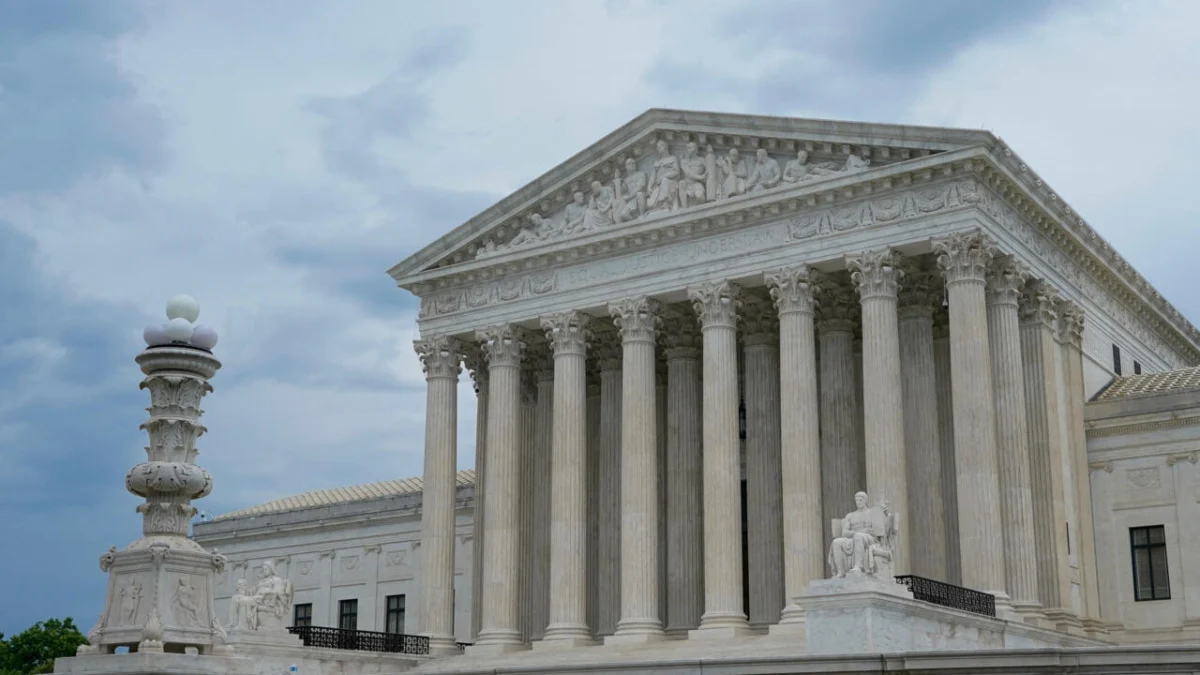
WASHINGTON – In a significant legal victory for the Trump administration, the United States Supreme Court on Tuesday intervened to lift lower-court restrictions on the deportation of undocumented immigrants to "third countries"—nations that are not the migrants’ countries of origin. The high court, which maintains a conservative majority, granted an emergency request to pause a ruling that had previously required the government to provide migrants with advance notice of their destination, effectively allowing the administration to resume its controversial removal operations while the case proceeds to a formal hearing in December.
The decision represents a pivotal moment in the ongoing battle over the scope of executive power in immigration enforcement. Since returning to the White House in 2025, President Donald Trump has prioritized the mass expulsion of undocumented individuals, viewing accelerated, unconventional removal strategies as a necessary tool to address what he characterizes as a broken immigration system.
The Legal Tug-of-War: A Chronology of the Dispute
The controversy centers on the administration’s use of "third-country removals," a practice where the U.S. sends deportees to nations with which they have no prior connection or legal ties.
Early 2026: The Rise of Third-Country Removals
As the Trump administration intensified its deportation mandate, logistical bottlenecks emerged. Many home nations, facing diplomatic friction or simply unwilling to absorb the influx of returning citizens, began refusing to accept deportation flights. In response, the administration initiated a series of aggressive diplomatic maneuvers, including multimillion-dollar aid packages and the threat of severe visa restrictions, to pressure various nations—particularly those in Africa—into accepting these individuals.
Mid-2026: The Lower Court Intervention
Civil liberties groups and immigration advocates challenged the practice, leading to a significant ruling by a lower court. The presiding judge determined that the U.S. government could not unilaterally remove individuals without providing them "effective notice" regarding their final destination. The court argued that this notification was a legal requirement to ensure migrants had the opportunity to claim asylum or raise concerns about potential persecution in the receiving country, as mandated by U.S. law and international human rights treaties.
September 2026: The Supreme Court Intervention
Following the lower court’s decision, which the administration claimed caused "substantial logistical problems," the Justice Department filed an emergency appeal. On Tuesday, the Supreme Court justices, by a split vote, granted the stay. The three liberal justices on the panel noted their dissent, indicating they would have allowed the lower court’s requirements for transparency to remain in place. The court has scheduled oral arguments for December to determine the merits of the policy on a permanent basis.
The Administration’s Stance: "An Essential Tool"
In his brief to the Supreme Court, Solicitor General John Sauer framed the administration’s strategy as a matter of national security and border integrity. Sauer argued that the ability to utilize third-country removals is an "essential tool" in the government’s arsenal.
"The government must have the flexibility to remove certain aliens, including some of the worst criminal aliens, when their home countries refuse to cooperate," the administration’s filing stated.
The administration maintains that the logistical hurdles imposed by the lower court—specifically the requirement to notify deportees of their destination in advance—undermines the efficacy of the removal process. They argue that if migrants are alerted to their destination, it may trigger further legal maneuvers or flight risks, complicating the already difficult diplomatic negotiations required to secure third-country cooperation.
Human Rights Concerns and the "Cascade" of Abuses
While the administration focuses on the mechanics of enforcement, a growing body of evidence suggests that the human cost of these policies is profound. Recent investigations, including those by AFP and Forbidden Stories, have unveiled a disturbing reality for those caught in the third-country pipeline.
Once individuals are removed from U.S. jurisdiction and delivered to these third-party nations, they often fall into a legal and humanitarian vacuum. Investigations have revealed:
- Abuse by Local Authorities: Without the oversight of U.S. officials, deportees have reported being subject to physical abuse, harassment, and extortion by local guards and police.
- Indefinite Detention: Many migrants are held in makeshift detention centers for months without access to legal counsel or the ability to challenge their status.
- Chain Deportations: In several documented cases, migrants have been quickly re-deported from the third country to their original home nation, effectively circumventing the very protections against torture and persecution that U.S. law is designed to uphold.
United Nations experts have issued stark warnings regarding this "cascade" of rights abuses. They argue that by outsourcing deportation, the U.S. is effectively laundering its human rights responsibilities, handing individuals over to jurisdictions where their fundamental rights are not protected, and where they may face imminent danger.
The Legal and Policy Implications
The Supreme Court’s decision to hear the case in December highlights the tension between two pillars of American governance: the executive’s authority to manage foreign relations and borders, and the legislative requirement to adhere to international and domestic human rights standards.
The Role of Congress
Under current U.S. policy, as established by Congress, it is strictly prohibited to return individuals to countries where their lives would be in danger or where they would be subjected to torture. Critics of the administration’s policy argue that by using third countries as a staging ground, the government is violating the spirit, if not the letter, of these statutory protections.
Diplomatic Fallout
The reliance on "third-country" deals has also altered the landscape of U.S. foreign policy. By leveraging visas and aid to secure the cooperation of smaller or developing nations, the U.S. has been accused of "coercive diplomacy." For many of the nations involved, the influx of unexpected deportees has created internal social and political strain, further complicating U.S. relations in Africa and beyond.
Future Outlook: A December Reckoning
The December hearing will be a landmark event for the current Supreme Court. The ruling will not only determine the immediate fate of those currently in the deportation pipeline but will also set a precedent for how much authority the executive branch possesses to bypass traditional norms in the pursuit of mass expulsion.
If the Court upholds the administration’s right to proceed with third-country removals, it will effectively signal that the executive’s power to control immigration is broad, potentially insulating the government from future challenges regarding the safety of the environments to which migrants are sent.
Conversely, a ruling against the administration would force the White House to overhaul its deportation strategy, likely requiring a return to bilateral negotiations with migrants’ home countries—a process that is historically slower and more difficult, but one that proponents argue is more compliant with the rule of law.
As the legal community and international observers look toward December, the core question remains: Does the sovereignty of the United States allow it to disregard the fate of an individual once they have left American soil? For the thousands of migrants currently caught in the ambiguity of the third-country system, the answer to that question is not merely a legal technicality—it is a matter of survival.
Summary of Key Considerations
- Executive Power: The administration asserts that the President must have the flexibility to enforce immigration law when home countries refuse to accept their citizens.
- Due Process: Critics argue that the lack of notice and the lack of oversight in third-country transfers violate the fundamental right to contest a removal that may lead to torture or death.
- Humanitarian Impact: International bodies and NGOs have documented cases of torture, detention, and rights abuses occurring immediately following the transfer of migrants to third-party nations.
- Judicial Review: The upcoming December session will clarify the extent to which the judiciary can check executive actions that effectively outsource border enforcement to countries with questionable human rights records.