Key lawmakers from both sides of the aisle are mounting an aggressive defense of federal scientific independence following revelations that the Trump administration is drafting plans to assume greater direct control over the National Institutes of Health (NIH) grantmaking process. The proposed oversight mechanisms—which could include a sweeping executive order or formal Office of Management and Budget (OMB) sign-offs—have raised immediate alarms among researchers, university administrators, and congressional appropriators who view the move as a dangerous politicization of biomedical research.
Main Facts: Executive Push for NIH Oversight Sparks Bipartisan Backlash
The controversy erupted following reports, initially published by The Washington Post, detailing an ongoing effort within the executive branch to screen federal biomedical grants before funds are disbursed. Under the proposed framework, the White House or political appointees within the administration would review individual research awards to ensure alignment with President Donald Trump’s political agenda and filter out studies deemed contrary to administration priorities.
The strategy marks a fundamental departure from the NIH’s decades-old framework, in which grant applications undergo a rigorous, multi-tiered scientific review by independent panels of experts. Critics argue that subjecting this scientific evaluation to executive branch political vetting subverts the explicit statutory intent of Congress.
       TRADITIONAL NIH GRANT REVIEW
  [Researcher Application]
            │
            ▼
  [Scientific Peer Review Panel] ────► Evaluates merit & scientific methodology
            │
            ▼
  [Institute Advisory Council]  ────► Recommends funding based on public health priority
            │
            ▼
  [Final Award Disbursed]

─────────────────────────────────────────────────────────────

       PROPOSED EXECUTIVE OVERLAY
  [Peer-Reviewed Grant]
            │
            ▼
  [OMB / Political Review]      ────► Filters out proposals contrary to executive agenda
            │
            ▼
  [Award Granted or Terminated]
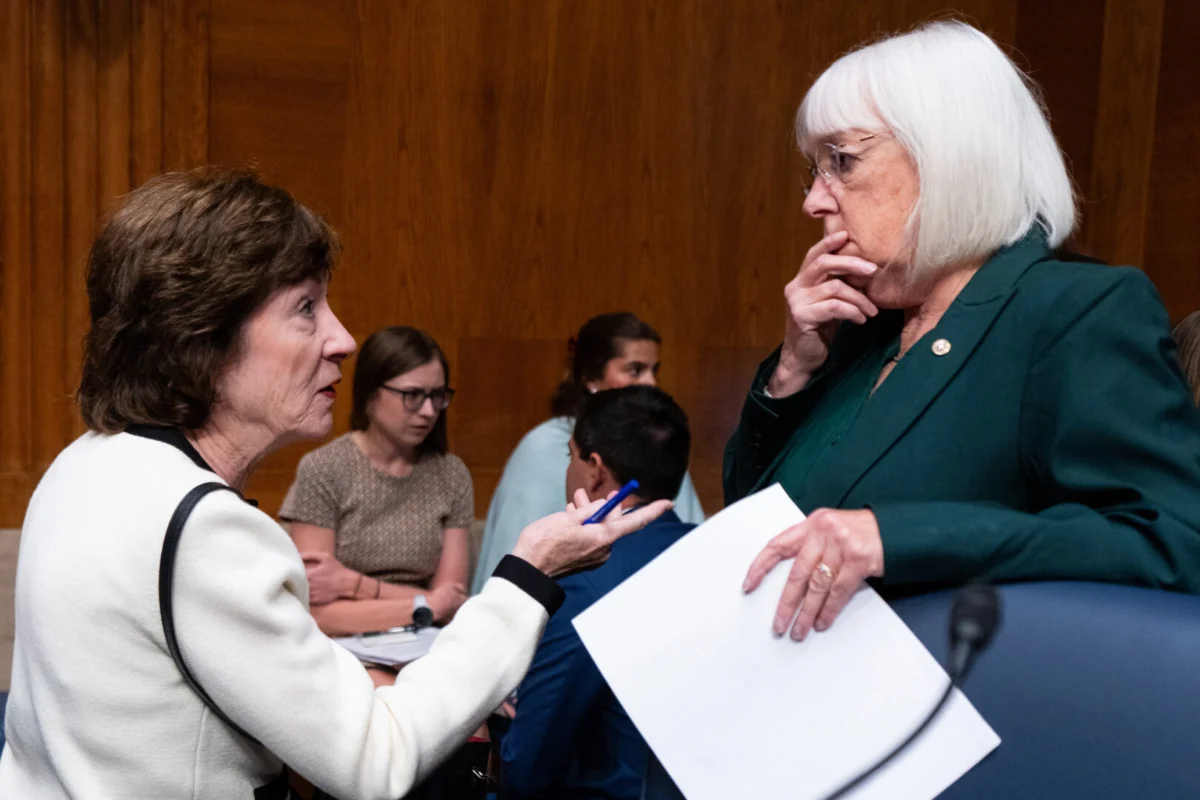
The response on Capitol Hill has been swift and unsparing. Senate Appropriations Committee Chairwoman Susan Collins, R-Maine, and Ranking Member Patty Murray, D-Wash., both issued stark warnings against the executive branch attempting to override merit-based scientific awards. Collins underscored that federal grantmaking is legally designed to serve objective medical priorities rather than the shifting mandates of any administration.
"Any attempt to politicize grantmaking at the National Institutes of Health, or any other agency, by another means—whether an Executive Order or guidance—is contrary to congressional intent," Collins said in an official statement. "Imposing a political review on awards that have already been selected through a rigorous scientific and merit-based process undermines the long-standing principle that the government funds awards based on scientific need and merit, rather than political ideology."
Chronology: The Escalation of Administrative Control Over Federal Research
The current confrontation over NIH funding represents the latest chapter in a long-running effort by the executive branch to re-engineer the administrative state and tighten command over federal agencies.
                   CHRONOLOGY OF GRANT OVERSIGHT BATTLES

  [Previous Year]  ──────►  1,800+ NIH Grants Frozen or Terminated
                            (Focused on DEI, Health Disparities)

  [Early 2026]     ──────►  OMB Proposes Overhead Caps & Forward-Funding Rules
                            (Rejected by Congress in Budget Debates)

  [Summer 2026]    ──────►  OMB Issues Proposed "Uniform Guidance Rule"
                            (Appointee review & termination "for convenience")

  [Sept 2026]      ──────►  Congress Passes CR Delaying Uniform Guidance
                            (Funding maintained through mid-December)

  [Sept 21, 2026]  ──────►  White House Draft Executive Order Leaked
                            (Triggers bipartisan Senate backlash)
1. Initial Grant Freezes and Targeting of DEI Programs
During the previous year, executive officials moved decisively to halt or cancel more than 1,800 research grants across federal scientific agencies. The effort heavily targeted projects incorporating diversity, equity, and inclusion (DEI) frameworks, health disparity research, and select social sciences. While administration officials noted that some blocked funds were eventually released after administrative re-justification, academic institutions disputed the extent of the restorations, asserting that crucial momentum and staffing had been permanently lost.
2. Overhead Caps and Budget Restructuring Debates
Earlier in the current term, the administration pursued structural changes to shrink the NIH’s fiscal footprint. Officials proposed severe top-line budget cuts and attempted to install a "forward-funding process." This rule would have mandated that multi-year grant awards be fully funded upfront out of a single fiscal year’s allocation—effectively capping administrative and overhead cost reimbursements for universities. Congress ultimately rejected this mechanism during spending negotiations.
3. The Summer 2026 Uniform Guidance Proposal
In the summer of 2026, the Office of Management and Budget introduced a controversial regulatory update known as the Uniform Guidance proposed rule. The draft regulation sought to formalize political appointee reviews for discretionary grants across all federal agencies and greatly expand the executive branch’s authority to revoke awards "for convenience." Senator Collins spearheaded a bipartisan letter demanding OMB rescind the rule, warning that it breached statutory boundaries.
4. The Continuing Resolution Safeguard
In response to growing anxiety over administrative overreach, congressional leaders inserted protective language into the temporary funding package passed in late summer. The Continuing Resolution (CR), which funds the federal government through mid-December 2026, explicitly contained a statutory provision freezing the implementation of the proposed OMB Uniform Guidance rule.
5. The Draft Executive Order
Faced with congressional roadblocks on the Uniform Guidance rule, the White House shifted toward direct executive action. On September 21, 2026, reports surfaced that administration lawyers were drafting an Executive Order to directly install political review mechanisms over the NIH grant portfolio, bypassing the administrative rulemaking process entirely.
Supporting Data: The Scope of NIH Funding and Mechanics of Intervention
To understand the stakes of the White House’s proposed changes, it is necessary to examine the massive apparatus of the National Institutes of Health and how federal research funding operates in practice.
The NIH commands a budget of approximately $48 billion annually, representing the largest public funder of biomedical research in the world. More than 80% of these funds are distributed through competitive grants to over 300,000 researchers at 2,500 universities, medical schools, and research institutions across all 50 states.
| Metric / Program Element | Scale / Impact |
|---|---|
| Total NIH Annual Budget | ~$48 Billion |
| External Grant Allocation | >80% distributed to external institutions |
| Supported Research Network | 300,000+ researchers; 2,500+ universities & institutions |
| Historical Interventions (2025–2026) | 1,800+ grants frozen, terminated, or subjected to review |
| Current CR Expiration Date | Mid-December 2026 |
Under the standard peer-review system, grant proposals are assigned to scientific study sections comprised of non-governmental expert scientists. These panels evaluate proposals strictly on criteria such as scientific merit, innovation, research design, and potential public health impact. Proposals that pass peer review receive a percentile score and proceed to Institute Advisory Councils before final funding approval by institute directors.
Under the administration’s proposed review framework, this merit-based chain would be intersected by a secondary layer of oversight controlled by political appointees within the executive branch or OMB.
       PROPOSED UNIFORM GUIDANCE OVERHAUL

┌─────────────────────────────────────────────────────────┐
│              Standard Peer Review System                │
│  - Evaluated on scientific merit, innovation, and safety│
│  - Conducted by non-governmental independent experts    │
└───────────────────────────┬─────────────────────────────┘
                            │
                            ▼
┌─────────────────────────────────────────────────────────┐
│          Proposed Appointee Overlay (OMB Draft)         │
│  - Check alignment with executive priorities            │
│  - Authority to cancel grants "for convenience"         │
└─────────────────────────────────────────────────────────┘
The expansion of "termination for convenience" authority allows the government to cancel multi-year clinical trials or laboratory studies without showing scientific fault or misconduct. Researchers warn that this capability introduces unprecedented institutional volatility: a multi-year cancer study requiring tens of millions of dollars in clinical infrastructure could be abruptly shuttered mid-trial if political priorities shift.
Official Responses: Bipartisan Congressional Firewall and Industry Alarm
The leak
of the executive draft drew immediate, coordinated resistance from key members of Congress and biomedical research advocacy organizations.
Congressional Leadership
Appropriators made clear that any attempt by OMB or the White House to redirect enacted funding away from peer-reviewed scientific studies violates the Appropriations Clause of the U.S. Constitution and the Impoundment Control Act.
Sen. Patty Murray, ranking member of the Senate Appropriations Committee, criticized the administration for attempting to turn medical science into an arena for political retribution.
"Only one question should decide which research gets funded: is this good science that could save lives?" Murray said on September 21. "Trump wants to answer a different question: does this help me settle a score?"
Biomedical Industry and Advocacy Reaction
Advocacy organizations representing universities, hospitals, and scientific societies expressed deep alarm, pointing out that political review threatens both basic scientific inquiry and clinical trials directly affecting patients.
Erica Sward, Executive Director of biomedical research advocacy coalition United for Cures, cautioned that political intervention could destabilize medical research nationwide.
"Medical research for patients isn’t a partisan issue—it never should be," Sward emphasized. "We call on Congress, Democrats and Republicans alike, to reject this proposal outright."
Advocacy groups pointed out several immediate risks to the scientific ecosystem:
- Interruption of Patient Care: Abruptly halting clinical trials can leave patients enrolled in experimental drug studies without alternatives.
- Brain Drain: Early-career researchers may abandon academic research or leave the U.S. entirely due to career instability.
- Economic Losses: University research grants serve as vital economic drivers for local communities, funding lab technicians, specialized equipment suppliers, and facility operations.
The White House did not immediately respond to requests for comment regarding the draft executive order.
Implications: Risks to Academic Freedom, Public Health, and Upcoming Funding Battles
The standoff over NIH oversight sets up an immediate political and legislative baseline for the remainder of the 2026 fiscal year, with far-reaching consequences for the scientific community, federal policy, and executive authority.
                    KEY CONFLICT DOMAINS

  ┌───────────────────────┐      ┌───────────────────────┐
  │ Legislative / Budget  │      │ Scientific / Academic │
  ├───────────────────────┤      ├───────────────────────┤
  │ Dec 2026 CR Deadline  │      │ "Chilling Effect" on  │
  │ Omnibus Rider Shield  │      │ Sensitive Research    │
  │ Impoundment Lawsuits  │      │ Capital Flight Abroad │
  └───────────────────────┘      └───────────────────────┘
1. The Mid-December Budget Showdown
Because the current Continuing Resolution funding the federal government expires in mid-December 2026, the dispute over grantmaking rules will be a primary friction point in upcoming omnibus appropriations negotiations. Senate appropriators—led by Collins and Murray—are expected to insist on statutory language explicitly forbidding the OMB or White House from applying non-scientific political criteria to approved NIH grants. If the executive branch refuses to accept these restrictions, it could risk a broader funding impasse.
2. Legal Challenges Under the Impoundment Control Act
Should the White House issue an executive order commanding political review or withholding appropriated NIH grant funds, the move will trigger immediate constitutional lawsuits from states, research universities, and medical associations. Legal scholars note that withholding funds enacted by Congress to enforce non-statutory executive preferences directly tests the boundaries of the Impoundment Control Act of 1974.
3. Structural "Chilling Effects" Across American Science
Beyond the legal disputes, researchers caution that institutional self-censorship poses a long-term risk. If scientists believe that terms like "equity," "environmental health," "vaccine innovation," or "disparities" will automatically invalidate their grant applications during White House review, researchers will alter their research proposals—or avoid high-priority public health topics altogether.
4. Global Scientific Leadership
The United States has long maintained a dominant global position in biotechnology and life sciences, largely due to the predictable, merit-driven allocation of federal research grants. Shifting toward an administrative model where research grants fluctuate based on presidential administration changes risks undermining international confidence in American scientific institutions, accelerating capital and talent migration to international research hubs in Europe and Asia.
As the mid-December budget deadline approaches, the clash over NIH grant management highlights a core constitutional conflict: whether executive control over administrative agencies can override the statutory mechanisms established by Congress to protect scientific research from political influence.