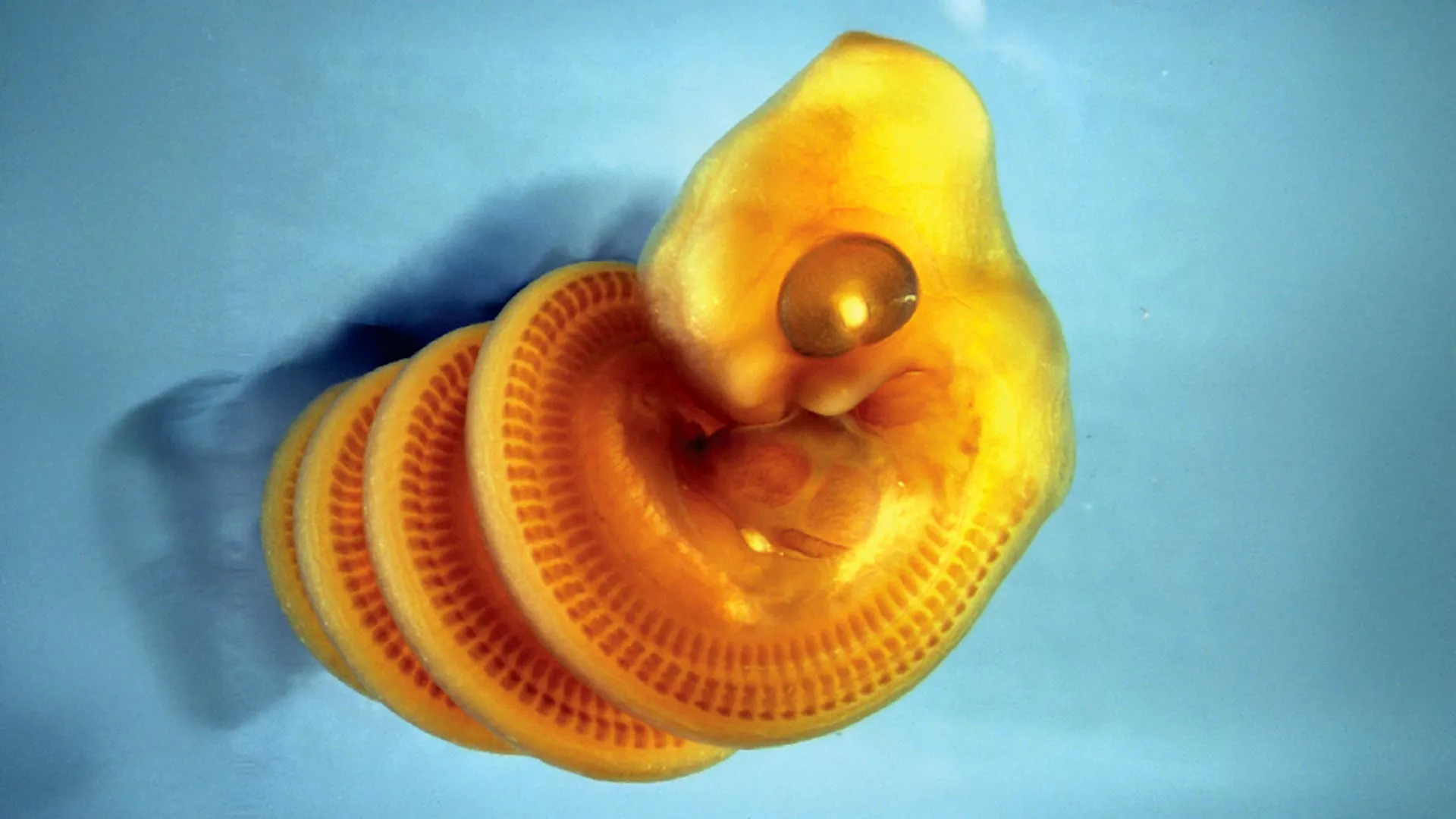
In the natural world, few developmental phenomena are as visually arresting as the tight, symmetrical coils of a snake embryo. For decades, evolutionary biologists have marveled at the elongated forms of snakes, yet the specific mechanical "instructions" that allow these creatures to pack their exceptionally long bodies into the confines of an eggshell remained an enigma.
A breakthrough study, recently published in the journal Current Biology, has finally provided a compelling explanation. An international team of researchers, led by scientists in Canada, has discovered that the iconic spiral shape of the snake embryo is not a result of deliberate muscle movement or complex genetic programming, but rather a direct byproduct of physical growth constraints—specifically, a "tethering" effect caused by the gut.
This finding does more than solve a long-standing mystery of squamate development; it provides a new, mechanical framework for understanding how biological spirals emerge in nature, from the looping human intestine to the delicate whorls of snail shells.
The Genesis of a Discovery: A Lockdown "Lightbulb" Moment
The story of this discovery is as much about human ingenuity under duress as it is about biological science. In early 2020, as the COVID-19 pandemic forced institutions into lockdown, Dr. Tetsuto Miyashita, an evolutionary biologist at the Canadian Museum of Nature, found himself working from his home office. Cut off from the physical specimens and laboratory equipment that typically drive his research, he was tasked with a unique challenge: identifying a research project that his students could conduct entirely remotely.
Dr. Miyashita, who had long harbored a fascination with asymmetries in animal forms—an interest inherited from his own PhD advisor—began to contemplate the visual data available in existing literature. "Every time I saw images of snake embryos in papers, I wondered whether they are right- or left-handed in their coiling," he recalls.
He tasked Alexandra Weber, then a student at Carleton University, and two undergraduate researchers at the University of Ottawa with a seemingly straightforward but Herculean project: to aggregate and analyze every available photograph of developing snake embryos from published research and museum databases. What began as a stop-gap project during a global health crisis quickly evolved into a statistically robust investigation that would eventually rewrite the understanding of snake embryology.
Chronology: From Observation to Anatomical Revelation
The research progressed in three distinct phases: initial data gathering, pattern recognition, and mechanical validation.
1. The Data Collection Phase
Over the course of their investigation, the team successfully compiled and analyzed images of more than 900 embryos across 39 distinct snake and limbless squamate species. By creating such a comprehensive dataset, the team ensured that their observations were not merely anomalies but representative of a fundamental biological process.
2. The Discovery of "Handedness"
As the team processed the images, a striking pattern emerged. During the first few weeks of development—a period when the embryos are essentially "limbless" and devoid of the muscular maturity required to move voluntarily—the snakes consistently exhibited a "dextral" coil. When viewed from head to tail, every single embryo displayed a right-handed spiral. This consistency indicated that a universal physical force, rather than behavioral choice, was dictating the shape of the embryo.
3. The CT Scan Breakthrough
To understand the "why" behind this right-handed bias, the team collaborated with Dr. Raul Diaz of California State University, Los Angeles. Utilizing advanced CT imaging, Dr. Diaz peered beneath the surface of the embryo’s skin, revealing a hidden anatomical structure. Inside the developing snake, the team discovered a "pillar" of gut tissue that remained attached to the yolk. This gut structure acted as a physical anchor, creating a mismatch in growth rates that forced the rapidly lengthening body to buckle into its characteristic right-handed spiral.
Supporting Data: The Mechanical Constraint Model
The team’s findings provide a compelling mechanical model for why snakes develop the way they do. The physical constraints are defined by three primary factors:
- Asymmetrical Growth Rates: The snake’s body must grow with extreme speed to reach its mature, elongated form. However, the gut—the internal organ system—grows at a significantly slower pace.
- The Tethering Effect: Because the gut is tethered to the yolk, it prevents the midsection of the embryo from lengthening at the same rate as the rest of the body. When a long, flexible object is pushed from both ends while being anchored in the middle, it inevitably buckles.
- Directional Bias: Because the yolk is consistently positioned on the left side of the embryo, the buckling motion is forced into a right-handed twist. This is a purely geometric result of the embryo’s spatial orientation relative to its nutrient source.
The study further explains the "recoil" observed in later stages. As the yolk is depleted and the embryo grows, the initial physical constraint weakens. Muscles begin to mature, and the embryo gains the physical space to shift. This is why, by the time of hatching, the strict right-handedness disappears, and a random distribution of left- and right-handed coils is observed.
Official Responses and Scientific Perspective
The research has been met with enthusiasm from the scientific community, particularly for its elegant simplicity.
"There is a touch of mystery to spirals, and we are only beginning to understand how these shapes are produced in animals," says lead author Alexandra Weber, now a graduate student in zoology at the University of British Columbia. Her work on the project has been cited as a masterclass in how observational research can lead to foundational biological insights without the need for expensive genomic sequencing or high-end laboratory equipment.
Dr. Miyashita emphasizes the philosophical impact of the study: "These puzzles beckon our curiosity. After all, spiral forms in nature have inspired human creations ranging from rotini pasta, to a barber’s pole or even portrayals of the biblical ‘Tower of Babel’."
For the team, the most satisfying aspect of the study is the demonstration that sophisticated biological structures do not always require "sophisticated" genetic explanations. While Hox genes and molecular signaling pathways are vital to development, sometimes the most profound answers are found in the basic physics of growth.
Broader Implications: A New Model for Biological Spirals
The implications of this research extend far beyond the study of snakes. The team believes their "mechanical constraint model" could serve as a blueprint for investigating other asymmetrical or spiral structures in the animal kingdom.
Expanding the Research Scope
The model suggests that researchers looking at the development of internal organs, shell formation in mollusks, or even the growth patterns of plant tendrils should look first at the mechanical tension between growing tissues. By identifying which structures are "tethered" and which are "lengthening," scientists may be able to predict the handedness of other biological spirals.
The Value of Simple Observations
Perhaps the most lasting legacy of this project is the reminder that curiosity, when paired with disciplined observation, is the most powerful tool in a scientist’s arsenal. At a time when biology is increasingly focused on big data and high-cost genomic studies, the "snake embryo project" serves as a poignant reminder of the value of classical morphology.
"We uncovered a snake’s secret with a startlingly simple approach," Dr. Miyashita notes. "Just scroll through an album of snake embryos and record which way they are coiled, and take a good look at their anatomy."
As the scientific team—comprising members from the Canadian Museum of Nature, UBC, Carleton, the University of Ottawa, CSULA, and the University of Helsinki—continues to refine this model, they hope it will inspire a new generation of biologists to look closer at the "simple" wonders of the natural world. The snake, once thought to be a creature of complex evolutionary mystery, has revealed itself to be a testament to the elegant, mechanical logic of nature.