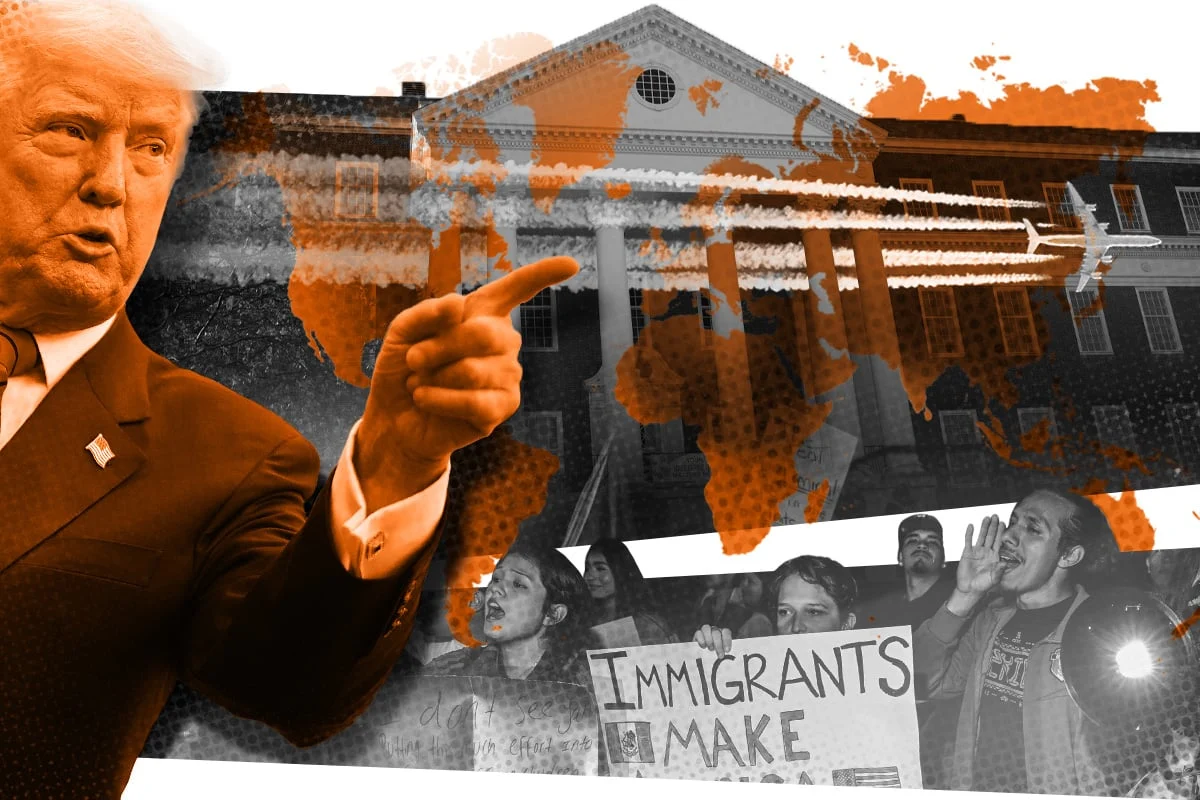
In a move that marks a seismic shift in American higher education policy, the U.S. Department of Homeland Security (DHS) has officially finalized a rule to dismantle the “duration of status” policy for international students. For nearly 50 years, students on F-1 and J-1 visas have been admitted to the United States for the length of their academic programs. Under the new directive, however, that open-ended admission will be replaced by a strict four-year cap, fundamentally altering the landscape for millions of international scholars and the institutions that host them.
The final rule, published recently in the Federal Register, mandates that international students must now secure government approval for extensions if their studies extend beyond a four-year window. The policy also introduces new, rigid constraints on a student’s ability to change majors or transfer institutions after arrival. Slated to take effect on September 15, the regulation represents the culmination of a long-standing effort by the Trump administration to exert tighter control over nonimmigrant populations, citing national security and the need for more robust vetting.
A Historical Departure: The End of "Duration of Status"
Since 1979, the "duration of status" (D/S) policy has served as the bedrock of international student enrollment in the U.S. Established to reduce the administrative burden on what was then the Immigration and Naturalization Service, the policy allowed students to focus on their academic pursuits without the anxiety of periodic visa re-applications, provided they maintained their legal status.
The shift announced this week reverses this long-standing precedent. DHS officials argue that the D/S policy created a “black hole” in the immigration system, where students could remain in the country indefinitely without interacting with federal oversight. According to department data, approximately 2,100 individuals who entered on F-1 visas between 2000 and 2010 remain in the country with that same status today.
“For decades, foreign students have been admitted into the U.S. indefinitely, allowing thousands to abuse our immigration system by perpetually enrolling in courses to avoid having to leave the U.S.,” DHS Secretary Markwayne Mullin stated during the announcement. “By implementing clear, finite limits on these visas, the United States is reclaiming its ability to properly screen, vet, and monitor individuals within our borders.”
Chronology: A Multi-Year Political Struggle
The push to end duration of status is not a new development, but rather a persistent policy goal of the Trump administration. During his first term, the administration attempted to implement a similar rule, only to see it struck down shortly after President Biden took office.
The proposal resurfaced in the summer of 2025, triggering a massive public outcry. The government received nearly 22,000 public comments—an overwhelming majority of which were in fierce opposition to the change. Despite the volume of opposition from university presidents, hospital administrators, and legal experts, the administration moved forward with the finalization of the rule this past week.
The following timeline highlights the progression of these restrictive measures:
- 1979: The original "Duration of Status" regulation is codified to streamline the admission of foreign students.
- 2020-2021: The first Trump administration proposes ending D/S; the policy is ultimately blocked following the transition to the Biden administration.
- Spring 2025: The current administration initiates a wave of status terminations within the Student and Exchange Visitor Information System (SEVIS).
- Summer 2025: The revised rule to cap student visas at four years is proposed, drawing 22,000 public comments.
- Fall 2025/Winter 2026: A sharp decline in international enrollment and new student visa issuances is reported, following reports of expanded social media screening and record-high rejection rates.
- September 15, 2026: The final rule is scheduled to take effect.
Supporting Data: The Academic Reality vs. Federal Policy
The primary contention among higher education leaders is that the four-year cap is fundamentally disconnected from the realities of modern academia. Data from the National Center for Education Statistics consistently shows that the average time to complete a bachelor’s degree in the U.S. now exceeds four years for many students.
The impact is even more pronounced for graduate education. Ph.D. programs in STEM fields, the humanities, and the social sciences frequently require five to seven years of research, dissertation writing, and laboratory work. Under the new rule, these students will be forced to apply for extensions, an process that critics argue is fraught with uncertainty.
Moreover, the government’s own data suggests that the "problem" of overstaying students may be statistically overstated. While the DHS points to a subset of 2,100 students from a decade-old cohort, international education advocates note that the total population of international students—numbering in the hundreds of thousands—is already heavily monitored through the SEVIS digital tracking system.
Official Responses and Political Polarization
The reaction to the policy has been deeply polarized along ideological lines. Republican legislators have largely championed the rule as a common-sense security measure. Missouri Senator Eric Schmitt praised the move as a long-overdue correction to the “forever student” phenomenon, arguing that it closes a significant loophole in the nation’s immigration framework.
Conversely, the academic and legal communities have reacted with alarm. Fanta Aw, CEO of NAFSA: Association of International Educators, described the policy as a “misguided and unnecessary” shift that injects a layer of bureaucratic hostility into a system that previously functioned with mutual benefit.
“The government is now inserting itself into academic decision-making,” Aw noted. “By penalizing students for changing majors or institutions, the administration is effectively discouraging the intellectual flexibility that is the hallmark of the American higher education system.”
The American Immigration Lawyers Association (AILA) went further, characterizing the move as an attempt to "dismantle the legal immigration system." AILA pointed out that the new requirements create redundant administrative hurdles that will likely exacerbate the already crippling backlog at U.S. Citizenship and Immigration Services (USCIS). With over 11.6 million pending cases, observers are skeptical that the agency has the capacity to process the "tsunami" of extension applications that will surely follow.
Implications for the Future of U.S. Research and Innovation
The long-term implications of this rule are multifaceted, impacting everything from institutional revenue to the nation’s competitive edge in research.
Economic and Academic Impact
International students contribute billions of dollars annually to the U.S. economy, not only through tuition but through their roles as research assistants, teaching fellows, and future members of the workforce. If top-tier talent begins to shun American universities in favor of nations with more stable and welcoming visa policies—such as Canada, the United Kingdom, or Australia—the loss of innovation will be felt across the American tech and medical sectors.
The "Chilling Effect"
Beyond the administrative burden, there is the “chilling effect.” The perception of the U.S. as a place where international students are under constant surveillance and at risk of abrupt visa revocation is already manifesting in the data. Fall 2025 enrollment figures showed a clear decline in international student participation, and new student visa awards dropped significantly.
The Risk of Discretionary Denials
One of the most pressing concerns for university international offices is the discretionary nature of the new extension process. Because the rule does not provide clear guidelines for what constitutes a “valid” reason for needing more than four years, there is a widespread fear that arbitrary denials will become the norm. Should a student be denied an extension, they would face the immediate termination of their legal status, forcing them to abandon years of research and investment.
Conclusion: A New Era of Uncertainty
As the September 15 implementation date approaches, universities across the country are scrambling to adjust their advising protocols to help students navigate this new, more restrictive reality. For thousands of students currently in the pipeline, the promise of an American education has been shadowed by a new layer of precarity.
While the administration maintains that the rule is a necessary tool for law enforcement and immigration control, the consensus among educators and advocates is clear: the cost of this policy may ultimately be the erosion of the very intellectual capital that has long solidified the United States as the global leader in higher education. As Zuzana C. Wootson of the Presidents’ Alliance on Higher Education and Immigration aptly put it, “At a time when international student enrollment is already declining, we should be welcoming the best and brightest—not erecting new barriers that limit opportunity and innovation.”