Thirty years ago, the cinematic landscape was dominated by a singular force: Arnold Schwarzenegger. By 1996, the Austrian Oak had already cemented his status as a global icon, having battled intergalactic hunters in Predator, faced down liquid-metal terrors in Terminator 2: Judgment Day, and navigated the mind-bending realities of Total Recall. When director Chuck Russell was tapped to helm Eraser, a high-stakes thriller about a U.S. Marshal specializing in the “erasure” of witnesses, he faced a daunting challenge: How do you reinvent a star who has already done everything?
As Eraser celebrates its 30th anniversary with a stunning 4K restoration, the film stands as a testament to a bygone era of practical stunt work, "hyper-reality" set pieces, and the sheer charisma of a peak-performance action lead.
The Genesis of an Action Icon
The road to Eraser was not a straight line. Chuck Russell, fresh off the massive success of the Jim Carrey vehicle The Mask, had initially been developing a swashbuckling project titled Captain Blood with Schwarzenegger. The two had built a professional rapport, with Schwarzenegger expressing admiration for Russell’s visual flair and his ability to blend genre elements seamlessly.
However, development on Captain Blood stalled, leaving the actor and director searching for a new venture. Schwarzenegger presented Russell with the script for Eraser, a Warner Bros. project that was primed for production. Russell saw an immediate opportunity to pivot the actor’s persona. Rather than focusing on Schwarzenegger as an unstoppable, singular engine of destruction, Russell wanted to frame him as a protector—a man whose job was to ensure survival, not just facilitate chaos.
“Eraser was a wonderful script,” Russell told Polygon during a retrospective interview. “All I did was make sure we had a few things I’d never seen before in an Arnold movie.”
A Chronology of Escalation
To elevate the film above the standard fare of the mid-90s, Russell utilized a three-pronged strategy of "action catnip." He sought to introduce elements that were visually arresting, technically innovative, and entirely absurd.
The Rise of the Railgun
Long before the term "railgun" became a staple of military tech blogs and competitive first-person shooters, Russell was obsessed with the concept. During pre-production, he discovered that while railguns were theoretically possible, they were relegated to massive, ship-mounted naval artillery.
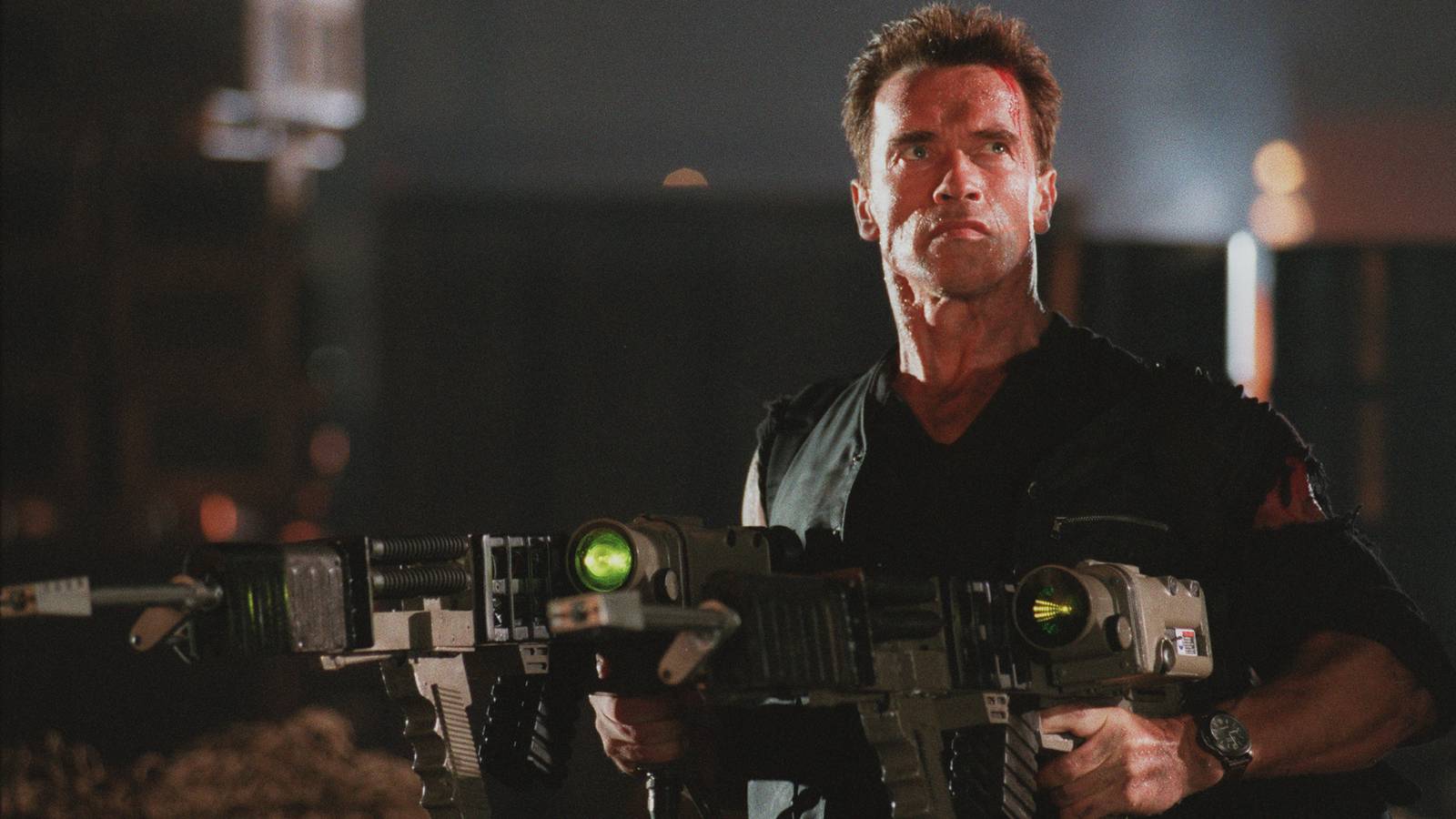
Russell’s creative leap was to miniaturize the technology. The result was the iconic, glowing dual-railguns wielded by Schwarzenegger in the film’s climactic showdown. By opting for "hyper-reality"—using glowing projectile trails and aggressive sound design—Russell ensured the weapons felt futuristic yet tactile. Years later, he received a quiet, unofficial nod of approval from sources within Naval Intelligence, confirming that his fictionalized design was surprisingly grounded in the principles of electromagnetic ballistics.

The Alligator Sequence
Perhaps the most memorable moment of the film—and one that epitomizes the "anything goes" spirit of 90s action—is the alligator attack. Borrowing a page from the tonal shifts in True Lies, where Schwarzenegger famously rode a horse into a hotel elevator, Russell wanted a moment of pure, unexpected spectacle.
The sequence, set in a zoo, provided the film with its most quotable line: “You’re luggage.” It was a moment of levity amidst the brutal betrayals that fueled the plot, proving that the film was self-aware enough to embrace its own insanity.
The Parachute Jump
If the railguns provided the fantasy, the climactic airplane sequence provided the grit. To this day, the freefall jump remains a masterclass in stunt cinematography. Russell employed a world-class team of skydivers who performed alongside the actors, carrying 35mm cameras into freefall.
“People forget there’s a cameraman pacing him the whole time when you’re actually both falling,” Russell explained. “There is CGI, but what you see is what we did. 90% of it.” By integrating rope rigs and real-world parachute maneuvers, the film achieved a level of kinetic energy that modern, green-screen-heavy productions struggle to replicate.

Supporting Data: The Craft of Practical Effects
The enduring appeal of Eraser lies in its commitment to "stuntcraft." In 1996, the industry was at a crossroads between traditional practical effects and the burgeoning world of computer-generated imagery. Eraser hit the sweet spot of this transition.
- Practical Stunt Integration: The parachute sequence required over 100 jumps to capture the necessary footage.
- Weapon Design: The railguns were custom-built to be bulky and cumbersome, lending weight to Schwarzenegger’s movements during the final battle.
- The "Schwarzenegger Factor": The actor’s willingness to perform on rope rigs and endure grueling physical conditions ensured that the audience felt the danger. As Schwarzenegger noted, the physical performance was integral to the audience’s suspension of disbelief.
Official Responses and Industry Legacy
The legacy of Eraser is not merely that of a successful box-office hit, but of a blueprint for the modern thriller. By pushing the boundaries of what a "hero" could do—moving from the invincible terminator to the tactical guardian—Schwarzenegger managed to sustain his dominance for another decade.
Industry critics often point to Eraser as the moment when the "Arnold Movie" evolved. It moved away from the darker, more nihilistic tone of the 80s into a polished, high-budget aesthetic that would define the late 90s. The film’s success paved the way for more tech-heavy, gadget-driven action films that would dominate the early 2000s.
Implications for Modern Cinema
The 4K re-release of Eraser serves as a poignant reminder of what is often missing in today’s landscape of digital-first filmmaking. The "hyper-reality" Russell championed is fundamentally different from modern CGI saturation. Because the film relied on physical interaction with the environment—whether it was an actual alligator in a tank or a cameraman falling at terminal velocity—the stakes felt tangible.
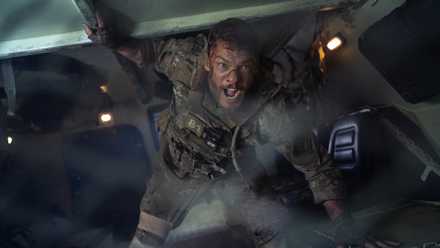
As audiences return to the film, they are witnessing a masterclass in pacing and stunt design. The implications for current action filmmakers are clear: audiences crave the "real." The success of recent films that lean into practical stunts proves that the philosophy Chuck Russell applied to Eraser in 1996 is just as vital today.
Conclusion: Why We Still Watch
Thirty years later, Eraser remains a touchstone for fans of high-octane entertainment. It is a film that never apologizes for its excesses, instead leaning into them with a level of craft that elevates the absurdity into art. Whether it is the glow of the railguns, the tension of the parachute drop, or the sheer, undeniable charisma of Schwarzenegger at the height of his powers, Eraser continues to hold its own.
As we revisit the film in its remastered 4K format, it is clear that its "erasure" from the public consciousness was never a possibility. It is, and remains, a cornerstone of 90s action cinema—a reminder that when you combine a visionary director with an icon of the screen, the results can stand the test of time, gravity, and even the occasional alligator.
The 30th Anniversary 4K Blu-ray edition of Eraser is available now, featuring restored visuals and behind-the-scenes insights into the production that redefined the genre.