By [Your Name/Journalistic Desk]
In a landmark moment for Philadelphia’s medical research landscape, the University of Pennsylvania’s Perelman School of Medicine (Penn Medicine) announced this week that it has received a transformative $50 million gift from Stanley C. Middleman. The donation is set to serve as the cornerstone for a new research infrastructure designed to bridge the gap between laboratory discovery and patient-facing clinical therapies.
The gift establishes two distinct, yet deeply integrated pillars: the Middleman Center at Penn Medicine, a state-of-the-art research facility, and the Middleman Fund, a specialized financial engine dedicated to accelerating the commercialization of high-impact medical treatments.
The Genesis of the Gift: A Philadelphia Philanthropist’s Vision
Stanley C. Middleman, the founder and CEO of Freedom Mortgage, has long been a fixture in the Philadelphia business community. While his philanthropic footprint has previously touched institutions like Temple University—his alma mater—and the Children’s Hospital of Philadelphia, this $50 million contribution to Penn Medicine represents his most significant investment in the future of human health to date.
For Middleman, the decision to partner with Penn was rooted in a desire to catalyze tangible, real-world outcomes. "I was born and raised in Philadelphia, and I’m proud to support Penn Medicine and the extraordinary work being done there to advance medicine and improve people’s lives," Middleman said in an official statement. "My hope is that the Middleman Fund will fuel the development of lifesaving therapies and new approaches to treating patients, and that the Middleman Center will bring together the people and ideas to make those breakthroughs possible."
Structural Transformation: The New Middleman Center
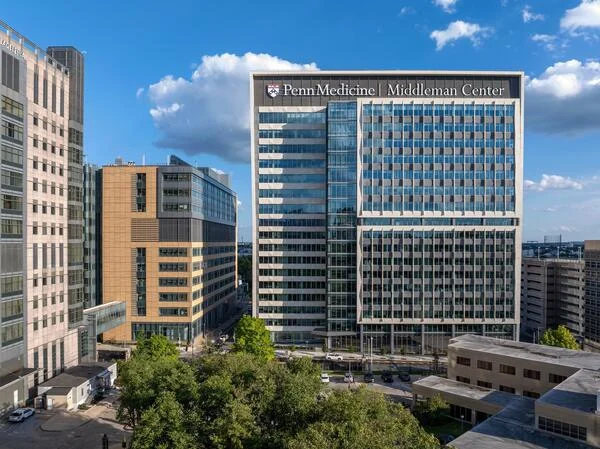
The physical manifestation of this gift will be housed within a recently expanded, 15-story building on the Penn Medicine campus. Rebranded as the Middleman Center, the facility is designed to foster a "collision space" environment where researchers from disparate disciplines—immunology, infectious disease, and oncology—can share resources and insights.
State-of-the-Art Infrastructure
The facility has undergone extensive retrofitting to meet the needs of 21st-century medicine. Key features include:
- Advanced Wet Labs: Flexible, open-concept laboratory spaces designed to support high-throughput experimentation.
- Autoimmunity Hub: A dedicated floor focused on the burgeoning field of immunotherapeutics, aiming to unravel the mechanisms behind chronic autoimmune conditions.
- High-Containment Biosafety Lab: A specialized, secure environment optimized for the study of infectious disease specimens, ensuring that Penn’s researchers can operate at the cutting edge of pathogen research while maintaining the highest safety standards.
The architectural layout of the Middleman Center is intentional. By consolidating these high-tech labs into a single, cohesive vertical campus, Penn Medicine intends to reduce the "silo effect" that often hampers progress in academic research.
The Middleman Fund: Accelerating the "Bench-to-Bedside" Pipeline
Perhaps the most critical component of the $50 million gift is the establishment of the Middleman Fund. In the current pharmaceutical and biotechnological landscape, a phenomenon known as the "Valley of Death" frequently traps promising research. This occurs when academic discoveries have significant potential but lack the funding, regulatory expertise, or commercial infrastructure to move from a petri dish into clinical trials.
The Middleman Fund is designed to serve as a bridge. By providing the capital necessary for early-stage development, the fund aims to de-risk projects, making them more attractive to larger biotech partners or allowing them to spin out as independent startups. This is not merely an endowment for general research; it is a strategic investment vehicle intended to bring life-saving therapies to the market with greater speed and efficiency.
Implications for the Future of Medicine
The infusion of $50 million into Penn’s research apparatus comes at a pivotal time for global health. The post-pandemic era has underscored the necessity for rapid response capabilities in infectious disease, while simultaneously highlighting the massive potential of mRNA technology and CAR-T cell therapy—fields where Penn Medicine has historically been a global leader.
Addressing Serious Illnesses
The research priority areas—cancer, autoimmune diseases, and infectious diseases—share a common thread: the immune system.
- Oncology: Leveraging the center to refine precision medicine and targeted cancer therapies.
- Autoimmune Diseases: Investigating the root causes of systemic conditions that currently affect millions.
- Infectious Diseases: Maintaining a state of readiness for emerging pathogens.
Penn President J. Larry Jameson, a staunch supporter of the partnership, emphasized the broader impact of the gift. "Middleman’s gift creates an extraordinary environment for discovery—not just sparking ideas but seeing them all the way through to the moments where lives change for the better," Jameson noted.
Chronology of the Partnership
- Pre-2024: Stanley C. Middleman engages in quiet philanthropy across Philadelphia, primarily focusing on educational initiatives and pediatric care.
- Early 2024: Discussions between Middleman and the Penn Medicine leadership team commence regarding the university’s long-term strategy for clinical translational research.
- September 2026 (Announced Date): The $50 million commitment is finalized and publicly unveiled.
- Post-Announcement: Renovation of the 15-story facility is completed, and the Middleman Center begins its transition into full operation.
- Future Outlook: The Middleman Fund is expected to begin reviewing its first slate of candidate research projects in the coming fiscal year.
Supporting Data and Economic Impact
While the $50 million gift is a significant capital influx, its true value is found in the "multiplier effect." According to data from the National Institutes of Health (NIH) and academic economic studies, every $1 million invested in translational medical research can generate up to $2.5 million in follow-on economic activity, including the creation of high-skilled jobs, the filing of patents, and the eventual revenue generated by new medical products.
By accelerating the path from the lab to the clinic, the Middleman Center is expected to bolster Philadelphia’s status as a "Cellicon Valley." The region has been steadily growing as a global hub for life sciences, and the addition of the Middleman Center provides a necessary upgrade to the physical infrastructure required to support this expansion.
Official Responses and Stakeholder Sentiment
The reaction within the academic and medical community has been overwhelmingly positive. Colleagues and stakeholders view the gift not just as a financial boon, but as a vote of confidence in Penn Medicine’s research trajectory.
"The Middleman Center will become a focal point for the brightest minds in our field," said a department lead at the Perelman School of Medicine. "Having the financial backing to pursue ‘high-risk, high-reward’ ideas—which is what the Middleman Fund allows—is exactly what we need to tackle the most stubborn diseases of our time."
A New Era for Penn Medicine
The establishment of the Middleman Center and the Middleman Fund represents a sophisticated approach to modern philanthropy. Stanley C. Middleman has moved beyond the traditional model of naming rights; he has actively participated in the creation of a systemic solution to the problem of medical stagnation.
As the center opens its doors, the focus now shifts to the scientists and researchers who will occupy the labs. The pressure to innovate is high, but so is the potential reward. For patients suffering from incurable cancers or debilitating autoimmune conditions, the Middleman Center represents something far more valuable than a building or a fund: it represents the possibility of a future where these illnesses are no longer considered life-altering, but rather, manageable or even curable.
In the final analysis, this $50 million investment is a testament to the power of private-public partnership. It ensures that Philadelphia remains at the forefront of the global biomedical revolution, proving that when business leadership and academic excellence align, the result is nothing short of a paradigm shift in human health.