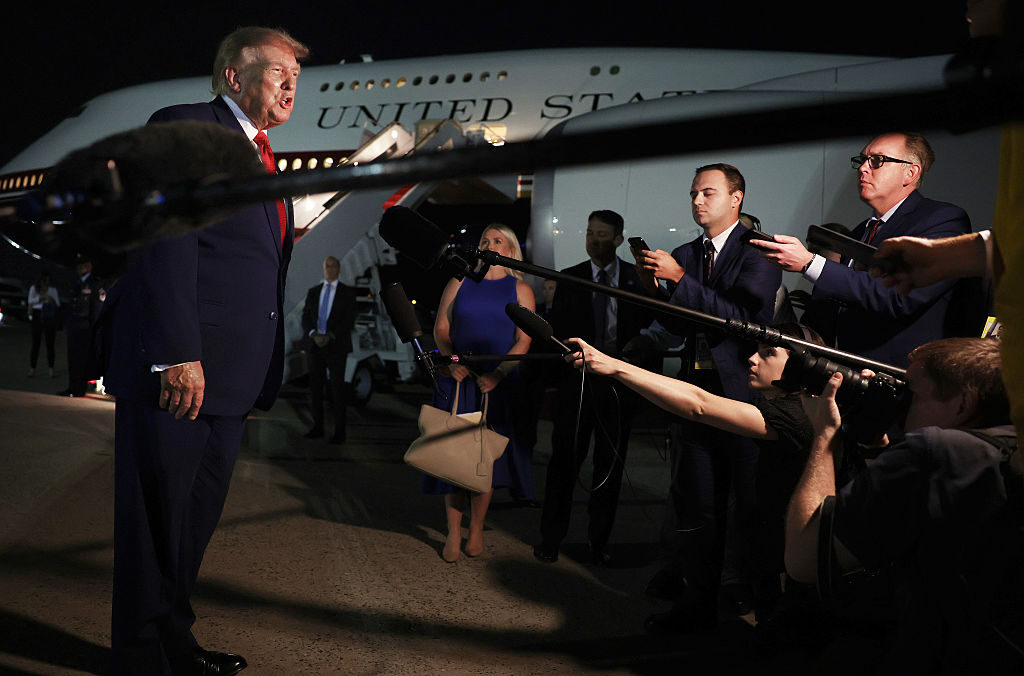
GENEVA, Ohio, and JOINT BASE ANDREWS, Md. — President Donald Trump offered a rare public acknowledgment of the constitutional limitations restricting executive power, stating that the law presents a formidable barrier to any potential third-term presidential bid in 2028. The remarks were delivered late Tuesday on the tarmac at Joint Base Andrews following his attendance at the finale of the "Patriot Games" in Geneva, Ohio.
The day’s events captured the duality of Trump’s post-congressional recess schedule: an afternoon spent inside a high-energy, televised spectacle designed to celebrate the nation’s upcoming 250th anniversary, followed by late-night press inquiries regarding constitutional boundaries, looming midterm elections, and escalating foreign policy tensions.
Main Facts
- Constitutional Acknowledgment: President Donald Trump cited the 22nd Amendment as a definitive barrier to seeking a third presidential term in 2028, telling reporters at Joint Base Andrews that while supporters frequently encourage another run, "the law is very strong."
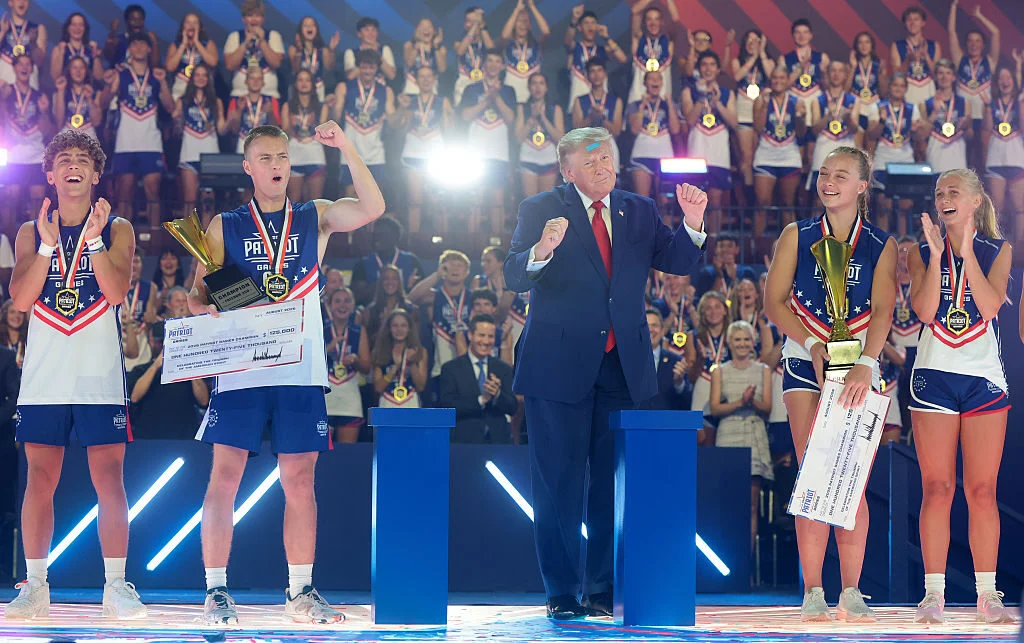
- Patriot Games Finale: Trump spent Tuesday afternoon at SPIRE Academy in Geneva, Ohio, watching the final round of the Patriot Games—an athletic competition created as part of the nation’s upcoming Semiquincentennial (250th birthday) celebrations. The event featured high school athletes navigating a complex obstacle course for scholarship funding.
- South Carolina Senate Runoff: Trump reaffirmed his endorsement of Darline Graham—sister of the late Sen. Lindsey Graham—in the South Carolina Republican Senate runoff against Rep. Ralph Norman, citing familial legacy despite Norman’s 100 percent voting record in support of Trump’s positions during the 2025 legislative session.
- Geopolitical and Midterm Pressures: The public appearance followed recent national polling pressures facing the administration ahead of the midterm cycle, as well as reporting regarding heightened security protocols during last month’s NATO summit in Turkey amid ongoing tensions with Iran.
Chronology of Events: From the Ohio Spectacle to Andrews Tarmac
Afternoon: The Patriot Games in Geneva, Ohio
With Congress departing Washington for its annual August recess, President Trump traveled to Northeastern Ohio to attend the conclusion of the Patriot Games, hosted at SPIRE Academy—a private facility in Geneva known for combining elite athletic training with high-level academics.
The made-for-television event, produced for an upcoming Thursday night broadcast special on ABC and ESPN, featured high school athletes taking on a grueling obstacle course. Competitors navigated upper-body challenges—including monkey bars, ninja rings, and a heavy glass partition—before climbing a steep ramp with an integrated climbing apparatus at its crest.
Trump took his seat in the presidential box alongside internet sports media personality and ESPN commentator Pat McAfee. The indoor arena, filled with an invited audience, was marked by distinct "Make America Great Again" aesthetics, featuring red, white, and blue lighting schemes reminiscent of classic broadcast sports entertainment shows.
Trump entered the humid facility to pyrotechnics and thematic music. Spectators reacted enthusiastically; one attendee loudly compared the president to professional basketball legends, noting he exhibited "that Michael Jordan glow" and "Larry Bird energy." Throughout the competition, Trump largely remained static in his box, viewing the action via a large monitor situated opposite his seating area while occasionally interacting with cheering audience members.
Following the competition, Trump participated in the trophy presentation, distributing large gold trophies and scholarship funds before performing his signature dance to the song "Y.M.C.A."
Evening: Tarmac Briefing at Joint Base Andrews
Later Tuesday evening, the presidential party boarded Air Force One—a Boeing aircraft gifted by the Qatari government—for the approximately one-hour flight back to the national capital region.
Upon landing at Joint Base Andrews in Maryland, Trump exited the aircraft and approached the waiting press pool on the tarmac. What began as a brief recap of the Ohio trip quickly shifted into a question-and-answer session covering executive power, primary endorsements, and international security.
Pressed by reporters regarding whether his previous public remarks teasing a potential 2028 campaign were serious, Trump pointed directly to the legal framework established by the U.S. Constitution.
"Everybody asks me that question. And you know that the law’s very strong on that. I’d love to run, but the law is very strong," Trump said. "I get asked by every, well, even tonight, they’re screaming at the event, ‘2028!’ No, everybody wants me to do it, but the law is very strong."
When asked point-blank if his response constituted a definitive refusal to consider a future bid, the president did not directly answer, choosing instead to address questions regarding international relations and domestic political races.
Supporting Data and Political Context
The Legal Barrier: The 22nd Amendment
The constitutional constraint referenced by the president is rooted in the 22nd Amendment to the U.S. Constitution, which was passed by the 80th Congress in March 1947 and officially ratified by the requisite three-fourths of states in February 1951.
The legal text explicitly limits presidential terms:
"No person shall be elected to the office of the President more than twice, and no person who has held the office of President, or acted as President, for more than two years of a term to which some other person was elected President shall be elected to the office of the President more than once."
As the second president in American history to serve nonconsecutive terms—following Grover Cleveland in the late 19th century—Trump’s election victory in 2024 marked his second term in office, rendering him legally ineligible for a third term under existing constitutional law.
       HISTORICAL CONTEXT: PRESIDENTIAL TERM LIMITS
┌─────────────────────────────────────────────────────────┐
│ March 1947: Passed by the 80th U.S. Congress           │
│ February 1951: Official ratification by the States      │
├─────────────────────────────────────────────────────────┤
│ KEY PROVISION:                                          │
│ "No person shall be elected to the office of the        │
│ President more than twice..."                           │
└─────────────────────────────────────────────────────────┘
The South Carolina Primary Landscape
The president’s return to Washington also highlighted strategic friction points within the Republican Party ahead of upcoming primary runoffs.
In South Carolina, a competitive GOP primary runoff has emerged between Sen. Darline Graham and Rep. Ralph Norman. Graham was appointed to the Senate to fill the vacancy created by the sudden death of her brother, long-serving Sen. Lindsey Graham.
| Candidate | Current Role | Key Political Distinction | 2025 Legislative Alignment with Trump |
|---|---|---|---|
| Darline Graham | U.S. Senator (Appointed) | Sister of late Sen. Lindsey Graham; Endorsed by Trump | N/A (Recent Appointee) |
| Ralph Norman | U.S. Representative | Four-term House Member; Freedom Caucus member | 100% Alignment (per CQ Roll Call voting analysis) |
Despite Norman’s flawless voting record in support of administration-backed measures during 2025, Trump reaffirmed his primary endorsement of Graham, pointing to family legacy as a primary factor.
Official Responses and Key Statements
On the 2028 Reelection Teases
Responding to queries on the tarmac at Joint Base Andrews regarding public enthusiasm for a third term, President Trump framed his position as a concession to legal realities rather than a lack of political interest:
"Everybody asks me that question. And you know that the law’s very strong on that. I’d love to run, but the law is very strong… No, everybody wants me to do it, but the law is very strong."
On the Patriot Games and Ohio Visit
Trump expressed satisfaction with the execution of the Patriot Games, describing the event as a success for the administration’s broader Semiquincentennial initiative:
"It was a tremendous, tremendous success. Great young athletes, the future of our country. And we had a great time in Ohio, a fantastic time in Ohio."
On the South Carolina Senate Endorsement
Addressing the dynamics of the South Carolina primary race and his decision to endorse Darline Graham over Rep. Ralph Norman, Trump noted:
"Well, she just called me to thank me for the endorsement, and it’s great that she’s doing so well. And she’s a very good woman. And she’s got good genetics, because she’s related to Lindsey, who [was] a real professional… I’m gonna call her right now."
Acknowledging the strong conservative credentials of Norman and other primary contenders, Trump added:
"Just so you understand, I like the other people in the race also. They’re all ‘Trump.’ I mean, they’re all ‘Trumpers.’ But, you know, I endorsed her. I think she’s great… It’s really in honor of her brother. And she’s really a very smart woman. You know, Lindsey loved his sister more than anything else. He would tell me about his sister, that she’s just outstanding."
Trump confirmed plans to travel to South Carolina to campaign personally on behalf of Graham prior to the runoff election.
Strategic Implications and Future Outlook
Republican Succession Planning
Trump’s formal recognition of constitutional term limits carries significant implications for the internal dynamics of the Republican Party. While the president has frequently used ambiguous language regarding his political future during public rallies, explicitly acknowledging the constraints of the 22nd Amendment signals the eventual opening of the 2028 Republican primary field.
Party strategists anticipate that clear acknowledgment of these legal boundaries will accelerate behind-the-scenes maneuvering among prospective 2028 contenders, including cabinet officials, prominent governors, and congressional leaders seeking to position themselves as policy heirs to the MAGA movement.
Midterm Primary Dynamics and Party Loyalty
The endorsement of Darline Graham over Ralph Norman illustrates the ongoing evolution of executive patronage within congressional primaries. Norman, a prominent member of the House Freedom Caucus, maintained a perfect legislative alignment score with the administration throughout 2025.
By prioritizing personal relationships and legacy honoring over legislative voting records, Trump’s endorsement strategy demonstrates that political capital during primary cycles may be awarded based on personal loyalty and strategic alliances rather than pure voting history alone.
Executive Focus During Congressional Recess
With the House and Senate officially adjourned for the August recess, executive operations face a temporary shift away from legislative negotiations toward campaign travel, executive actions, and foreign affairs.
However, external pressures remain elevated. The administration continues to navigate complex security challenges—evidenced by recent covert logistics adjustments during international summits in Turkey—alongside international tensions involving Iran. As the midterm election cycle approaches, the administration must balance populist public events like the Patriot Games with pressing geopolitical issues and structural party organization.