
By Ford James
June 30, 2026
The perennial struggle against cheaters in first-person shooters (FPS) has long been defined by an escalating "arms race" between developers and exploiters. For decades, the industry has relied on signature-based detection, kernel-level drivers, and intrusive third-party software to keep the playing field level. However, as hacks become increasingly sophisticated—moving toward hardware-level spoofing and AI-assisted aimbots—many developers are finding that traditional anticheat measures are failing to keep pace.
Bulkhead, the studio behind the upcoming tactical shooter Wardogs, is proposing a paradigm shift. According to CEO Joe Brammer, the most effective tool to combat unfair play isn’t a digital shield, but a financial ledger. By treating in-game currency as a diagnostic tool, Bulkhead intends to turn the economy into a high-fidelity anticheat mechanism.
The Evolution of the Anticheat Arms Race
To understand the novelty of the Wardogs approach, one must look at the current industry standard. Most modern, high-fidelity FPS titles have moved toward hardware-level protections. This includes mandates for Secure Boot and TPM 2.0, which aim to ensure the integrity of the PC’s operating environment. Wardogs will implement these industry-standard protections, as confirmed by Brammer, acknowledging that there is no single "silver bullet" for security.
However, kernel-level anticheat software is often met with resistance from the player base due to privacy concerns and system stability issues. Furthermore, professional cheat developers are constantly evolving, creating "DMA" (Direct Memory Access) devices that bypass the CPU’s restrictions entirely. Because of this, Bulkhead has concluded that while technical barriers are necessary, they are insufficient on their own.

The "Cash as Anticheat" Philosophy: A New Frontier
The core of Bulkhead’s strategy lies in the Wardogs metagame economy. In this title, every tactical decision—from securing an objective to reviving a teammate—is tied to the acquisition and expenditure of in-game currency. This creates a quantifiable stream of data that, according to Brammer, mirrors the behavioral analysis used by retail giants to detect fraud.
"The nice thing about cash is we can clearly see abnormal behavior," Brammer explained. "What we see is probably very similar to what supermarkets see: people are very predictable in how they both spend and treat their money. So we can quickly start to map out what is an unusual behavior and what isn’t."
By monitoring the "velocity" of money—how fast a player earns, how they spend it, and the patterns of their transactions—Bulkhead aims to identify bad actors based on their output rather than just their input.
Chronology of Economic Exploitation in FPS Titles
The concern regarding in-game economies is not unfounded. Over the past decade, the industry has seen several high-profile titles struggle to maintain economic integrity:
- 2020-2022 (The Rise of Extraction Shooters): As the "extraction shooter" genre gained popularity, developers realized that currency wasn’t just a reward; it was a target. Players began utilizing "duping" glitches and bot-farming to inflate their wealth, effectively breaking the game’s progression curve.
- 2023 (The Arc Raiders Lesson): High-profile titles like Arc Raiders highlighted the fragility of economy-based progression. Despite numerous patches, duplication glitches persisted, with hackers constantly finding new ways to exploit the "expedition" mechanics.
- 2024-2025 (The Era of AI-Assisted Farming): Developers began noticing automated scripts that could mimic human movement while farming currency, a practice that is notoriously difficult to catch with traditional anticheat software, as the inputs look "natural."
- 2026 (The Wardogs Shift): Bulkhead signals a pivot toward proactive economic monitoring, utilizing the "diminishing returns" model to discourage repetitive, non-organic behavior.
Supporting Data: Diminishing Returns as a Deterrent
One of the most innovative aspects of Wardogs is the implementation of "diminishing returns" on actions. This is designed to combat "boosting"—the practice where players coordinate to farm kills or revives to artificially inflate their wealth.

Brammer provided a clear example: "If someone shoots me and I get revived, that person gets $1,000. If I get shot by the same person again, the sniper, I’m like, ‘You got me again, for god’s sake,’ but I can be revived again. That person gets $800, then $600, and so on. It goes down anyway because that’s not a fun gameplay loop for anyone."
This system serves a dual purpose. First, it prevents players from creating infinite money loops. Second, it acts as a "tripwire" for the developers. When the system detects a player attempting to bypass these diminishing returns—or exploiting the system despite them—it provides clear, forensic evidence of intentional abuse. As Brammer noted, "If you want to sit in a server and abuse that with a friend, sure. You won’t make that much money, we can see it, and we’ll ban you."
Implications for the Competitive Landscape
The implication of this strategy is a potential shift in how developers view "cheating." In the past, cheating was defined almost exclusively by software modifications (wallhacks, aimbots). In Wardogs, "cheating" also encompasses economic exploitation. This broadens the scope of moderation, forcing the development team to think more like economists and data scientists.
Transparency and Community Trust
By openly discussing the use of economic data to catch cheaters, Bulkhead is attempting to build trust with a player base that is often skeptical of opaque, "black box" anticheat software. If players know that their economic behavior is being tracked, it acts as a deterrent. Furthermore, this approach allows for more nuanced moderation. Rather than issuing a blanket ban based on a shaky heuristic, the studio can review the transaction history of an account, leading to fewer false positives.
The "Dad Gamer" Factor
As noted in our wider interview with Brammer, Wardogs is specifically designed to respect the time of "dad gamers"—players with limited time who need a progression system that feels meaningful. If the economy is ruined by bots and exploiters, the game ceases to respect that time. By protecting the currency, Bulkhead is effectively protecting the player experience for those who cannot grind for hours on end.
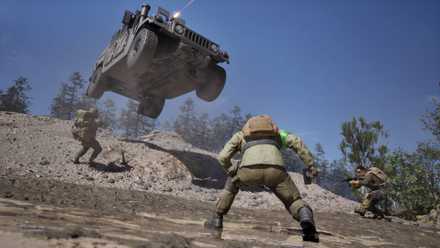
The Future of Anti-Exploit Design
Is this the final solution to the cheating epidemic? Likely not. There will always be a segment of the population that seeks to break the rules, and as the economy becomes a focal point of Wardogs, it will inevitably become the primary target for malicious actors.
However, by integrating economic monitoring into the foundation of the game, Bulkhead is moving the industry toward a more holistic view of security. Instead of focusing solely on the "how" (the software used to hack), developers are now looking at the "why" and the "what" (the profit motive and the resulting data).
If Wardogs can successfully differentiate between an organic "lucky streak" and an exploited "infinite money glitch," it may set a new standard for the genre. In the high-stakes world of modern FPS games, the ability to follow the money may prove to be the most powerful weapon a developer has in their arsenal.
As Brammer succinctly puts it: "Cash is the best anticheat." Whether that holds true when the game launches later this year remains to be seen, but the industry is watching closely. For now, the message to potential cheaters is clear: if you try to game the system, the system is designed to catch you.