The automotive world operates under a strict, unyielding march toward electrification and downsizing. For most manufacturers, the transition to smaller, turbocharged, or hybrid-assisted powertrains is not a choice—it is a survival mandate. Yet, in the quiet, historic ateliers of Molsheim, France, Bugatti has chosen a different path. Following the emotional conclusion of the legendary W16 engine’s two-decade reign, the brand has executed a move that defies conventional logic: it has replaced its icon with an even more ambitious, naturally aspirated 8.3-liter V16.
This is not merely an engineering update; it is a profound statement of defiance in an era of homogenization. As the final Mistral rolled off the production line, closing the book on the era defined by the Veyron and the Chiron, Bugatti unveiled the Tourbillon—a hypercar that proves, in the high-stakes world of multi-million dollar machinery, the "irrational" remains the ultimate luxury.
The End of an Era: The W16 Legacy
For twenty years, the W16 engine was the beating heart of modern Bugatti. Since its introduction in the Veyron, the quad-turbocharged 8.0-liter colossus became the gold standard for internal combustion performance. It was a masterpiece of packaging, essentially mating two V8s on a common crankshaft to achieve power outputs that transitioned from "shocking" to "unfathomable."
The production of the final W16—housed within the open-top Mistral—was more than a factory milestone; it was the passing of a titan. Having powered the Veyron, the Chiron, the Divo, the Centodieci, and the track-only Bolide, the W16 defined the 21st-century hypercar. When the final unit was completed, the industry expected a pivot to pure electric propulsion. Instead, Bugatti returned to the drafting board with a singular goal: to build a combustion engine that honored the past while mastering the future.
The Tourbillon: A V16 Reborn
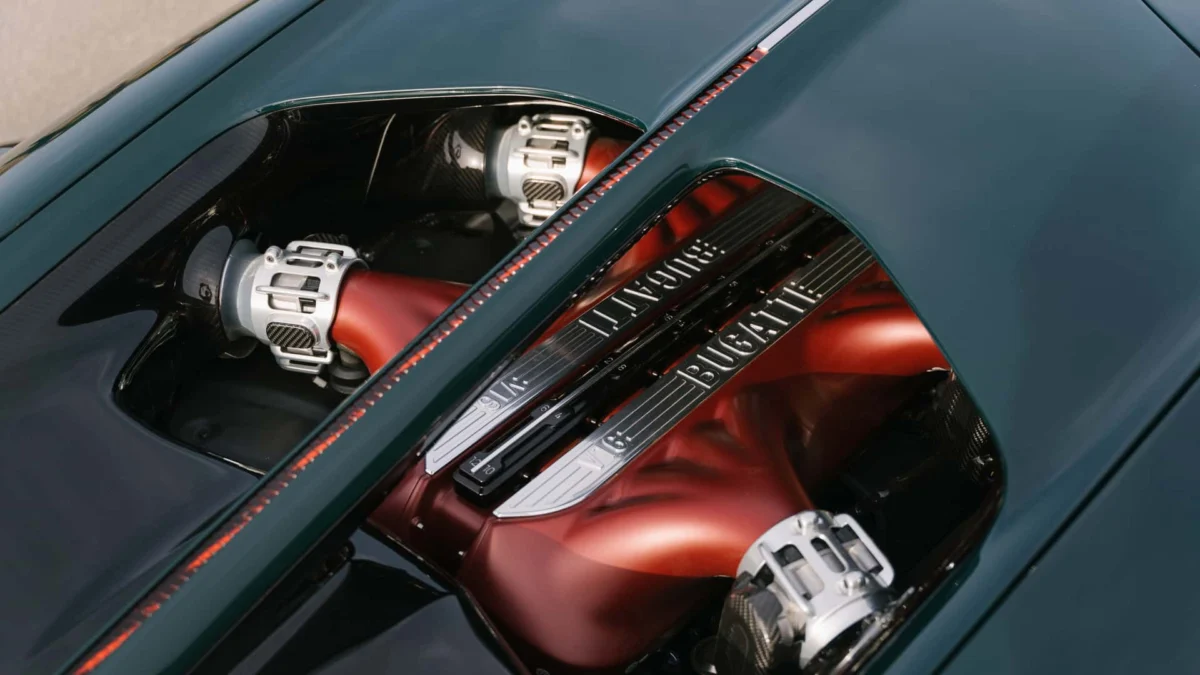
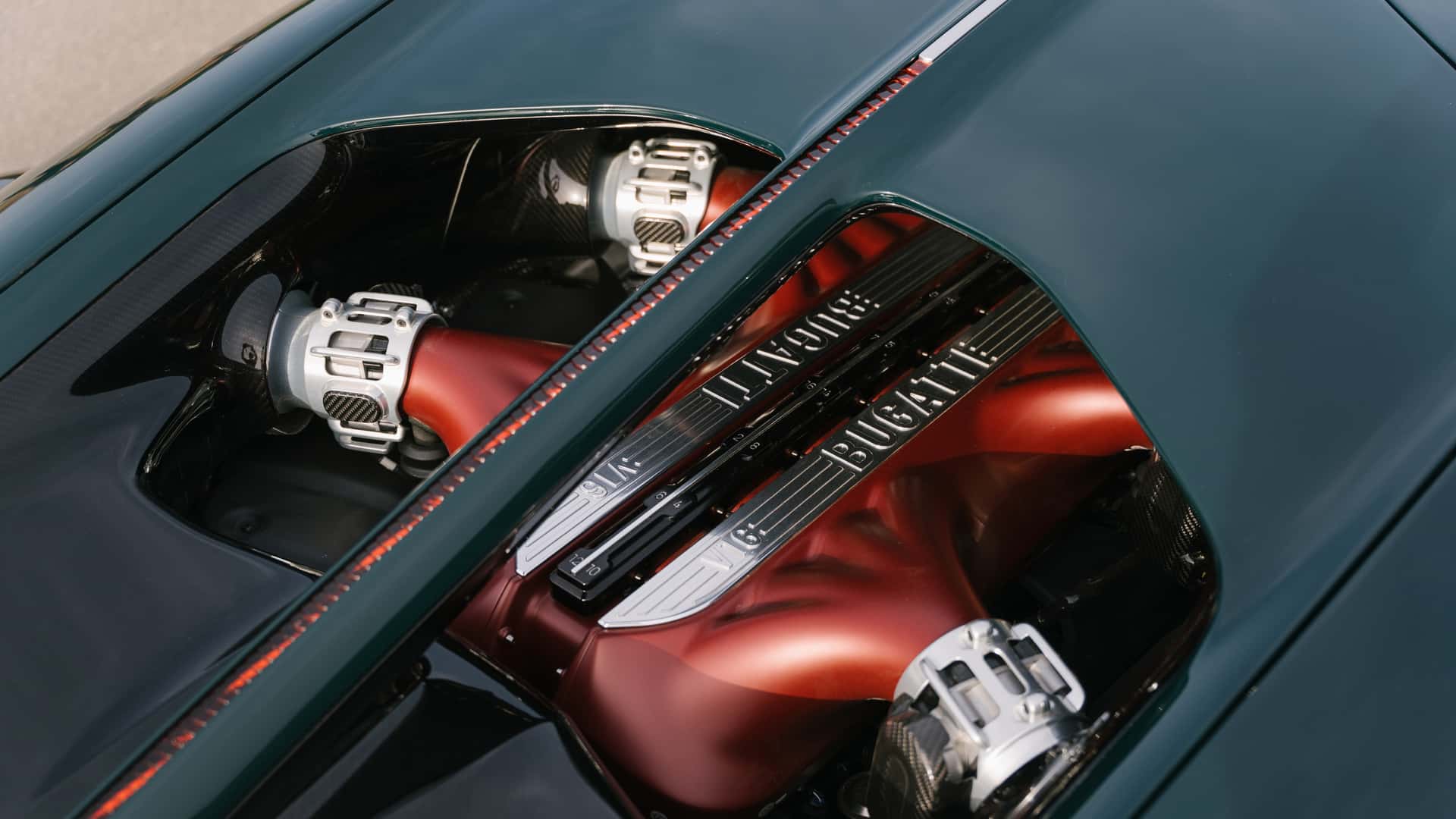
The Bugatti Tourbillon, announced as the spiritual successor to the Chiron, introduces an 8.3-liter naturally aspirated V16 engine. Co-developed with the legendary British engineering firm Cosworth, this powertrain is a departure from the forced-induction philosophy of its predecessors.
With a 9,000 rpm redline and a staggering 1,000 horsepower output from the engine alone (augmented further by an electric hybrid system), the Tourbillon’s engine is a work of high-frequency art. Unlike the heavy, low-revving surge of the quad-turbo W16, the new V16 is designed to be a high-revving, spine-tingling experience. It is a technical tour-de-force that requires the precision of a Swiss watchmaker—hence the name "Tourbillon"—to manage the sheer kinetic energy produced by sixteen cylinders moving in concert at such velocity.
Engineering the Soundtrack: Beyond the Artificial
In modern vehicle development, acoustic character is often manufactured. With emissions and noise regulations tightening globally, many performance brands resort to "sound enhancement"—digital files played through interior speakers to mimic the growl of a powerful engine.
Bugatti has taken the harder, more expensive route. In a recent technical breakdown, the engineering team revealed the thousands of hours spent in simulation to perfect the engine’s natural "voice." The objective was to maintain the authentic, mechanical, and slightly "dirty" character of a Bugatti, even while adhering to strict noise-homologation limits.
"Bugatti, from a sound perspective, has never had a very clean-sounding engine," the lead engineers noted. "It has always been a little bit dirty and raw, so we decided to keep that as one of the key points of the sound."
To achieve this without artificial trickery, engineers focused on the intake and exhaust geometry. The V16 breathes through a sophisticated exhaust system featuring eight individual outlets, a configuration that serves as both an aesthetic signature and a functional acoustic filter. By fine-tuning the gas pulse frequencies within the exhaust manifolds, they created a sound profile that is civilized at low RPMs for cruising, yet transforms into a feral, symphonic wail as it approaches its 9,000-rpm limit.
The Challenge of Homologation
Developing a high-performance engine is only half the battle. Passing international noise regulations is a rigorous, often unforgiving process. Current standards require vehicles to pass a maximum noise limit of 72 decibels under specific testing conditions.
Crucially, this limit does not apply solely to the engine’s exhaust note. It measures the cumulative noise generated by the entire vehicle. Factors such as tire roar, the mechanical clicking of the transmission, and, significantly for the Tourbillon, the noise generated by active aerodynamic components, all contribute to the final reading.
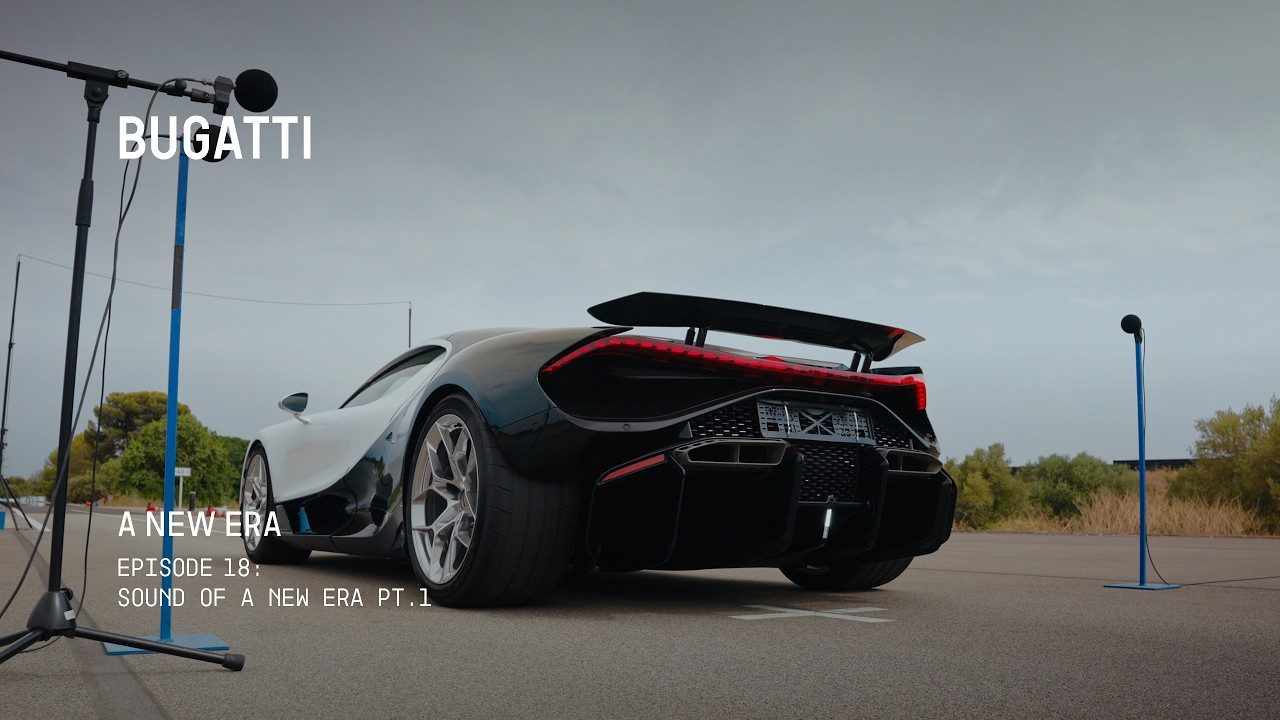
The testing process is so sensitive that environmental variables dictate success or failure. Temperature, humidity, and wind speed are strictly controlled; even a minor gust of wind across the test track can invalidate a run. For a car with the complex, moving surfaces of the Tourbillon, the challenge was to ensure that the active aero panels did not create "flutter" or wind noise that would push the car over the legal limit. It is a testament to Bugatti’s obsessive engineering that they managed to balance the requirements of a screaming 9,000-rpm V16 with the strict, quiet-running mandates of modern regulators.
The Economic and Cultural Implications
The decision to invest millions in a new internal combustion engine in 2024 is, by all metrics, irrational. Yet, the market response has been deafeningly positive. Bugatti’s order books are currently full through 2029. This underscores a vital truth about the "ultra-high-net-worth" automotive sector: the customer base is not looking for the most efficient transport; they are looking for the ultimate mechanical experience.
There is a growing "analog fatigue" among collectors. As mass-market vehicles move toward silent, indistinguishable electric platforms, the value of the "mechanical experience"—the vibration, the heat, the complexity of a naturally aspirated V16—has skyrocketed. The Tourbillon serves as a bridge between two worlds: it utilizes electrification to boost torque and efficiency, but it keeps the internal combustion engine as the protagonist of the driving experience.
Conclusion: A Monument to Combustion
The transition from the W16 to the V16 is not just a change of architecture; it is a declaration of intent. While the rest of the world prepares for a silent future, Bugatti has decided to give the internal combustion engine its grandest finale yet.
The Tourbillon’s engine is more than a collection of pistons and valves; it is a defiant, rolling monument to engineering excellence. By choosing the difficult, expensive path of developing a bespoke V16 rather than adopting a generic hybrid or electric powertrain, Bugatti has ensured that its cars remain the "artifacts" of the automotive world—objects of desire that transcend simple performance figures.
As we look toward the future, it is clear that internal combustion will eventually fade into the history books. However, with the Tourbillon, Bugatti has ensured that when the chapter on the combustion engine is finally closed, the last word will be written in sixteen cylinders, screaming at 9,000 revolutions per minute. For the collectors and the engineers in Molsheim, the V16 isn’t just an engine—it is the heartbeat of a legacy that refuses to go quiet.