After a grueling offseason dominated by legal maneuvers, conference realignment discourse, and the general cacophony of the modern NIL era, Week 1 finally arrived as a long-awaited oasis. The gridiron, for the first time in months, reclaimed its rightful place as the primary stage. While the spectacle featured the typical pageantry of college football, the opening weekend proved to be more than just a return to routine—it was a definitive signal that a generational shift is underway.
From the sweltering heat across the country, which served as a backdrop for an explosion of offensive production, to the emergence of underclassmen signal-callers who look seasoned beyond their years, Week 1 provided a chaotic, brilliant, and often shocking narrative.
The Main Facts: Defining the Landscape
The weekend’s marquee attraction featured Lane Kiffin leading his squad into a high-stakes environment at LSU. The result was a definitive 51-10 statement victory for the Tigers, a game that served as the weekend’s anchor. However, the headlines were quickly shared by a historic upset in Amherst, where UMass shed the weight of a 16-game losing streak to topple a Power Four opponent in Rutgers.
Across the board, scoring was up, records were broken, and the "Group of Six" programs proved that the gap between the haves and have-nots is narrowing. Yet, for every Cinderella story, there was a blue-blood program left to answer difficult questions.
A Chronology of Chaos
The weekend began with a Friday night explosion from Miami’s Malachi Toney and ended with lingering debates about officiating integrity.
- Friday: Miami opened the floodgates, with Toney posting a school-record 229 receiving yards. The tone was set: this was to be a weekend of explosive aerial attacks.
- Saturday Morning/Afternoon: The heat indexes climbed, and so did the scores. Alabama’s Keelon Russell and Tennessee’s Faizon Brandon showcased the future of the SEC, putting up massive yardage that signaled the end of the "game manager" era for young quarterbacks.
- Saturday Evening: The Clemson-LSU clash drew all eyes, but the real intrigue unfolded in the trenches and the officiating booths. The controversial finish to the Michigan-Western Michigan game—where a single second added back to the clock facilitated a game-winning Hail Mary—sparked a national debate regarding the efficacy of replay technology.
- Late Night: As the dust settled, programs like Oklahoma State and Oregon were left to pick up the pieces, while UMass celebrated the most significant win in its modern history.
Supporting Data: The Rising Tide of Talent
The most striking takeaway from the opening slate was the sheer quality of the underclassmen. The "Year of the Receiver" moniker, often tossed around in preseason hype, gained immediate legitimacy.
The Quarterback Revolution
The performance of the 2026 class and early-career starters was statistically anomalous.
- Faizon Brandon (Tennessee): 294 total yards and five touchdowns.
- Will Hammond (Texas Tech): A perfect 14-of-14 start to his tenure as a full-time starter.
- Mason Heintschel (Pittsburgh): An ACC-record seven touchdown passes in a single game, demonstrating that the Panthers’ shift toward an aggressive, pass-first offense under Kade Bell is paying immediate dividends.
The Receiver Explosion
If quarterback play was the catalyst, the wide receivers were the explosion. Jeremiah Smith (Ohio State) dominated the first half against Ball State with 151 yards and two scores, while KJ Duff (Rutgers) put on a clinic with 196 yards and three touchdowns. These aren’t just role players; they are focal points of their respective offenses, capable of single-handedly altering the trajectory of a game.
Official Responses and Internal Implications
The Clemson Crisis
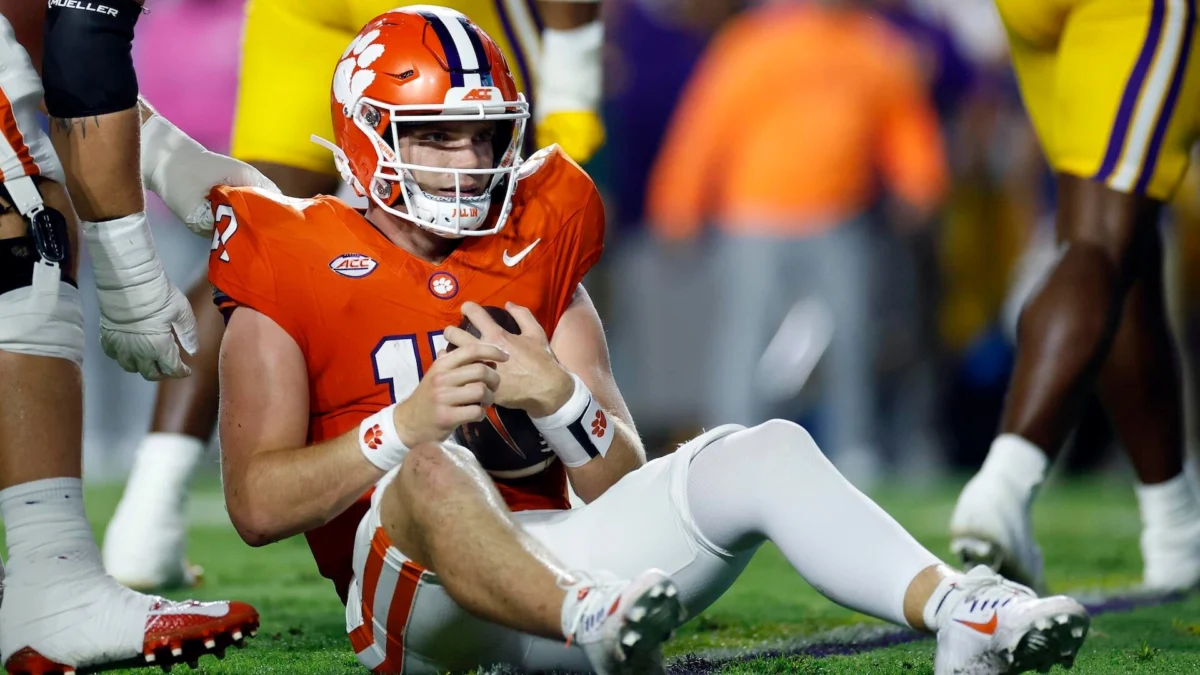
The fallout at Clemson is perhaps the most significant story of the week. Dabo Swinney, once the untouchable architect of a modern dynasty, finds himself at a precarious crossroads. A 51-10 loss to LSU wasn’t just a defeat; it was an indictment of the program’s current identity.
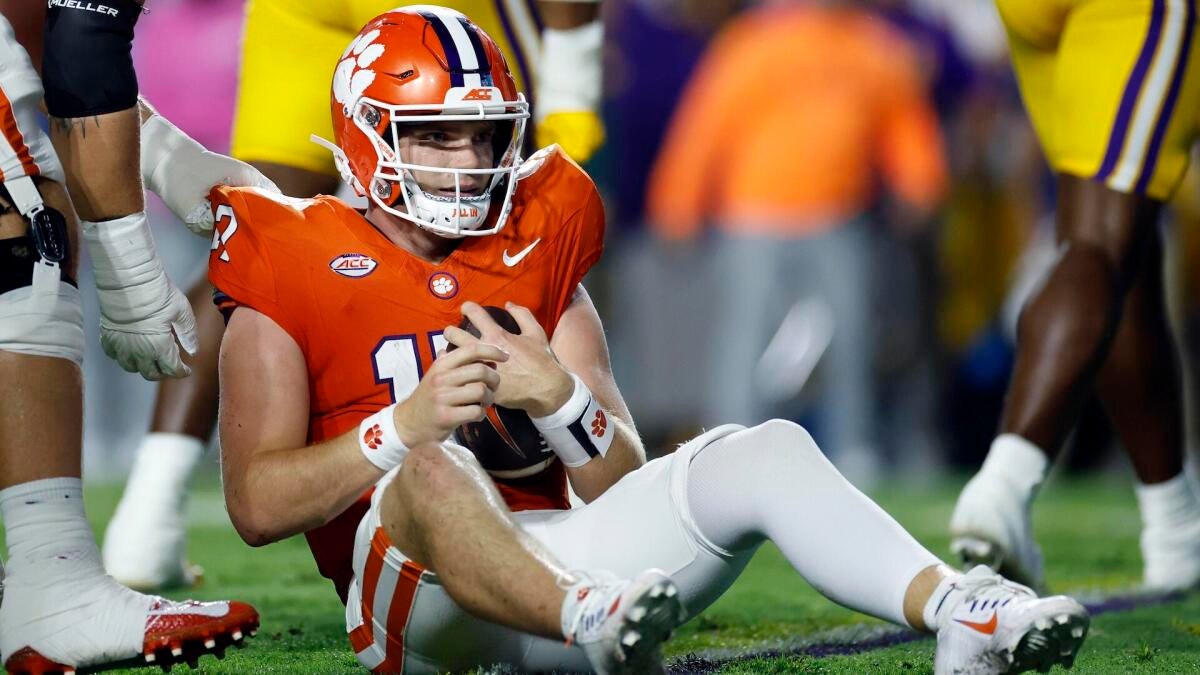
"We didn’t look like we belonged on the same field," noted one analyst, a sentiment echoed by the statistics. With under 100 yards of total offense heading into the fourth quarter, the Tigers’ lack of offensive identity is no longer a "transition period" issue—it is a systemic failure. With a date against No. 7 Miami looming on Oct. 3, the seat beneath Swinney is officially the hottest in the country.
The Officiating Controversy
The Michigan-Western Michigan finish has prompted calls for a standardized review protocol. The consensus among rules experts, looking at high-definition freeze-frames of the game clock, suggests that the game should have ended before the snap. While the Big Ten has yet to issue a formal apology, the optics have been disastrous for the league’s reputation regarding replay accuracy. For Western Michigan, it was a stolen moment of glory; for the sport, it was a reminder that technology is only as good as the humans interpreting it.
The Defensive Rebirth at USC
While the headlines went to the offensive fireworks, the most impressive tactical shift occurred in Los Angeles. Gary Patterson’s defensive overhaul at USC moved from "work in progress" to "dominant reality." Holding a potent Fresno State offense scoreless is a testament to Patterson’s defensive pedigree. By limiting the Bulldogs to 1.3 yards per carry, USC has signaled that it is no longer content to rely solely on an explosive offense; they are building a unit capable of surviving the grind of a Big Ten schedule.
The Broader Implications: A Changing Power Dynamic
Week 1 was a masterclass in the volatility of the new college football landscape. The struggle of Oregon’s defensive line—a unit heralded as a national championship-caliber group—against Boise State suggests that elite recruiting rankings do not always translate to on-field dominance. Conversely, the success of UMass and the resilience shown by teams like Tarleton State proves that the expansion of the playoff and the influx of transfer talent have created a more egalitarian, albeit unpredictable, environment.
The "growing pains" at Oklahoma State, under first-year coach Eric Morris, further illustrate that simply importing talent—even five-star transfers—is not a substitute for program culture. Morris, who brought in over 90 new players, learned the hard way that cohesion takes time, even in an era of immediate gratification.
Conclusion: Looking Ahead
As we look toward the remainder of the season, the Week 1 results serve as a prologue rather than a conclusion. The emergence of young stars like Brandon and Heintschel suggests that the product on the field is, if anything, becoming more dynamic.
However, the pressure is mounting for the established programs. For Clemson, Oklahoma State, and Oregon, the path forward is narrow. They must address their glaring deficiencies before the conference schedules tighten the noose. Meanwhile, the fans have been reminded of why they endure the offseason: for the chance to see a 29-point underdog like UMass storm the field, or to witness a freshman quarterback set records before he’s even old enough to vote.
Week 1 was chaotic, flawed, and occasionally controversial. In other words, it was the perfect start to a college football season.