By James Benge
August 18, 2026
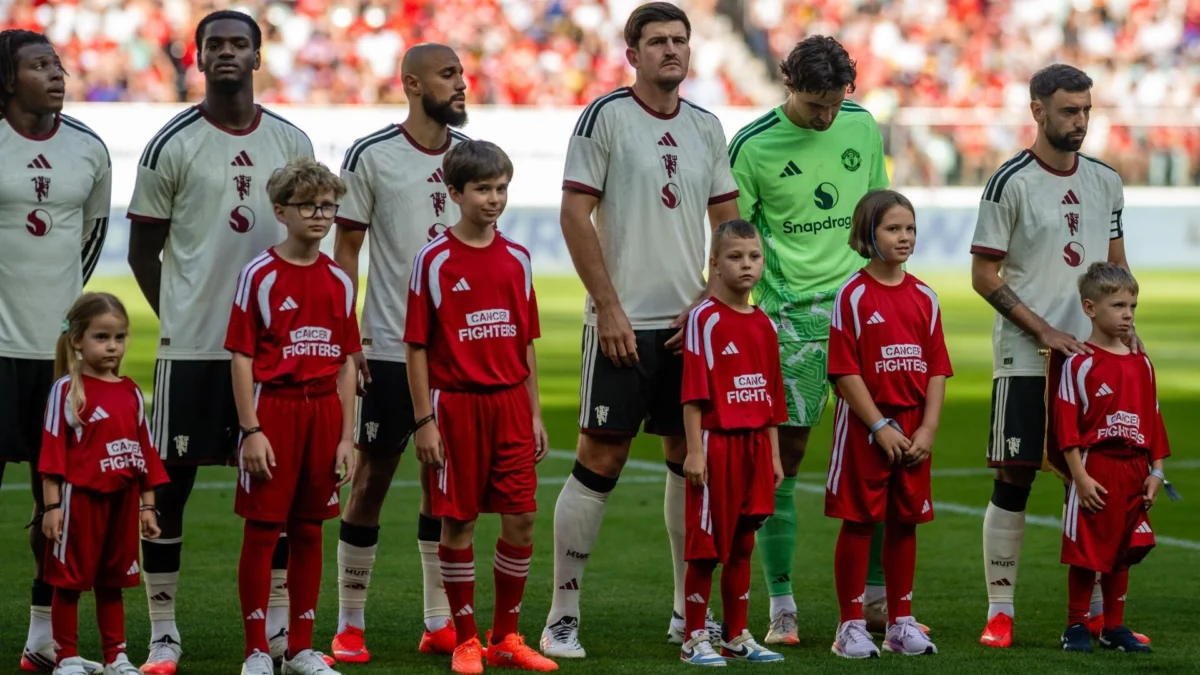
The 2025-26 Premier League season concluded with a surprising, almost tranquil, development at Old Trafford: Manchester United, a club synonymous with drama, had finally found a sense of equilibrium. After years of turbulent managerial tenures and frantic transfer windows, the "Red Devils" finished the campaign in a respectable third place. It was a finish earned not through the headline-grabbing chaos of the past, but through the steady, pragmatic hand of interim-turned-permanent head coach Michael Carrick.
As the 2026-27 campaign approaches, the narrative surrounding the most discussed club in English football has shifted. For the first time in three years, the burning questions regarding the manager’s future have been extinguished. The club is no longer tethered to the tactical whims of a new regime or the desperate, high-cost recruitment drives that defined the Erik ten Hag era. Instead, United enters the new term with a sense of purpose: to build upon a solid foundation without the pressure of an immediate title mandate.
The Chronology of a Quiet Revolution
To understand the current state of Manchester United, one must look back at the chaotic timeline of the post-Ferguson era. The previous three years were marked by a revolving door of tactical philosophies. From the high-pressing demands of Ruben Amorim to the rigid structures favored by Ten Hag, United’s identity was constantly in flux.
The turning point occurred mid-way through the 2025-26 season. Following the dismissal of his predecessor, Michael Carrick was installed as an interim manager. Initially viewed as a stop-gap, Carrick’s ability to stabilize a fractured dressing room and implement a more balanced, possession-oriented style of play surprised even his harshest critics. By April 2026, the Champions League qualification spots were secured "at a canter," a phrase that, in the context of recent United history, serves as high praise.
In May 2026, the club hierarchy confirmed what the fans had begun to accept: Carrick was the man for the long haul, signing a two-year contract. This decision marked a departure from the "galactico" recruitment strategies of the past, signaling a shift toward sustainable growth.

Supporting Data: The "Bruno" Factor and the Reality of Third Place
While the third-place finish in 2025-26 was a testament to the team’s progress, the underlying metrics present a more nuanced reality. The squad’s performance was undeniably tethered to the superhuman output of Bruno Fernandes.
The data from the previous season is staggering: Fernandes recorded 21 assists, leading the league by a wide margin. Advanced analytics reveal that the Portuguese playmaker provided 54% more chances and 35% more expected assists than the second-best creator in the division. While this highlights Fernandes’ brilliance, it also underscores a systemic reliance that could prove precarious.
Statistically, United finished with the third-best goal difference and the third-best expected goal difference (xG). However, they remained 14 points adrift of the eventual champions. Their xG difference was roughly half that of Arsenal’s, suggesting that while United were the "best of the rest," they were still far from elite parity. The question for 2026-27 is whether the team can maintain their top-four status if Fernandes regresses from a 99th-percentile season to even an 80th-percentile one.
Strategic Reinforcements: A Midfield Refit
Manchester United’s summer recruitment strategy has been characterized by "floor-raising" rather than "ceiling-busting." The club’s decision-makers have clearly identified the need to reduce the burden on Fernandes.
The acquisition of Youri Tielemans for a $47.5 million release clause is a shrewd, if unspectacular, move. At 29, Tielemans offers the deep-lying playmaking ability the team lacked. While questions regarding his defensive work rate persist, his ability to transition the ball into the final third is vital.
Perhaps more significant is the $65 million arrival of Andrey Santos from Chelsea. Santos is designed to be the engine of the new-look midfield, providing the defensive steel that was lost following the departure of Casemiro. These moves, while not likely to close a 14-point gap overnight, represent a sophisticated approach to squad construction that focuses on mitigating individual form slumps.

Official Stance: Managing Expectations
The club’s internal messaging has been remarkably disciplined. There are no proclamations of impending title challenges or "must-win" rhetoric. Instead, the focus is on organizational stability.
Even the handling of Marcus Rashford has reflected this newfound calm. Once the subject of relentless transfer speculation, Rashford has been integrated into a squad role without the typical media firestorm. The club’s willingness to quietly move players into rotation roles, rather than forcing high-profile exits, suggests a maturity that has been absent since the departure of Sir Alex Ferguson.
As one club official noted during the preseason media rounds, "We are not in a hurry to force a revolution. We are in the business of building a sustainable, top-tier organization." This patience is a clear signal to the global fanbase: the 13-year wait for a league title might not end this year, but the club is finally walking the path toward being a legitimate, consistent challenger once again.
Implications for the 2026-27 Campaign
As the curtain rises on the new season, the implications for Manchester United are clear. The club is attempting to institutionalize success. By prioritizing a tactical identity over marquee signings, they are gambling on the idea that a cohesive unit is more valuable than a collection of stars.
The Challenges Ahead
- Balancing Commitments: For the first time, Carrick must manage the physical toll of Champions League fixtures alongside a demanding Premier League schedule. His squad depth will be tested, particularly in the midfield and at left-back.
- Reducing Reliance: The tactical challenge for the coaching staff is to diversify their attack. If the system is too reliant on Fernandes, they remain vulnerable to defensive schemes designed to neutralize him.
- The Psychological Barrier: After years of underperformance, the team must overcome the mental hurdle of competing against the likes of Manchester City and Arsenal, who have established a higher baseline for success.
Projected Outlook
The expectations for 2026-27 are modest but firm. A successful season would be defined by another top-five finish, a meaningful run in the Champions League knockouts, and perhaps a domestic trophy. While this may not satisfy the "glory-seekers" who demand immediate dominance, it represents a significant step toward returning to the summit of English football.
For the supporters who have endured the post-Ferguson "misery," the current climate offers something more valuable than trophies: hope. It is a quiet, measured hope built on the realization that, for the first time in a decade, Manchester United is acting like a modern, professional football club. They are no longer chasing ghosts of the past; they are, finally, building for the future. The long way round, as it turns out, might just be the only way back to the top.