Main Facts of the Case
A federal investigation has culminated in conspiracy and threat charges against a group of college-aged activists associated with the University of Michigan. The defendants are accused of engaging in a coordinated, multi-year campaign of intimidation, stalking, and property damage targeting university administrators, regents, and local businesses. The alleged goal of the campaign was to force the university to divest its financial holdings from Israel.
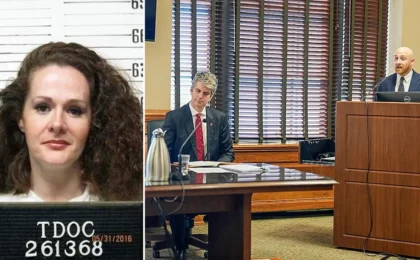
The legal proceedings advanced significantly in federal court when four of the eight named defendants—Zainab Hakim, 23; Paige Feyock, 26; Jonathan Zou, 22; and Colin Weger, 24—appeared before U.S. Magistrate Judge Anthony Patti in the Eastern District of Michigan. The court appearances followed an announcement by FBI Director Kash Patel confirming that federal agents had arrested seven individuals linked to what prosecutors describe as a "campaign of violence."
+--------------------------------------------------------------------------------+
|                          KEY DEFENDANTS & PRIMARY CHARGES                      |
+---------------------+-----+----------------------------------------------------+
| Name                | Age | Primary Allegations / Charges                      |
+---------------------+-----+----------------------------------------------------+
| Zainab Hakim        | 23  | Conspiracy, Witness Intimidation (Up to 20 years)  |
| Paige Feyock        | 26  | Conspiracy, Witness Intimidation (Up to 20 years)  |
| Jonathan Zou        | 22  | Conspiracy, Vandalism (Provost's Home)             |
| Colin Weger         | 24  | Conspiracy to Transmit Threats                     |
| Ahmet Korkaya       | —   | Conspiracy, Poison/Death Threats (Med Student)     |
| Alexander Sepulveda | 23  | Conspiracy, Destruction of Property/Evidence       |
+---------------------+-----+----------------------------------------------------+
During the arraignment, Hakim, Feyock, Zou, and Weger entered pleas of not guilty. Despite strong objections from federal prosecutors—who argued that the defendants posed a flight risk and a continuing danger to the community—Judge Patti ordered their release on bond. However, the release is subject to stringent conditions:
- Surrender of all passports and travel documents.
- Strict GPS location monitoring.
- Severe travel restrictions.
- An absolute "no-contact" order prohibiting communication with co-defendants, victims, or witnesses.
Chronology of the Alleged Campaign
The federal indictment outlines a systematic escalation of tactics over an eighteen-month period, tracing the transition from standard campus protest activity to targeted harassment and criminal conspiracy.
2023                        2024                                      2025
  |                           |                                         |
  +-- Oct 7: Hamas Attacks    +-- May: Hubbard Home Targeted            +-- Mar: McCauley Home Vandalized
  |                           |                                         |
  +-- Late Oct: Conspiracy    +-- May 21: "Hit List" Texts              +-- Apr: Warrant Executed /
      Coordination Begins     |                                             Sepulveda Wipes Devices
                              +-- Oct 7: Jewish Federation Vandalized   |
                                                                        +-- Present: Federal Arrests
                                                                            & Arraignments
Autumn 2023: The Genesis of the Conspiracy
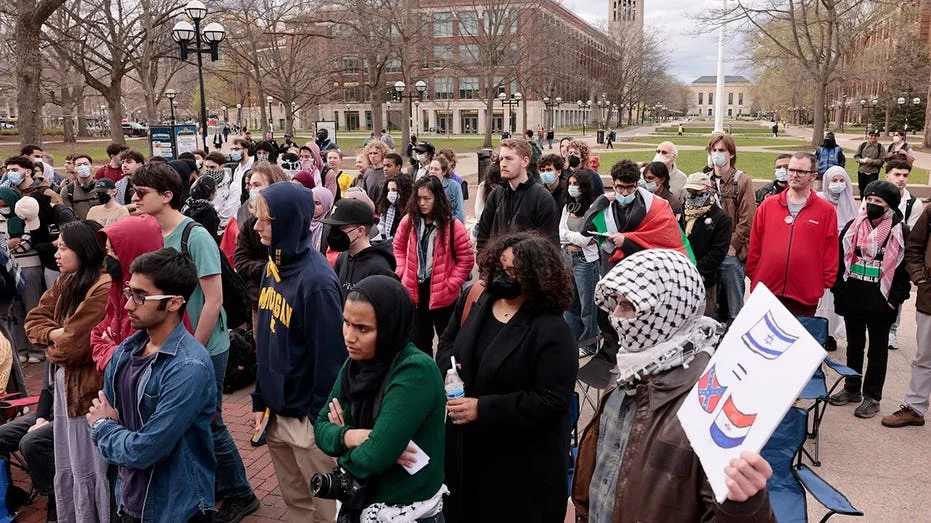
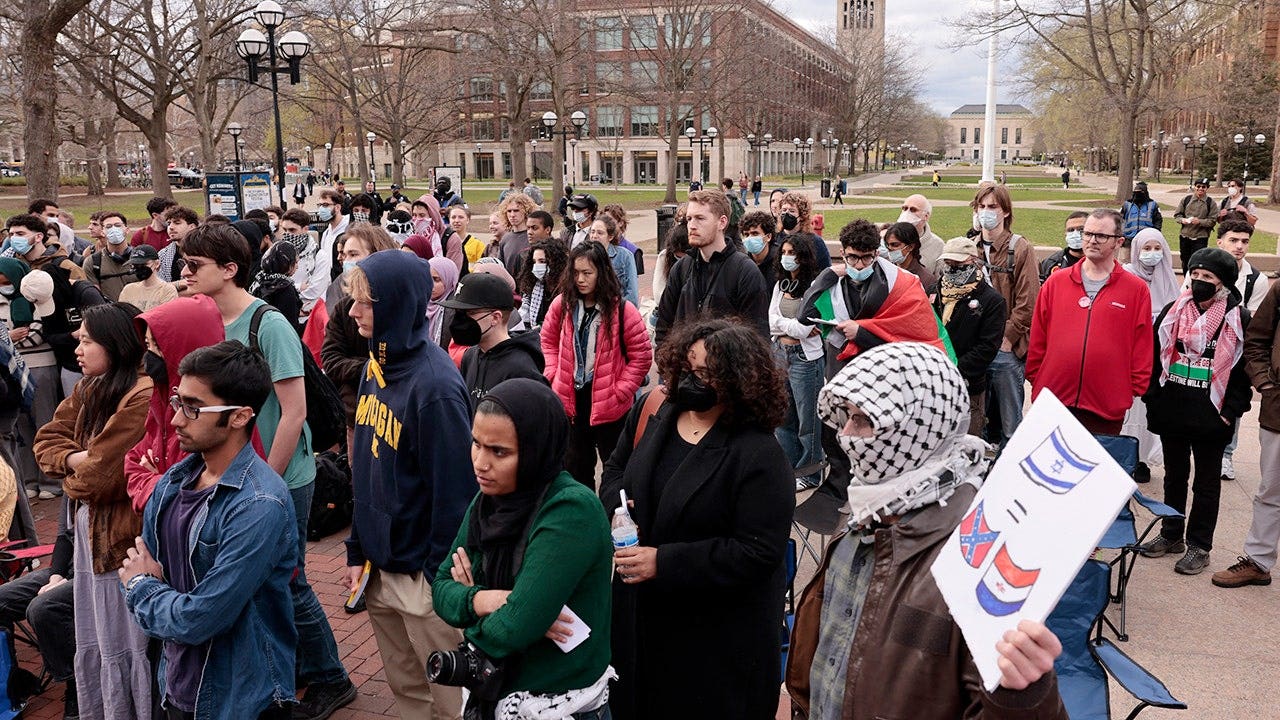
Following the October 7, 2023, Hamas-led attacks on Israel and the subsequent military response in Gaza, protests erupted across the University of Michigan campus in Ann Arbor. According to federal prosecutors, the defendants began utilizing encrypted messaging platforms and closed networks shortly thereafter to coordinate efforts to pressure the university administration.
May 2024: Targetization of University Regents
The first major escalation outside of campus property occurred in May 2024. Activists targeted the private residence of University of Michigan Regent Sarah Hubbard. Protesters placed mock corpses wrapped in blood-stained sheets on her lawn, accompanied by demand letters insisting on immediate divestment from Israeli-linked funds.
May 21, 2024: Private Communications and Threats of Violence
Internal communications intercepted by law enforcement reveal that on May 21, 2024, Paige Feyock and Ahmet Korkaya allegedly agreed to escalate their campaign to include physical violence. Text messages from this period detail plans to stalk, terrorize, and potentially kill their targets and their families.
October 7, 2024: Anniversary Vandalism
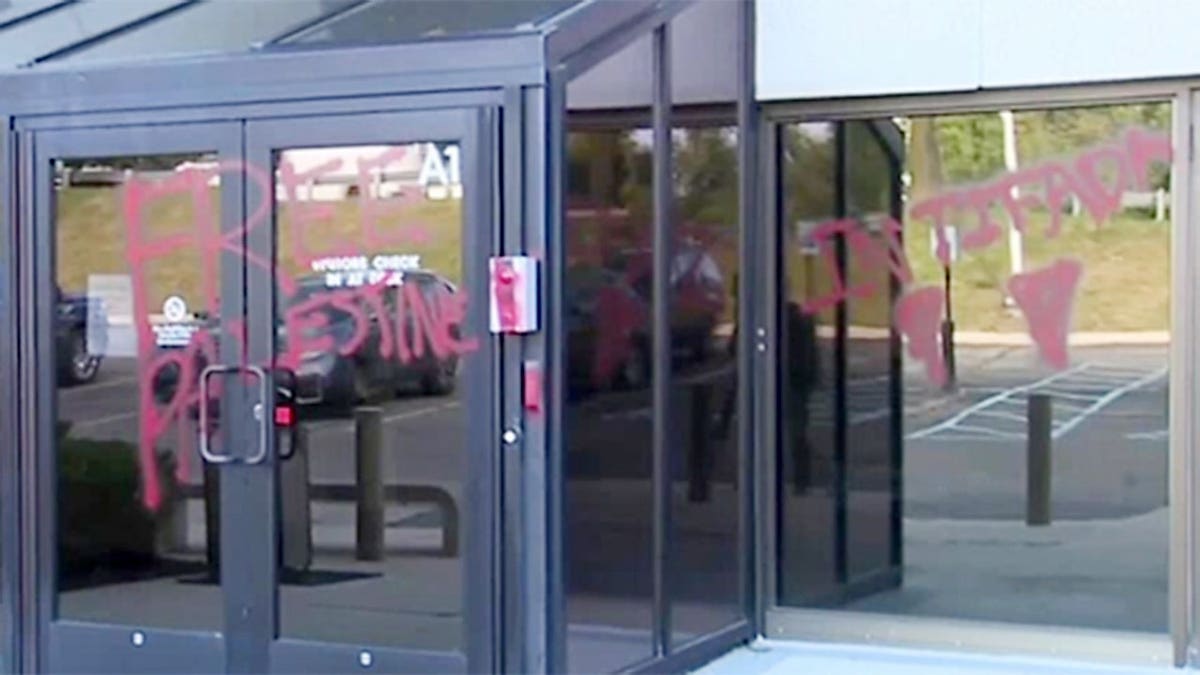
On the one-year anniversary of the October 7 attacks, the Jewish Federation Building near the University of Michigan campus was heavily vandalized. Red spray paint was used to write slogans such as "Free Palestine," "Divest Now," and "Intifada" across the exterior walls. Entryways were blocked, and property was defaced.
March 2025: Assault on the Provost’s Residence
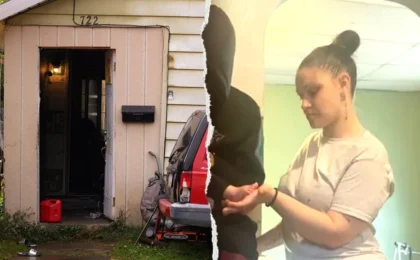
In March 2025, the campaign targeted the private home of University of Michigan Provost Laurie McCauley. According to the indictment, Jonathan Zou and Alexander Sepulveda threw glass jars filled with an unknown blue substance, later identified as a mixture containing dye and butyric acid, through the windows of McCauley’s home. They also defaced the residence with spray-painted inverted red triangles—a symbol historically associated with targeting markers—and left threatening demand notes.
April 2025: Evading Law Enforcement
In April 2025, federal authorities secured a search warrant for the residence of Alexander Sepulveda. Before the warrant could be executed, an unidentified individual in an encrypted group chat alerted Sepulveda to the imminent arrival of law enforcement. Sepulveda allegedly initiated a remote wipe of his phone and laptop, destroying potential evidence.
Supporting Data and Specific Allegations
The indictment details the specific tools, methods, and rhetoric allegedly utilized by the defendants to execute their campaign.
Chemical and Physical Tactics
The conspiracy went beyond written threats to incorporate chemical agents and physical barriers designed to cause property damage and psychological distress:
- Butyric Acid: The defendants allegedly threw glass jars filled with butyric acid into target residences. Butyric acid is a highly noxious chemical compound with an extremely unpleasant, persistent vomit-like odor. It is frequently used in industrial applications but has been deployed by extremist groups to render buildings temporarily uninhabitable.
- Tactical Vandalism: Entryways to target properties were systematically disabled. The defendants allegedly used commercial caulking guns to seal door frames shut and heavy-duty bicycle locks to secure exterior gates, trapping occupants inside or preventing access.
- Symbolic Targeting: The use of spray-painted inverted red triangles on the homes of administrators is highlighted in the indictment. Prosecutors note that this symbol is used in propaganda to denote active military targets, signifying an explicit threat of physical harm.
Digital Evidence and the "Hit List"
The prosecution’s case relies heavily on recovered digital communications from encrypted messaging applications. The most severe evidence involves Ahmet Korkaya, a medical student at the time of the conspiracy.
In text exchanges with Paige Feyock, Korkaya allegedly stated that he had compiled a "hit list" that included the "entire family" of one of his targets. In one message, Korkaya wrote that he would be the "dirtiest f—— doctor ever" and discussed plans to slowly "poison" individuals on his list.
The Scale of Legal Charges and Penalties
The defendants face a range of federal charges depending on their level of involvement in the conspiracy:
+------------------------------------------+------------------------+------------------------+
| Charge                                   | Max Prison Sentence    | Max Financial Penalty  |
+------------------------------------------+------------------------+------------------------+
| Witness Intimidation                     | 20 Years               | $250,000               |
| Conspiracy to Transmit Threats           | 5 Years                | $250,000               |
| Destruction of Property/Evidence         | 5 Years                | $250,000               |
+------------------------------------------+------------------------+------------------------+
The most severe charges—witness intimidation—were leveled against Zainab Hakim and Paige Feyock. The pair allegedly discovered that an associate within their activist circle was cooperating with law enforcement and used threats of violence to silence them.
Official Responses and Legal Proceedings
The federal government’s intervention in this case represents a significant shift in how law enforcement addresses campus-related protests that cross into personal harassment.
Law Enforcement and Executive Statements
In announcing the arrests, FBI Director Kash Patel emphasized that the Department of Justice would not tolerate campaigns of fear disguised as political speech.
"While the First Amendment protects the right of every American to voice their political opinions, it does not protect a coordinated campaign of stalking, property destruction, and threats of chemical violence," Patel stated. "The FBI will continue to aggressively pursue those who seek to terrorize public servants and community institutions."
Victims’ Responses
University of Michigan Regent Sarah Hubbard, whose home was targeted with mock corpses, expressed relief following the federal indictments.
"I am very appreciative of the tireless work of local, state, and federal law enforcement agencies in bringing these charges forward," Hubbard said in an official statement. "Public officials must be able to perform their duties without fear of targeted harassment and violence directed at their homes and families."
Defense Arguments and Judicial Perspective
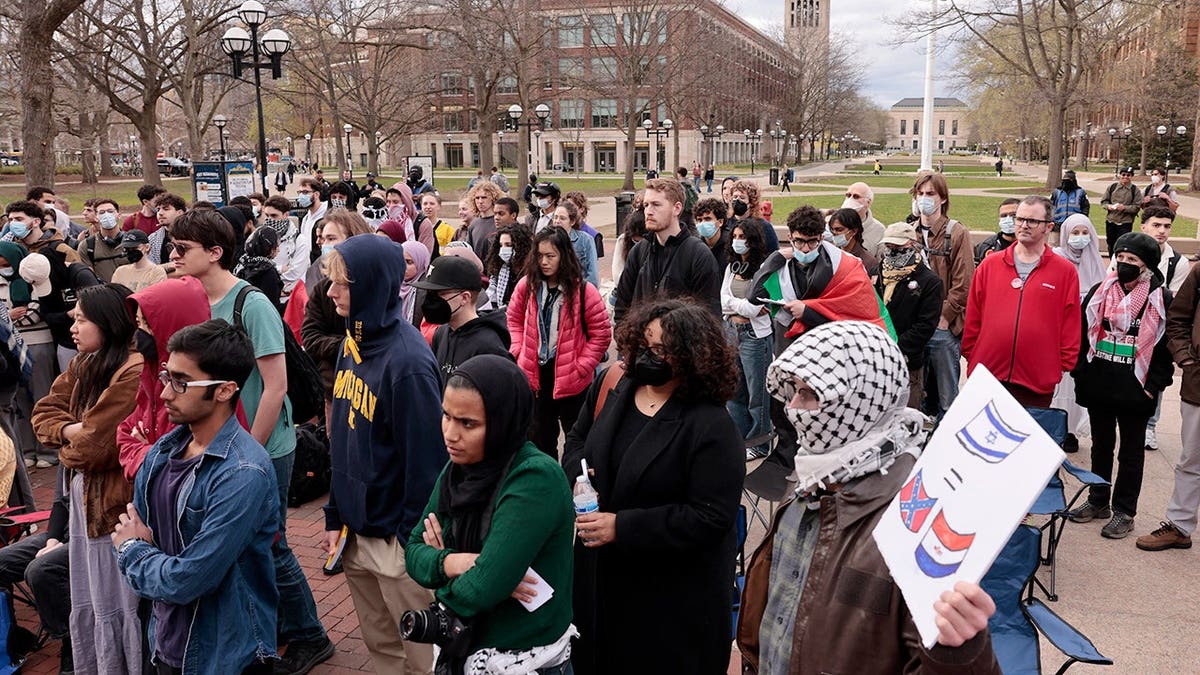
During the bond hearing, defense attorneys argued that the prosecution’s case relies heavily on hyperbolic language used in private social media chats, which they assert is protected under the First Amendment. They argued that the defendants, as young scholars and activists with no prior significant criminal histories, did not pose a physical threat to the community.
U.S. Magistrate Judge Anthony Patti acknowledged these arguments, noting the complex intersection of federal threat statutes and protected free speech. He observed that much of the government’s conspiracy case is built upon digital communications and social media posts, which require careful constitutional scrutiny.
While Judge Patti allowed the defendants to be released on bond, he implemented strict monitoring protocols to ensure the safety of the victims and the integrity of the ongoing trial.
Implications for Campus Activism and Public Safety
The federal prosecution of the University of Michigan activists carries broad implications for the limits of political protest, the security of academic institutions, and the legal definition of domestic extremism.
Redefining the Boundaries of Protest
This case marks a clear boundary-setting moment by federal law enforcement regarding campus activism. While sit-ins, marches, and campus encampments are generally protected under the First Amendment, the targeting of administrators’ private residences with chemical agents, mock corpses, and threats of violence is being treated as domestic terrorism and extortion.
Legal experts suggest that this prosecution will serve as a precedent for other universities grappling with intense, polarized protest movements. It signals to activist groups that tactics extending beyond campus boundaries into the private lives of university staff will face federal prosecution rather than campus disciplinary boards.
The Safety of University Governance
The targeting of regents and provosts highlights the growing vulnerability of university administrative bodies. Traditionally, university board members—many of whom are public servants or volunteers—have operated in public spaces with minimal security. The escalation of tactics to include home invasions, stalking, and chemical vandalism may force universities nationwide to reassess their security protocols for leadership teams.
The Role of Encrypted Communications in Modern Activism
The investigation highlights the challenge law enforcement faces when monitoring modern activist networks. The use of encrypted apps allowed the defendants to coordinate their activities and share intelligence regarding police movements.
However, the prosecution’s ability to recover deleted data and penetrate these networks demonstrates that encryption does not provide absolute anonymity. The charges of destruction of evidence against Alexander Sepulveda emphasize the severe legal risks associates face when attempting to wipe digital footprints during an active federal investigation.