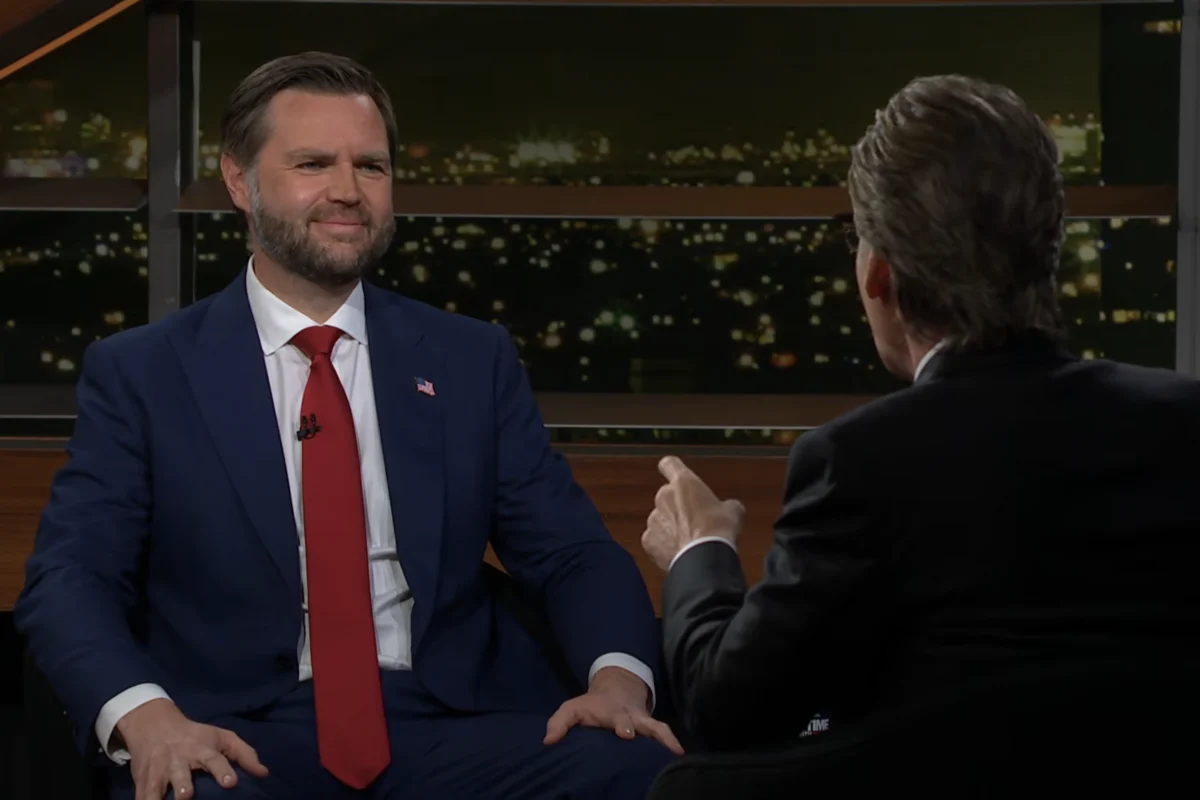
Vice President JD Vance has spent the past week navigating a high-wire act of political brinksmanship, oscillating between historical revisionism at the Nixon Presidential Library and a combative, wide-ranging appearance on HBO’s Real Time with Bill Maher. As the administration navigates a complex geopolitical landscape and internal polling shifts, Vance’s recent public interventions offer a window into the evolving philosophy of the Trump-Vance ticket—one that is increasingly comfortable with rewriting the norms of American governance and foreign policy.
The Nixonian Renaissance: Redefining Corruption
The week began with a provocative stop at the Richard Nixon Presidential Library and Museum in Yorba Linda, California. Standing in the shadow of a presidency defined by the Watergate scandal and the subsequent resignation of the 37th president, Vance offered an assessment that signaled a stark departure from traditional Republican reticence regarding Nixon’s fall from grace.
"I think that his historical legacy is enjoying a bit of a renaissance—but I think deservedly so," Vance remarked, addressing the crowd. He went further, suggesting that the standard by which modern political morality is measured has become distorted. "If Watergate happened tomorrow, it would be like a 12-hour news story. Like, the idea that it would have taken down a presidency is crazy."
This statement, while framed by Vance as a critique of modern media sensationalism, has been widely interpreted by political analysts as an attempt to normalize the legal and ethical challenges currently facing the Trump administration. By casting the original institutional crisis of the modern era—Watergate—as a triviality, Vance appears to be laying the groundwork for a broader argument: that the current administrative controversies are mere political theater rather than substantive abuses of power.
Chronology of a Controversial Week
- Thursday: Vance visits the Nixon Presidential Library, praising the late president and dismissing the severity of the Watergate scandal in the context of modern media cycles.
- Friday: The Vice President sits for an interview with Bill Maher on HBO’s Real Time, becoming the first sitting vice president to appear on the program.
- Friday Evening: The interview covers topics ranging from the Iran nuclear negotiations to ICE enforcement policies and the integrity of American electoral processes.
- Saturday: Political commentators and former administration officials begin to dissect the conflicting claims regarding the status of Iran’s nuclear program.
The Maher Interrogation: Foreign Policy and Friction
The most significant moment of the week occurred on Friday night, when Vance appeared on Real Time with Bill Maher to promote his new book, Communion. The interview served as a microcosm of the current divide in American political discourse, with Maher attempting to pin the Vice President down on foreign policy and the humanitarian impact of the administration’s border enforcement strategies.
The Iran Nuclear Stalemate
The conversation quickly pivoted to the administration’s ongoing negotiations with Tehran. Maher, skeptical of the administration’s claims of success, questioned the efficacy of their approach. Vance maintained a posture of strength, asserting that the administration holds the leverage.
"The thing that you have to destroy is their ability to enrich uranium, which has been destroyed," Vance argued. When pressed by Maher on how the administration could verify this in the absence of on-the-ground inspections, Vance remained steadfast, characterizing the program as "functionally destroyed."
The lack of empirical evidence provided for this claim has drawn concern from non-proliferation experts, who argue that without verifiable, intrusive inspections, the administration’s claims of success in Iran are speculative at best. This exchange highlighted the administration’s reliance on assertive rhetoric to define the success of its foreign policy, regardless of traditional diplomatic benchmarks.
The ICE Enforcement Debate
Maher shifted the focus to the domestic front, specifically the administration’s aggressive ICE enforcement policies. In an unusually candid moment, Maher suggested that the administration could bridge the divide with moderate voters by acknowledging that certain past actions went "too far."
"I’m not asking you to apologize," Maher said. "I’m just saying, you’d go a long way toward getting people who have just completely shut the door to you and your administration if you guys would just own that."
Vance’s response was a masterclass in political obfuscation. Rather than engaging with the human impact of the policies, he framed them as an inevitable consequence of law enforcement duties. "You can’t do a law enforcement operation like that without having some situations that are recorded like that," he stated. "I don’t think there was an easy way to do this."
The Question of Electoral Integrity
Perhaps the most heated portion of the interview concerned the health of the American democratic process. Maher, who expressed deep concern over the trajectory of the Democratic Party, noted that his support was "in play" for the next Republican candidate—provided that candidate adheres to democratic norms.
"Here’s my dealbreaker for your side: Under Trump, you guys have two outcomes that an election can be, either we win or they cheated," Maher challenged. "That shit has to stop. And that means the person who has to stop it will be you, or Marco [Rubio]. Can you tell me you will do that?"
Vance declined to provide a direct assurance, instead pivoting to a critique of social media and technology companies. He argued that the real threat to elections is not the denial of results, but the perceived censorship of conservative voices during the 2020 election cycle. This deflection left Maher visibly frustrated, leading to a biting closing remark: "Well, you’re going to get a big pat on the back when you go back to the White House."
Implications: A New Era of Political Communication
The events of the past week underscore a shift in how the current administration manages its public image.
1. Normalization of Irregularity
By invoking a "Nixonian renaissance," Vance is attempting to shift the Overton window regarding executive branch conduct. The message is clear: institutional challenges are not signs of failure, but rather features of a presidency that challenges the status quo.
2. Strategic Media Engagement
Vance’s appearance on Real Time represents a calculated attempt to engage with platforms outside the traditional conservative bubble. While Maher was often perceived as "outmatched" in the tactical back-and-forth, the interview also revealed a potential vulnerability: the administration’s difficulty in answering direct, principled questions regarding the peaceful transfer of power and the humanitarian consequences of its border policies.
3. The Trust Deficit
The conflicting narratives regarding Iran’s nuclear capabilities and the 2020 election demonstrate that the administration is operating in an environment where facts are secondary to the narrative of strength. As Vance continues to tour, the challenge for his team will be balancing this assertive, revisionist messaging with the necessity of maintaining credibility with the broader electorate.
As we look toward the next election cycle, the "Vance Doctrine"—characterized by a willingness to challenge established history, a defensive posture on policy execution, and a pivot toward grievances regarding "big tech" bias—will likely remain the central pillar of the campaign’s communication strategy. Whether this approach serves to mobilize the base or alienate the center remains the defining question of this political season.