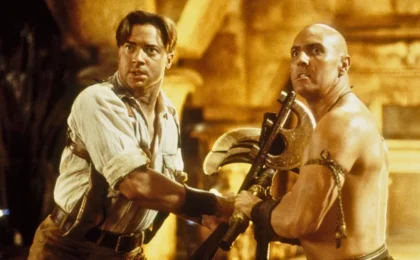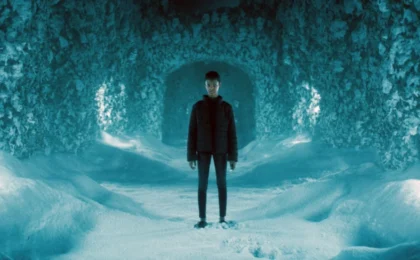
When film historians and casual cinephiles compile lists of Tim Burton’s most significant contributions to cinema, the conversation is often dominated by the macabre, the gothic, and the surreal. Beetlejuice remains the gold standard for his early eccentricities, while the Batman films cemented his ability to handle blockbuster stakes. Edward Scissorhands and Ed Wood are frequently cited as his most personal, vulnerable works, and Pee-Wee’s Big Adventure serves as the foundational text for his unique brand of whimsy. Even The Nightmare Before Christmas—a film directed by Henry Selick but perpetually tethered to Burton’s brand—holds a permanent spot in the cultural zeitgeist.
Yet, there is a gaping hole in the collective memory regarding the 2003 film Big Fish. A vibrant, emotionally resonant, and surprisingly grounded departure for the director, Big Fish stands as one of the most sophisticated entries in his filmography. As of August 2026, the film is available to stream for free on Tubi, offering a perfect opportunity to revisit a work that, for too long, has been overshadowed by the director’s more gothic trademarks.
Main Facts: The Narrative of Memory and Myth
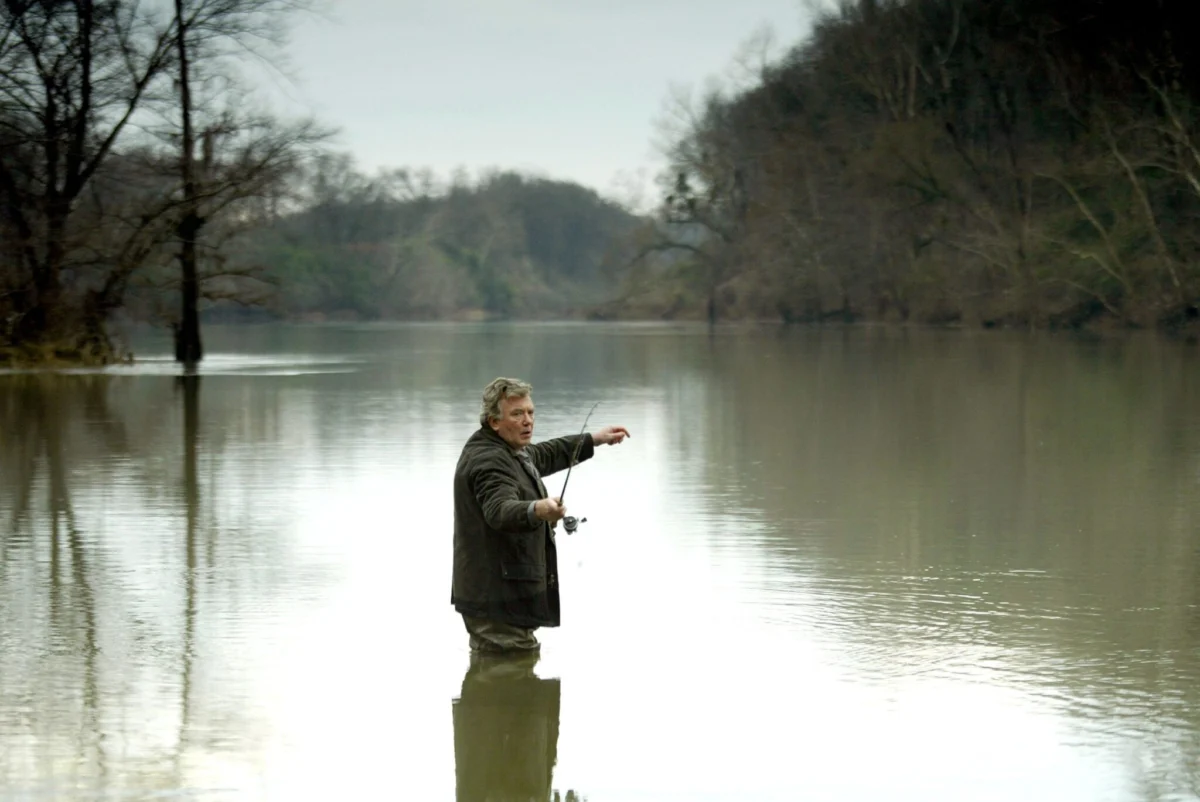
At its core, Big Fish is a poignant exploration of the divide between reality and the stories we tell to make sense of our lives. The film centers on Will Bloom (Billy Crudup), an investigative journalist who has spent his entire adult life distancing himself from his father, Edward (Albert Finney). Edward is a man defined by his tall tales—impossible stories involving 11-foot giants, prophetic witches, and elusive, legendary catfish.
As Edward lies on his deathbed, Will returns home to reconcile with the man he feels he never truly knew. The narrative structure mirrors the tension of their relationship, oscillating between the sterile, somber reality of the present and the saturated, magical-realist flashbacks of Edward’s youth (played by Ewan McGregor). Through these vignettes, the film asks a fundamental question: Is the truth of a man found in the cold, hard facts of his life, or in the myths he creates to inspire those around him?

Chronology: A Career at the Crossroads
To understand why Big Fish is so often overlooked, one must look at the timeline of Tim Burton’s career in the early 2000s. The film was released in a period of intense volatility for the director.
- 2001: Burton released his ill-fated remake of Planet of the Apes, a project that many critics felt lacked his signature creative stamp and was bogged down by studio interference.
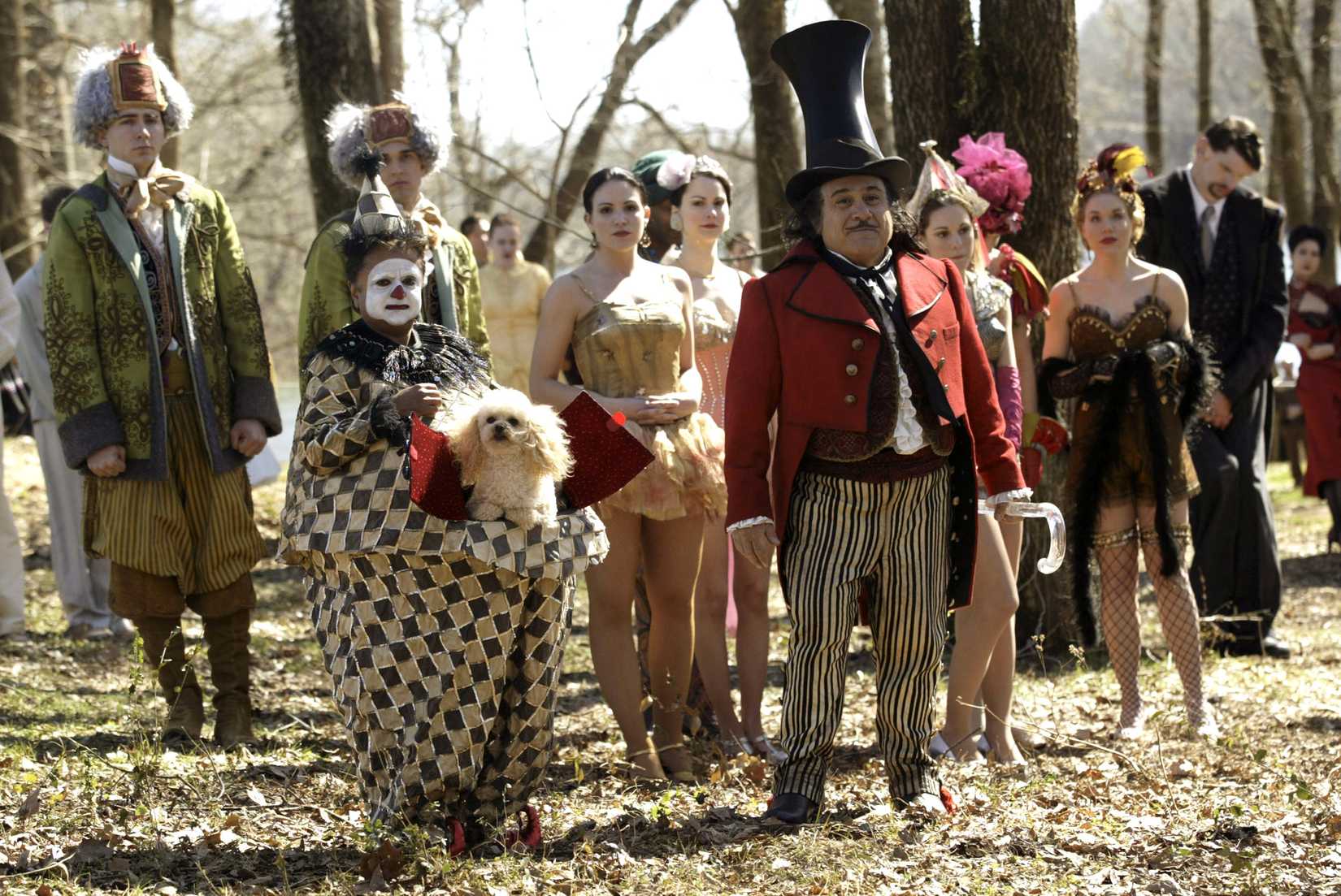
- 2003: Big Fish arrives, presenting a sun-drenched, Southern Gothic aesthetic that felt like a radical pivot from the shadows and sharp angles of Sleepy Hollow (1999).
- 2005: Burton pivoted again, diving into the production of Charlie and the Chocolate Factory, a film that would trigger a long, contentious era of his career involving Disney remakes and "hired gun" projects that many fans found artistically stifling.
Big Fish essentially sits as a bridge between the director’s "auteur" phase and his transition into high-budget studio spectacle. It was a moment of vulnerability where Burton stepped away from the grotesque to tell a story about family, mortality, and the endurance of love. Because it didn’t fit the "Burtonesque" brand of spooky, high-contrast imagery, audiences at the time were perhaps unprepared for the sincerity they encountered.
Supporting Data: The Anatomy of Charm
The film’s success relies heavily on the dual performance of Ewan McGregor and Albert Finney. Casting two actors to play the same character across a lifetime is a risky endeavor, but in Big Fish, it is a stroke of genius.
The McGregor Era (The Dreamer)
Ewan McGregor’s portrayal of the younger Edward Bloom is a masterclass in charisma. In 2003, McGregor was at the height of his powers, fresh off his turn in Moulin Rouge! and the Star Wars prequels. He imbues Edward with a relentless, infectious optimism. He isn’t a hero in the traditional sense; he is a man who moves through life with the confidence of someone who believes the world is inherently designed for adventure. This version of Edward is the personification of the "American Dreamer," a archetype that is difficult to play without appearing arrogant. McGregor avoids this trap by ensuring that Edward’s confidence is always rooted in kindness and a genuine desire to connect with others.

The Finney Era (The Storyteller)
Albert Finney, meanwhile, provides the anchor of the film. His performance is that of the "favorite uncle"—the man who has seen it all, lived it all, and uses his stories to insulate himself from the pain of his impending death. Finney captures the weariness of a life well-lived, balancing the performative nature of his storytelling with a hidden, profound melancholy. The contrast between McGregor’s boundless energy and Finney’s brittle, fading strength serves as a beautiful visual metaphor for the aging process.
Official Responses and Critical Reception
Upon its release, Big Fish received generally favorable reviews, with many critics praising it as a return to form for Burton. Roger Ebert famously gave the film four stars, noting that "it is a movie that plays with the emotions, and wins." Despite this critical acclaim, the film’s box office performance was modest by the standards of the time, and it failed to penetrate the cultural consciousness in the same way The Nightmare Before Christmas or Batman did.
The film’s departure from Burton’s standard visual language—the absence of German Expressionist architecture and monochromatic palettes—confused marketing departments and audiences alike. It was a "Tim Burton movie" that didn’t look like a "Tim Burton movie," which led to it being categorized as a niche, sentimental drama rather than a cornerstone of his filmography.
Implications: A Reappraisal for the Modern Era
Why should audiences watch Big Fish today? The film’s themes of generational trauma, the reconciliation of father-son relationships, and the importance of storytelling as a coping mechanism are arguably more relevant now than they were in 2003.
The "James Gunn" Effect
Interestingly, the film’s pacing and soundtrack—featuring hits from Elvis Presley, Buddy Holly, and Canned Heat—evoke a sensibility that would later be popularized by directors like James Gunn. The use of classic rock to underscore emotional beats gives the film a jukebox-musical energy that makes the heavy subject matter (death and dying) feel accessible and human.
The Life-Affirming Finale
The film’s ending is widely considered one of the most effective and emotional in the director’s career. Without spoiling the specifics, the conclusion recontextualizes every "tall tale" we have heard throughout the runtime. It suggests that truth is not just about what actually happened, but about what those events meant to the people involved. It is a profoundly life-affirming moment that serves as a tribute to the power of imagination.
A Masterpiece in Plain Sight
Big Fish is a quiet triumph. It proves that Burton does not need to rely on prosthetic makeup, gothic castles, or dark, dreary lighting to create a sense of wonder. Instead, he uses the medium of film to explore the interior life of a man who chose to see the world as a place of magic rather than a place of misery.
As we look back at the director’s body of work from the vantage point of 2026, Big Fish stands out not as a deviation from his style, but as an expansion of it. It represents a version of Tim Burton that was willing to let go of the shadows to embrace the light, resulting in a film that is as warm, messy, and complicated as the human experience itself. If you haven’t watched it recently—or at all—now is the time to find it on Tubi and lose yourself in the tall tales of Edward Bloom. It is, quite simply, a film that deserves to be remembered.