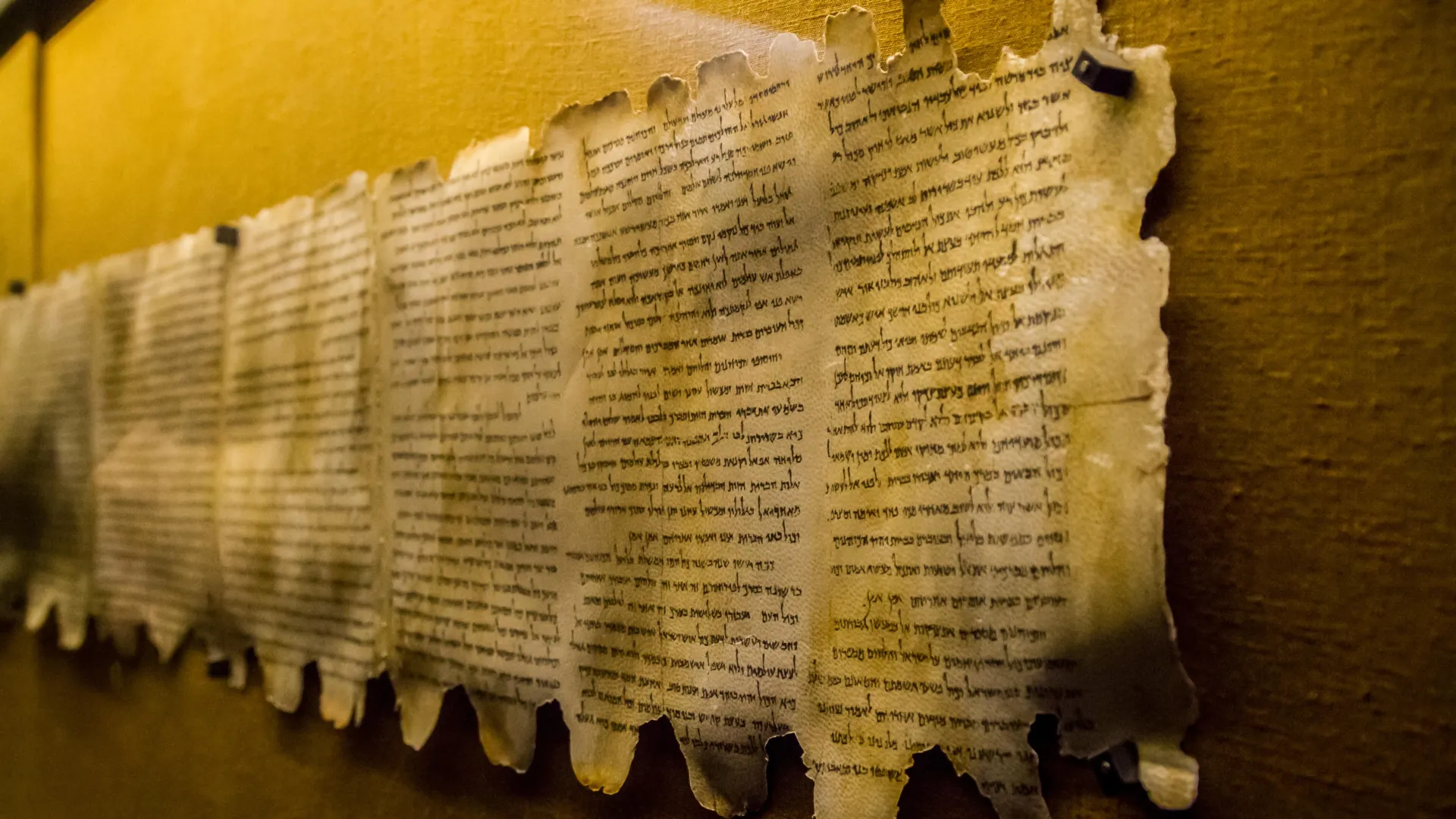
For decades, the arid caves of Qumran, overlooking the northwestern shore of the Dead Sea, have yielded secrets that have fundamentally altered our understanding of Second Temple Judaism. Among the most perplexing of these artifacts are the scrolls detailing a 364-day calendar—a system so distinct from the prevailing lunisolar traditions of the time that it sparked a scholarly firestorm. Was this calendar a functional tool for daily life, or was it merely a theological manifesto, a utopian vision of divine order never intended for human implementation?
A groundbreaking study by Professor Eshbal Ratzon of the Department of Jewish Philosophy and the Cohn Institute for the History and Philosophy of Science and Ideas at Tel Aviv University suggests that the binary nature of this debate is flawed. According to Ratzon, whose findings were recently published in the Tarbiz Quarterly for Jewish Studies, the truth lies in a nuanced historical evolution: the calendar was likely a lived reality during the sect’s formative years, only to be relegated to the realm of religious idealism as astronomical reality and political expediency collided.
The Architecture of Perfection: A Divine Mathematics
To understand the Qumran sect, one must understand their obsession with order. The Jewish world of the Second Temple period relied on a lunisolar calendar, which tracked the moon’s phases—a system that is inherently messy, requiring the periodic addition of "leap months" to keep the lunar year aligned with the solar cycle.
The Qumran sect, however, championed a 364-day year. While this might seem like a minor deviation, it was, in the eyes of the sect, a mathematical miracle. The number 364 is perfectly divisible by seven. This resulted in a year consisting of exactly 52 weeks. In this system, every festival, every Sabbath, and every holy day fell on the same day of the week, every single year.
For the community at Qumran, this was not merely a convenient way to organize a diary; it was a reflection of the "perfect divine system." They believed that God had established this calendar at the moment of Creation. By adhering to it, they were not just keeping time—they were aligning themselves with the primordial heartbeat of the universe. Moreover, by rejecting the lunar-based calendar of the Jerusalem Temple authorities, the sect was making a profound political statement: they refused to allow human high priests the power to alter sacred time.
The Chronology of a Failed Clock
The brilliance of the 364-day calendar was also its undoing. The astronomical year—the time it takes the Earth to orbit the sun—is approximately 365.24 days. By insisting on a 364-day year, the Qumran sect created an "astronomical deficit" of roughly 1.25 days every year.
While this error was negligible in the short term, the implications were catastrophic over time. In a society where religious festivals were inextricably linked to agriculture—the harvest of barley, the first fruits, the seasonal cycle of the land—a calendar that drifted from the seasons was a theological liability.
- Year 0: The calendar is aligned with the equinox.
- Year 10: The calendar drifts by 12.5 days.
- Year 20: The calendar drifts by 25 days, nearly a full month.
- Year 40: The calendar is out of sync by nearly two months.
If the Qumran community followed this strictly, a festival intended to celebrate the spring harvest would eventually be observed in the dead of winter. This "clock" was losing time, and eventually, the divergence between the sect’s holy calendar and the natural world would become impossible to ignore.
Evidence from the Scrolls: A Community Obsessed
Professor Ratzon’s research underscores just how central this issue was to the sect’s identity. The Qumran library is not a random collection of texts; it is a curated archive of a movement defined by its dissent. Nearly twenty scrolls discovered at Qumran deal explicitly with astronomy and calendrical calculations. This is a disproportionate number, signaling that timekeeping was a pillar of their theological framework.
The Book of Jubilees, a central text preserved among the Dead Sea Scrolls, serves as the manifesto for this movement. It portrays the 364-day calendar as a holy mandate given to Moses on Mount Sinai, explicitly condemning the "lunar" observers who, according to the text, would "err" in their observances and pollute the holy days. This indicates that the calendar was not just a side project—it was a battleground.
Political Shifts and the End of the Experiment
If the calendar was destined to fail due to astronomical drift, why did the sect persist? Prof. Ratzon argues that the calendar functioned as an anchor during the community’s early, isolationist phase in the second century BCE. It was a clear, unambiguous way to separate "the sons of light" from the "sons of darkness" in Jerusalem.
However, the political landscape of the Hasmonean period was volatile. As the sect’s relations with the Hasmonean dynasty evolved, the rigidity of their calendar began to chafe against the reality of their survival. During the reign of Alexander Jannaeus, a shift occurred. Jannaeus, though often at odds with the Pharisaic establishment, occasionally found common ground with dissenting groups.
Ratzon posits that as the political pressure to be "different" shifted, and as the practical difficulties of the calendar became insurmountable, the sect began to retreat from strict adherence. The calendar did not vanish, however. Instead, it underwent a process of "idealization." It was transformed from a daily functional tool into a sacred memory—a symbol of the "true" world created by God, which would only be fully restored in the messianic age, or the "End of Days."
Scholarly Implications: Bridging the Gap
The academic community has long been divided into two camps: those who argue the calendar was a functional system that periodically added intercalary days, and those who argue it was purely theoretical. Ratzon’s study offers a third way: it was a functional system that became a theoretical one.
This hypothesis explains the paradox of the scrolls. The texts are filled with precise, technical instructions for calculating the sun and moon, yet they show no evidence of the messy, manual adjustments required to keep a 364-day calendar aligned with the seasons. If the calendar was used early on and then abandoned as a practical guide, the lack of "correction" records in the later scrolls makes perfect sense.
Conclusion: A Living Memory
Professor Ratzon’s synthesis of history, theology, and astronomy provides the most comprehensive explanation to date regarding the Qumran calendar. By viewing the calendar as an evolving instrument of religious identity rather than a static mathematical rule, we gain deeper insight into the psyche of the Qumran sect.
"The Qumran calendar has long been regarded as one of the Qumran sect’s defining features, but also as one of the most baffling mysteries of the Dead Sea Scrolls," Ratzon notes. Her research suggests that the scrolls were not just recording time; they were preserving a vision of a world that was, for a brief, turbulent period, meant to be lived. When the heavens failed to align with their math, the sect did not abandon the math—they elevated it to the status of a holy mystery, a perfect clock for a perfect world that existed only in their prayers and their scrolls.
This study not only resolves a long-standing scholarly debate but also invites us to reconsider how marginalized communities use time, space, and structure to define their existence against the backdrop of a changing, often hostile, world. The Dead Sea Scrolls continue to speak, and thanks to this new research, the ticking of the Qumran clock is finally beginning to make sense.