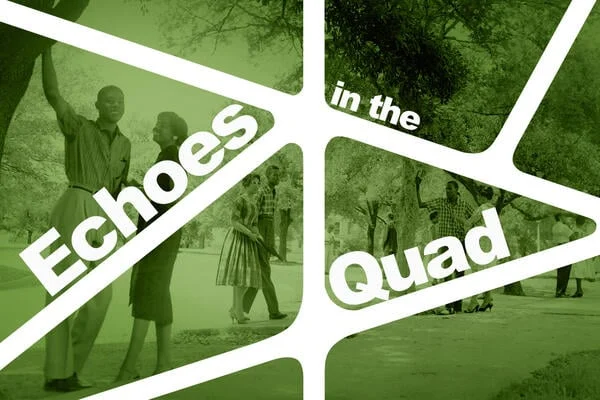
In the contemporary American university, a quiet, well-funded revolution is taking place—one packaged in the soft, appealing language of "civility." Across the country, state legislatures and university administrations are rushing to establish centers for "civil discourse" and "intellectual freedom." These initiatives, often presented as neutral remedies for a fractured political landscape, are increasingly viewed by scholars as a coordinated effort to reshape higher education in alignment with conservative ideologies.
By analyzing the historical misuse of civility as a cudgel, the strategic funding of these programs, and the disconnect between mandate and student engagement, it becomes clear that "civil dialogue" is often less about open exchange and more about the preservation of existing power structures.
A History of Weaponized Etiquette
To understand the modern obsession with civility, one must first confront its historical application. As UCLA professor Gaye Theresa Johnson noted in a landmark episode of NPR’s Code Switch, the call for civility has almost exclusively originated from the powerful, directed downward at those seeking change.
In the infancy of the American republic, the rhetoric of "savagery" was used to paint Indigenous peoples as uncivil, providing a convenient moral scaffolding for genocide and territorial theft. Following the Civil War, the narrative shifted toward Black Americans, who were portrayed as inherently incapable of "higher order" thought. During the Jim Crow era, fabricated stories of "vulgar" behavior by Black men were used to justify state-sanctioned violence, while simultaneously ignoring the systemic abuse inflicted upon Black women.
"People of color don’t get to orchestrate the terms of civility," Johnson observed. "Instead, we’re always responding to what civility is supposed to be." This historical pattern reveals that civility is rarely a neutral social grace; it is a tactical gatekeeping mechanism designed to police the boundaries of permissible dissent.
The Chronology of the "Civil Dialogue" Boom
The modern institutionalization of civility did not emerge in a vacuum. Scholars and journalists point to two pivotal catalysts: the 2016 election of Donald Trump and the global fallout following the October 7, 2023, attack on Israel. These events intensified public anxieties regarding "polarization"—the assumption that American politics is suffering from an equal and symmetric drift of both liberals and conservatives toward extremes.
Since 2016, this diagnosis of "polarization" has been used to justify an influx of university-based programs. These initiatives take many forms: independent university centers, internal department programs, and partnerships with external organizations or corporate consultants.
However, a closer look at the funding reveals a familiar architecture. The same ideological networks that historically backed humanities and civics centers are now the primary underwriters of civil dialogue initiatives. For example, recent reporting from Inside Higher Ed highlights that when lawmakers in Iowa, Utah, and West Virginia moved to establish new centers for "intellectual freedom," the explicit, stated objective was to promote "civil discourse."
The Disconnect: Mandates vs. Participation
Despite the legislative fervor surrounding these centers, a striking trend has emerged: a lack of organic student interest. At institutions like the University of Iowa, West Virginia University, and various schools across Ohio, enrollment in center-sponsored courses has been consistently low.
When student demand failed to materialize, state legislatures moved from persuasion to coercion. In both Ohio and Iowa, lawmakers have recently moved to mandate that students complete specific coursework through these centers to graduate—even when the content of these courses duplicates existing curricula in other departments. This heavy-handed approach reveals the core of the project: these centers are not necessarily responding to a student need for dialogue, but rather to a political need for institutional control.
Echoes of the Intercollegiate Studies Institute
The contemporary push for civility mirrors the strategic efforts of the mid-20th century, particularly the work of the Intercollegiate Studies Institute (ISI). Founded by Frank Chodorov and William F. Buckley Jr., the ISI was explicitly designed to shift the American university toward conservative goals.
As historian Lauren Lassabe Shepherd documents in her book Resistance From the Right, the ISI functioned as a powerful pipeline. It provided fellowships for doctoral students, funded guest lectures, and disseminated reading materials that championed Western civilization and free-market capitalism while actively working to erode student interest in "collectivist" values.
The strategy was simple but effective: recognize the university as the gateway to cultural and political power, and invest heavily in shaping the minds of the next generation of leaders. Today’s civility centers are, in many respects, the modern successors to this project. They utilize the facade of neutrality—"fighting polarization"—to create a pedagogical environment that prioritizes conservative viewpoints under the guise of balance.
The Myth of Symmetric Polarization
The premise that polarization is a symmetric, organic phenomenon has been heavily critiqued by political scientists. Vanderbilt University historian Nicole Hemmer has argued that the current state of U.S. politics is not a product of two equally radical sides, but the result of a deliberate, fifty-year project by right-wing activists to push the Republican Party further to the right.
Lilliana Mason, a leading political scientist at Johns Hopkins University, has challenged the "civility-as-a-cure" narrative directly. In her recent research, she notes that the current level of animosity is a predictable outcome when an extremist faction attempts to strip away the hard-won rights of the majority.
"When we focus on polarization as the problem, the solution is for everyone to quiet down and be ‘civil,’" Mason explained. "This is an outcome that benefits those who are willing to grab as much power as they can without concern for legality or civility." Mason argues that when the problem is correctly identified as a threat to social progress, the solution is not silence or politeness—it is the active defense of democratic rights.
Implications: Civility as a Canard for Oppression
The implications of this trend are profound. We must ask: when is civility a constructive tool for democratic life, and when is it a canard for oppression?
Two centuries ago, in my home state of Virginia, the act of learning to read was illegal for Black people. It was not "civil dialogue" that overturned these laws; it was the visceral, often disruptive force of the Civil War and the relentless pressure applied by Black Virginians demanding their humanity.
The poet and activist Audre Lorde famously captured this dynamic when she described a white peer asking her to express her anger more "gently" so it could be heard. Lorde asked the essential question: "Is it my manner that keeps her from hearing, or the threat of a message that her life may change?"
When institutional programs demand a "civil" tone, they are often asking marginalized voices to prioritize the comfort of the status quo over the urgency of their lived experience. They are asking that the conversation be held on terms that do not threaten the existing power structure.
Conclusion: Piercing the Veil
The current proliferation of "civil dialogue" centers on college campuses serves as a warning. We must remain vigilant in distinguishing between genuine, bridge-building conversation and the strategic use of etiquette as a weapon against social progress.
Education is not meant to be a polite negotiation of the status quo; it is a space for critical inquiry, dissent, and the pursuit of justice. If we are to serve our students, we must teach them not only how to speak to one another with respect, but also how to identify when that respect is being used as a mask for authoritarianism.
We owe it to the future of our democracy to pierce these pernicious veils. The goal should not be to "quiet down," but to ensure that our discourse is honest, even when—and especially when—it is uncomfortable. True civic engagement requires the courage to speak truth to power, regardless of whether that power finds our tone "civil."