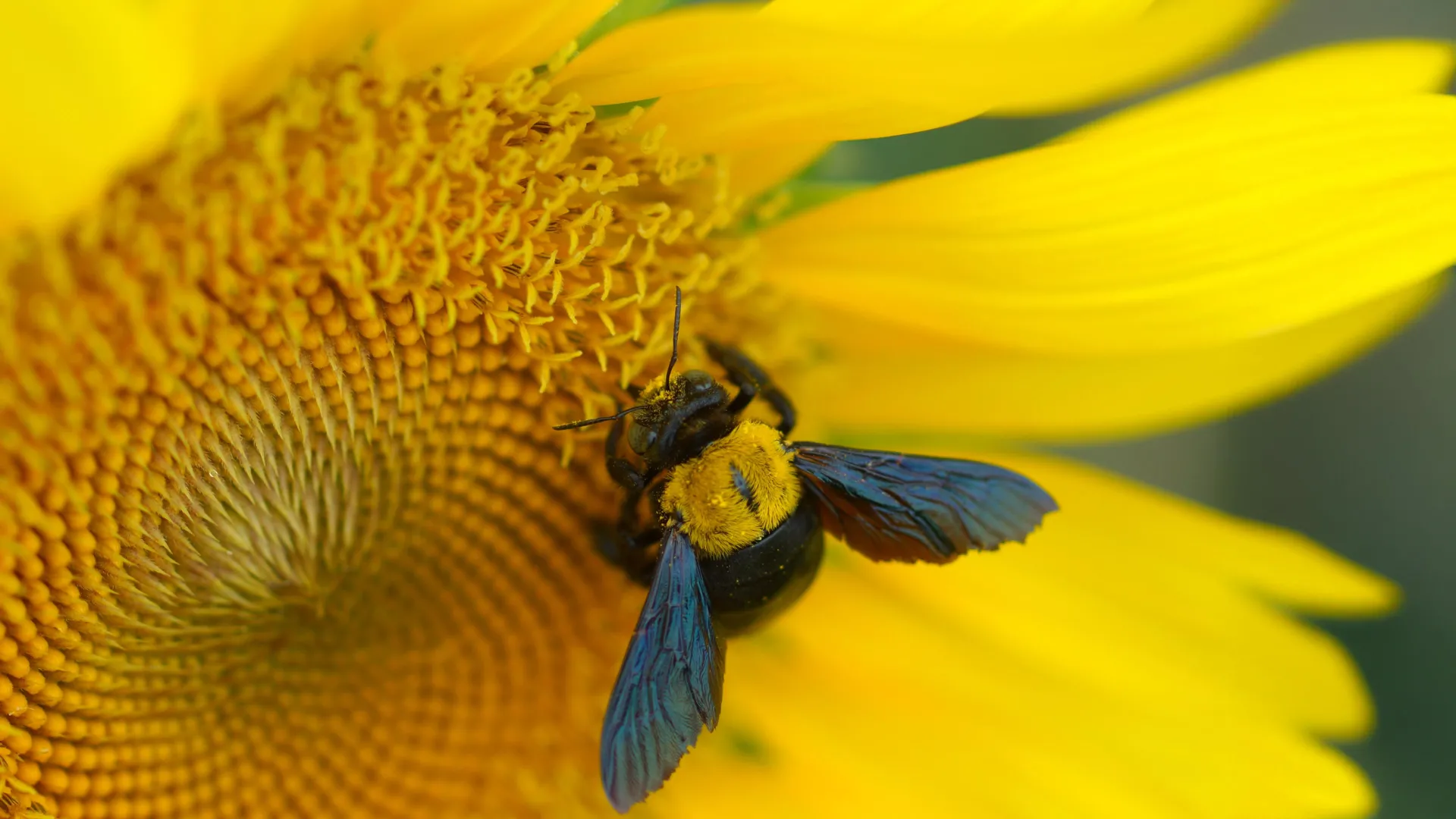
In the intricate tapestry of Australia’s biodiversity, native bees serve as the invisible architects of our food security and ecosystem health. However, a groundbreaking study published in Nature Communications has sounded a dire alarm: the very way these insects build their homes may be determining their survival in an era of rapid climatic shifts.
New research, conducted by an expansive coalition of Australia’s leading academic institutions, reveals that species nesting within the thin, exposed walls of plant stems are facing the most acute immediate threat from rising global temperatures. While subterranean dwellers have the luxury of thermal regulation through the earth, those living above ground are increasingly exposed to environmental extremes that threaten to push them toward extinction.
The Architectural Divide: Why Nesting Habits Dictate Survival
Australia is home to an astonishing array of approximately 1,700 native bee species. To understand the risks posed by climate change, researchers from Macquarie University, The University of Sydney, La Trobe University, Flinders University, the University of Wollongong, Adelaide University, and The University of Queensland categorized these insects based on their architectural preferences.
Broadly, native bees fall into three distinct nesting categories: ground-nesters, cavity-nesters (utilizing hollows in wood or branches), and stem-nesters (occupying the narrow, pithy interiors of plant stalks).
The study highlights a stark disparity in thermal buffering. Ground-nesting bees, by virtue of their subterranean homes, possess an innate climate-mitigation strategy. The earth provides a natural, stable thermal environment, insulating larvae from the erratic spikes in temperature that characterize modern heatwaves. Conversely, stem-nesters occupy thin, exposed plant tissue that offers virtually no insulation. As ambient temperatures rise, the internal temperature of these stems tracks the external environment almost perfectly, leaving the developing brood with no refuge from the scorching heat.
Dr. Carmen da Silva, lead author of the study and a Research Fellow in the Pollinator Futures Research Centre at Macquarie University, emphasizes the severity of this vulnerability. "Bees that nest underground can hide from extreme heat," she explains. "As a result, they don’t experience temperatures as high as those that live above ground, particularly species that live in thin plant stems. Stem-nesting species appear to have the lowest capacity to escape unfavorable environmental temperatures and are likely to be the most impacted by anthropogenic climate change in the near term."
Chronology of the Research: Unpacking the Data
The study did not occur in a vacuum; it represents the culmination of years of field research spanning the Australian continent. By analyzing 95 distinct native bee species across a vast latitudinal gradient—from the sweltering tropical north to the temperate southern regions—the research team sought to map the evolution of heat tolerance against the backdrop of a warming world.
The Phases of Investigation:
- Site Selection and Sampling: Researchers identified 95 representative species across diverse Australian ecosystems to ensure a wide spectrum of environmental exposure and evolutionary history.
- Thermal Tolerance Mapping: The team conducted rigorous laboratory testing to determine the critical thermal maxima (CTmax) for each species—the temperature at which a bee loses the ability to function.
- Environmental Modeling: These physiological thresholds were cross-referenced with local climate data and the specific nesting architecture of each species.
- Vulnerability Synthesis: The final phase involved modeling the likelihood of "thermal mismatch," where the species’ physiological limit is exceeded by projected future temperature increases in their specific habitats.
Supporting Data: The Paradox of Heat Tolerance
One of the most counterintuitive findings of the study lies in the relationship between heat tolerance and climate risk. It is a common assumption that a species with high heat tolerance is "safer" in a warming world. However, the data provided by the research team suggests the opposite.
Dr. Vanessa Kellermann, a Senior Lecturer at La Trobe University and a senior author on the paper, notes that this is one of the most significant challenges in modern ecological forecasting. "We found bee species with the highest heat tolerance were not necessarily the safest from warming," she says. "Many of them already live in extremely hot environments."
The data indicates that species inhabiting the tropics have evolved to function near their physiological limits. While they may appear "robust" because they can survive heat that would kill a southern species, they possess very little "thermal safety margin." Consequently, even minor increases in temperature—well within the range of climate change predictions—could prove catastrophic for these highly adapted populations. They have essentially run out of "room" to adapt further.
Official Responses and Ecological Implications
The implications of this research extend far beyond the welfare of the bees themselves. As primary pollinators, these insects are the linchpins of both wild botanical diversity and industrial agriculture.
The Economic and Ecological Stakes
Dr. da Silva emphasizes that the loss of these pollinators would have cascading effects. "Bees are critical in ecosystems all over the world because of their role as pollinators," she states. "They sustain native ecosystems and play a crucial role in agricultural crop production."
In the tropical and subtropical regions of Australia, native bees are the silent partners of the agricultural sector. They are essential for the pollination of high-value crops, including:
- Macadamia nuts: A major Australian export reliant on specific native pollinators.
- Avocados: Highly dependent on consistent insect pollination for fruit set.
- Mangoes and Lychees: Tropical fruits that require the specific foraging behaviors of native species to reach commercial yields.
If these bees decline, the economic fallout for the agricultural sector could be significant. More importantly, the collapse of these populations would likely lead to a loss of genetic diversity in native flora, as many plant species have evolved specific, exclusive relationships with particular native bee species over millions of years.
Bridging the Knowledge Gap: The Road Ahead
Despite their ecological importance, much of Australia’s native bee population remains shrouded in mystery. The sheer scale of diversity, combined with the lack of historical data, makes conservation efforts difficult.
Dr. Ros Gloag, co-senior author and Senior Lecturer in Evolutionary Biology at the University of Sydney, views this study as a call to action for the scientific community. "We still know so little about most of Australia’s amazing native bees," Dr. Gloag admits. "This study helps us recognize that having a better understanding of native bee behavior is key to identifying the greatest threats to their wild populations."
Future Research Directions
The researchers suggest that future efforts must focus on:
- Micro-climate Mapping: Understanding how variations in local vegetation cover can protect stem-nesting species.
- Habitat Restoration: Investigating whether creating artificial nesting environments or maintaining specific types of plant debris can help mitigate the thermal risks for stem-nesters.
- Long-term Monitoring: Establishing longitudinal studies to observe shifts in bee populations in the tropics versus the south to see if species are migrating to cooler latitudes or higher altitudes to escape rising heat.
Conclusion: A Delicate Future
The findings of this study provide a sobering look at the intersection of climate change and evolutionary biology. For the stem-nesting bee, the "architecture" of its life is its greatest vulnerability. As the mercury rises, the narrow, exposed stems that have served these insects for eons are becoming death traps.
The research underscores a vital lesson in conservation: we cannot view climate change as a uniform threat that affects all species equally. Instead, it is a surgical force that exploits the specific biological and behavioral vulnerabilities of individual species. Protecting these vital pollinators will require a nuanced approach—one that goes beyond broad environmental policy and addresses the specific needs of the hidden, industrious insects that keep our ecosystems and food systems alive.
As the scientific community continues to peel back the layers of these complex interactions, the message is clear: understanding the behavior and ecological niches of our native bees is no longer just an academic pursuit—it is a fundamental requirement for preserving the stability of the natural world in a warming century.