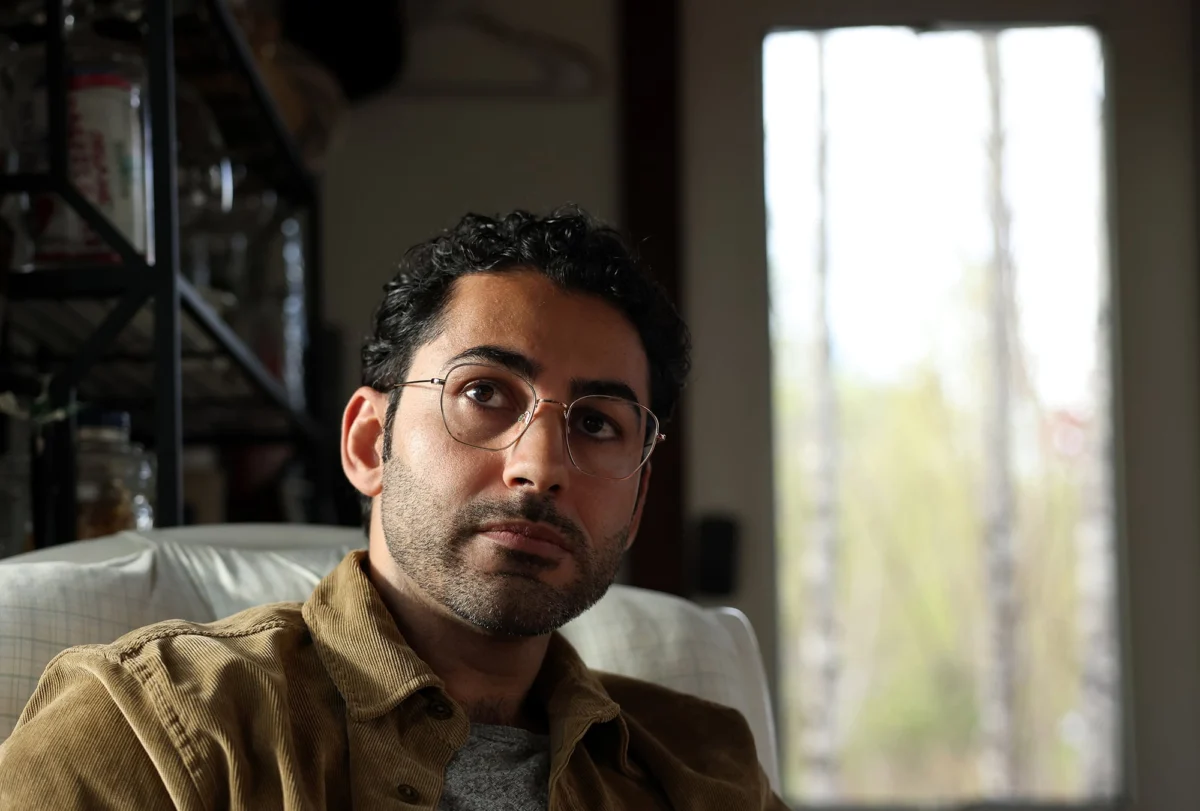
In a high-stakes legal confrontation that has sent shockwaves through the American higher education landscape, Columbia University graduate student Mohsen Mahdawi finds himself at the center of a federal effort to strip him of his residency status. The Trump administration, in a move that civil liberties advocates describe as a chilling escalation of ideological policing, is attempting to deport the Palestinian refugee based solely on his participation in pro-Palestinian demonstrations.
The case of Mr. Mahdawi, who has resided in the United States since 2014, has become a lightning rod for debates surrounding the reach of the First Amendment, the weaponization of immigration law, and the autonomy of the judiciary in an era of heightened political tension.
A Chronology of Escalation
The legal campaign against Mr. Mahdawi is not an isolated incident but rather the latest chapter in a broader, sustained effort by federal authorities to target international students who have exercised their right to protest.
The Initial Crackdown (2025)
The conflict began in early 2025 when the Trump administration intensified its scrutiny of campus protests. Mr. Mahdawi was swept up in this crackdown, spending 16 days in federal custody. At the time, his detention was criticized by human rights organizations as an attempt to intimidate student activists and stifle dissent regarding U.S. foreign policy. Despite the harsh treatment, Mr. Mahdawi remained committed to his academic pursuits and his advocacy.
Judicial Pushback and Administrative Retaliation (February 2026)
In a significant victory for the defense, an immigration judge terminated removal proceedings against Mr. Mahdawi in February 2026. This decision, which mirrored similar rulings in the case of Rümeysa Öztürk—another international student targeted for her activism—was based on the principle that the students’ activities were protected under the First Amendment.
However, the administration’s response was swift and unprecedented. Reports surfaced shortly thereafter that the government had removed the two judges who ruled against its deportation efforts. This administrative maneuver sparked outrage among legal scholars, who viewed the removal as a direct assault on the independence of the immigration courts.
The Current Crisis (June 2026)
The situation reached a new nadir last week when the Board of Immigration Appeals (BIA) overruled the previous termination of proceedings, declaring Mr. Mahdawi deportable. According to the American Civil Liberties Union (ACLU), which is leading Mr. Mahdawi’s defense, the decision relies on a memo purportedly authored by Secretary of State Marco Rubio. The memo argues that Mahdawi’s advocacy on behalf of Palestinian human rights undermines U.S. foreign policy, triggering the "foreign policy bar" of the Immigration and Nationality Act. While an order for removal has been issued, Mr. Mahdawi remains in the country under a temporary stay of deportation while his legal team mounts an appeal to the federal courts.
The Legal Framework: The "Foreign Policy Bar"
At the heart of this controversy is the government’s invocation of the "foreign policy bar." This legal provision grants the executive branch broad latitude to restrict the presence of noncitizens if their actions are deemed detrimental to the national interest or international relations.

The ACLU and other civil rights groups argue that the government is stretching this provision to unconstitutional lengths. In their official statement, ACLU officials noted, "The use of this provision to target the speech of noncitizens has been found to be likely unconstitutional by several federal courts."
The core of the argument is that the government is engaging in "viewpoint discrimination." By targeting students specifically for their pro-Palestinian advocacy, the administration is effectively punishing individuals for expressing political opinions that diverge from official state policy. Legal experts note that while the federal government has significant authority over immigration, that authority is not absolute and cannot be used to suppress speech that would otherwise be protected if spoken by a U.S. citizen.
Supporting Data and Broader Context
The targeting of Mr. Mahdawi is part of a larger trend that has seen international students facing increased administrative and legal pressure for their political involvement.
The "Deep Dive" into Student Speech
Reports from throughout 2026 indicate that the Department of Homeland Security (DHS) has been systematically monitoring student organizations and individuals participating in protests. The rationale often cited is "national security," yet in cases like that of Mr. Mahdawi and Mahmoud Khalil—another Columbia-affiliated student currently petitioning the Supreme Court—the subjects have not been charged with any criminal offenses.
The Pattern of Targets
The pattern suggests a deliberate strategy:
- Identification: Utilizing surveillance and campus reporting to flag students with international status who participate in protests.
- Detention: Using federal custody to exert pressure and disrupt academic progress.
- Legal Attrition: Initiating lengthy deportation proceedings, which, even when unsuccessful, force students to spend thousands of dollars on legal fees and live in a state of constant instability.
- Administrative Purge: Replacing judges or shifting venue if initial rulings do not align with the administration’s objectives.
Official Responses and Public Statements
The administration has remained largely opaque regarding the specifics of these cases, generally citing the sensitivity of foreign policy and the discretion afforded to the executive branch in immigration enforcement. However, the lack of transparency has drawn sharp rebukes from academic institutions and human rights advocates.
The ACLU’s ongoing litigation emphasizes the retaliatory nature of the proceedings. By tying the deportation specifically to the "speech of noncitizens," the government has invited a constitutional challenge that could potentially redefine the limits of executive power over international residents in the United States.
For his part, Mr. Mahdawi has maintained a stoic profile. Despite the looming threat of expulsion from the country he has called home for over a decade, his supporters emphasize that he continues to advocate for the rights of Palestinians, viewing the legal battle as an extension of his commitment to his principles.

The Implications for Higher Education
The implications of these developments for American universities are profound. International students represent a vital component of the research, cultural, and intellectual life of U.S. campuses. If students are made to fear that political activism—a hallmark of the university experience—could result in deportation, the resulting "chilling effect" could fundamentally alter campus discourse.
Impact on Academic Freedom
Colleges and universities have long prided themselves on being forums for the "free exchange of ideas." If the federal government successfully uses the foreign policy bar to silence international students, it creates a two-tiered system of speech rights: one for citizens, and one for everyone else.
The Global Reputation of U.S. Universities
The perception that the U.S. is an inhospitable environment for students with dissident views could lead to a "brain drain." Top-tier international talent may begin to look toward universities in Europe or Canada, where political participation by international students is not met with the threat of deportation.
Conclusion: A Constitutional Crossroads
The case of Mohsen Mahdawi is a litmus test for the resilience of democratic norms within the American judicial system. As the case heads to federal appellate court, it brings to the fore an uncomfortable question: Is the United States a nation that protects the fundamental rights of all who reside within its borders, or is it a nation where the right to speak is contingent upon a government-approved political agenda?
The outcome of this appeal will likely set a significant precedent. If the court upholds the government’s use of the foreign policy bar to target noncitizen speech, it will grant the executive branch unprecedented power to curate political thought on American campuses. If, however, the judiciary reaffirms the primacy of the First Amendment, it will signal that even in an era of intense geopolitical conflict, the core values of open expression remain protected by law.
For now, Mohsen Mahdawi remains in the U.S., a student caught in the gears of a legal system that he and his counsel argue is being used as a tool of political retaliation. His struggle has become a focal point for all who believe that the right to advocate for human rights should not be a cause for exile.