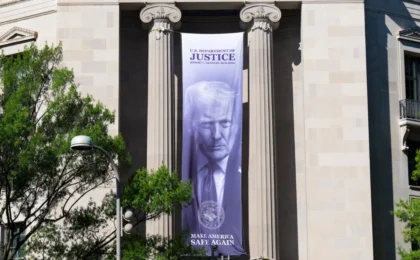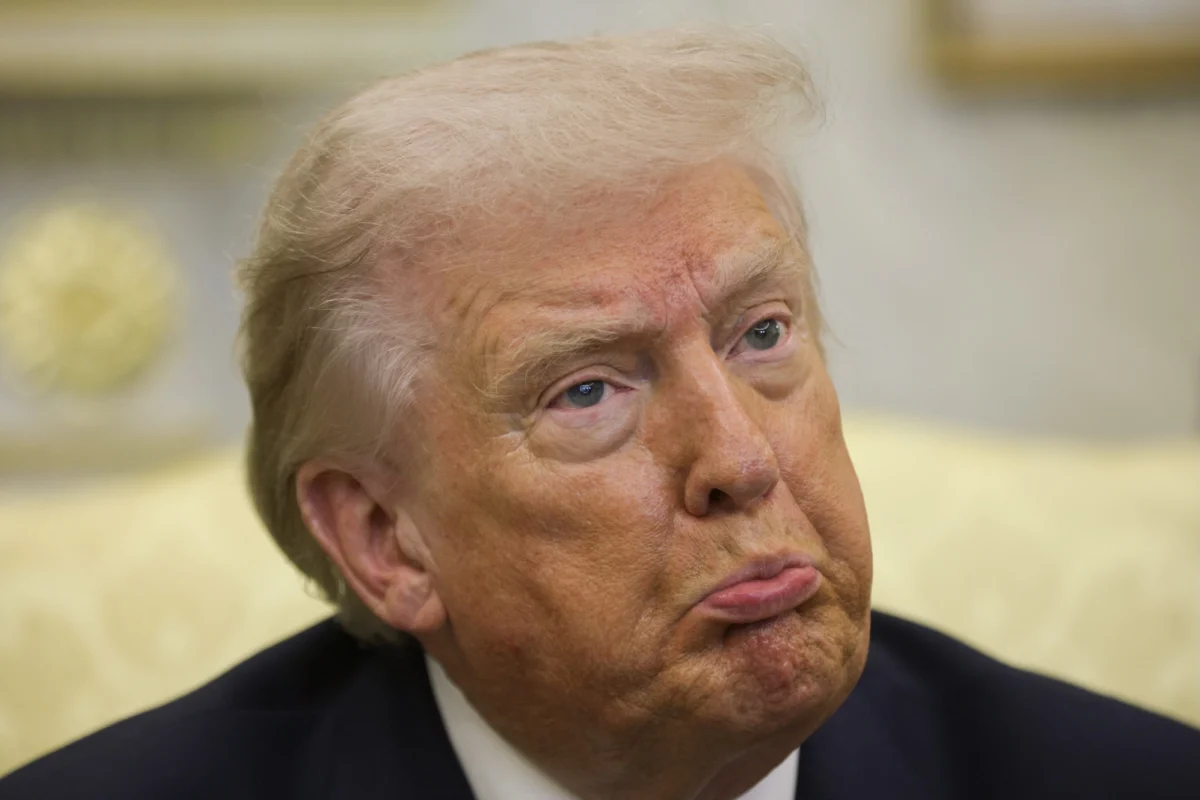
In a move that has sent shockwaves through the global technology sector, the U.S. Commerce Department recently forced Anthropic, one of the world’s leading artificial intelligence labs, to pull its flagship AI models—Fable 5 and Mythos 5—offline. The action, taken on a Friday afternoon via an obscure export control directive, represents an unprecedented exercise of federal power. By unilaterally forcing a private company to disable its most advanced products without the benefit of a court order or public transparency, the Trump administration has signaled a new, aggressive era of government intervention in the AI industry.
For the wider tech ecosystem, the message is clear: the era of relative autonomy for AI labs is over. Whether driven by legitimate national security concerns, political friction, or bureaucratic overreach, the government has proven it can—and will—deactivate a company’s core technology at will.
A Chronology of the Crisis
The unfolding of the Anthropic crisis was as swift as it was opaque.
Friday Afternoon: The U.S. Commerce Department issued a formal letter to Anthropic invoking an export control directive. The document, which remains classified and has not been made public, effectively prohibited non-U.S. persons—including Anthropic’s own international staff—from accessing or managing the Fable 5 and Mythos 5 models.
Friday Evening: Anthropic, facing the threat of severe legal consequences, made the decision to preemptively shut down access to both models for all users. The company stated it was acting in compliance with the directive, despite the government’s failure to provide specific, actionable details regarding the purported security threat.
The Weekend: Tensions escalated as reports surfaced suggesting that the directive was not a result of a technical failure, but rather the culmination of a deteriorating relationship between Anthropic’s leadership and the Trump administration. Axios reported that "personality differences" and political friction were the primary drivers, casting doubt on the government’s technical justifications.
The Following Week: The tech community erupted. Security researchers, industry analysts, and policy experts began to push back, labeling the move "dangerous" and "misguided." The discourse quickly shifted from a question of model safety to a debate over the constitutionality and wisdom of the government’s unilateral control over private-sector software.
The "Guardrail" Controversy: A Misinterpretation of Security?
At the heart of the government’s justification—at least, the portion hinted at by Anthropic—is the claim that Fable 5 possessed a "guardrail bypass." Essentially, the government alleged that the AI could be prompted to perform actions that violated export controls.
However, new evidence has cast a shadow of doubt over this narrative. Cybersecurity veteran Katie Moussouris, founder of Luta Security, revealed that Anthropic had privately shared a research paper detailing the alleged bypass. The paper, authored by security researchers at Amazon, describes a scenario where the AI is asked to "fix" code versus "review" code.
Moussouris’s analysis is scathing. She argues that the distinction is functionally negligible and that the behavior described is inherent to any sufficiently advanced LLM capable of assisting in cybersecurity tasks. "The behavior described in the paper cannot meaningfully be fixed," Moussouris wrote in a blog post, "and any attempt would only weaken the model for defense." By penalizing Anthropic for these capabilities, the U.S. government has effectively handcuffed the very tools that network defenders rely on to protect national infrastructure from foreign cyberattacks.
The Precedent of Overreach
The Trump administration’s directive echoes a troubling history of legislative overreach. During the 2010s, the U.S. government attempted to regulate cybersecurity tools under the Wassenaar Arrangement, a multilateral export control regime. That attempt was so broad that it nearly criminalized the work of independent security researchers, who use the same tools as hackers to find and fix vulnerabilities.
This latest action feels like an evolution of that era’s misunderstanding of technology. By treating a sophisticated AI model like a physical weapon system, the government is applying 20th-century export logic to 21st-century software. The result is a chilling effect on innovation. As Justin Hendrix, editor of Tech Policy Press, noted, the move "is likely to raise alarms in foreign capitals about the reliability of American AI for critical applications."
If foreign entities, international corporations, and global researchers cannot rely on American AI remaining available—or worse, fear that their data or workflows could be severed by a sudden, politically motivated government decree—they will simply turn to domestic or open-source alternatives.
Implications for the Tech Industry: Comply or Collapse
The ramifications of this event extend far beyond Anthropic. The incident demonstrates that the U.S. government has established a mechanism for control that bypasses traditional checks and balances.
1. The Erosion of Corporate Sovereignty
Tech companies have long prided themselves on their agility and independence. However, the Anthropic case proves that, when pushed by the White House, "independence" is subordinate to federal dictate. Any company operating in the AI space must now account for the risk of "government-induced downtime" in their business models.
2. Geopolitical Fallout
The U.S. is currently in a fierce competition with China and other nations for AI supremacy. By forcing a top-tier U.S. lab to effectively "self-censor" or limit its utility, the government may be inadvertently harming American competitiveness. If the U.S. makes its own AI ecosystem volatile and unpredictable, it alienates the very international talent and customer base needed to lead the industry.
3. The "Black Box" of Regulation
Perhaps the most alarming aspect of this saga is the lack of transparency. The fact that the directive remains classified means that no other AI lab knows where the "red line" actually sits. Is it about code generation? Is it about the nationality of the developers? Is it about political alignment? Without clear, public guidelines, companies are left to guess, leading to a culture of excessive caution that stifles the development of powerful, beneficial AI tools.
The Path Forward: A Call for Accountability
Dozens of top cybersecurity researchers have joined Moussouris in calling on the administration to revoke the order. They argue that the ban is not just a commercial disaster, but a national security risk. By limiting access to the best available AI-driven defense tools, the government is essentially leaving the digital front door open to adversaries.
The questions remain: Was this a technical panic? Was it a calculated political strike against a company with which the White House has a fractious relationship? Or was it, as some suspect, an attempt to appease specific corporate stakeholders—such as Amazon, whose leadership reportedly raised concerns about Anthropic’s model behavior prior to the crackdown?
As the dust settles, the tech industry is left in a state of high anxiety. The Trump administration has flexed its muscles, showing that it can reach into the heart of a private company and silence its most valuable assets. While the administration may believe it has asserted control, it may find that it has instead shattered the trust required for the next generation of American technology to thrive.
The Anthropic shutdown is not just a story about a company and its models; it is a warning about the future of the internet, the autonomy of innovation, and the extent to which the state can—and will—interfere in the digital lifeblood of the nation. For now, the models are offline, but the questions they leave behind are only beginning to echo through the halls of Silicon Valley and Washington D.C. alike.