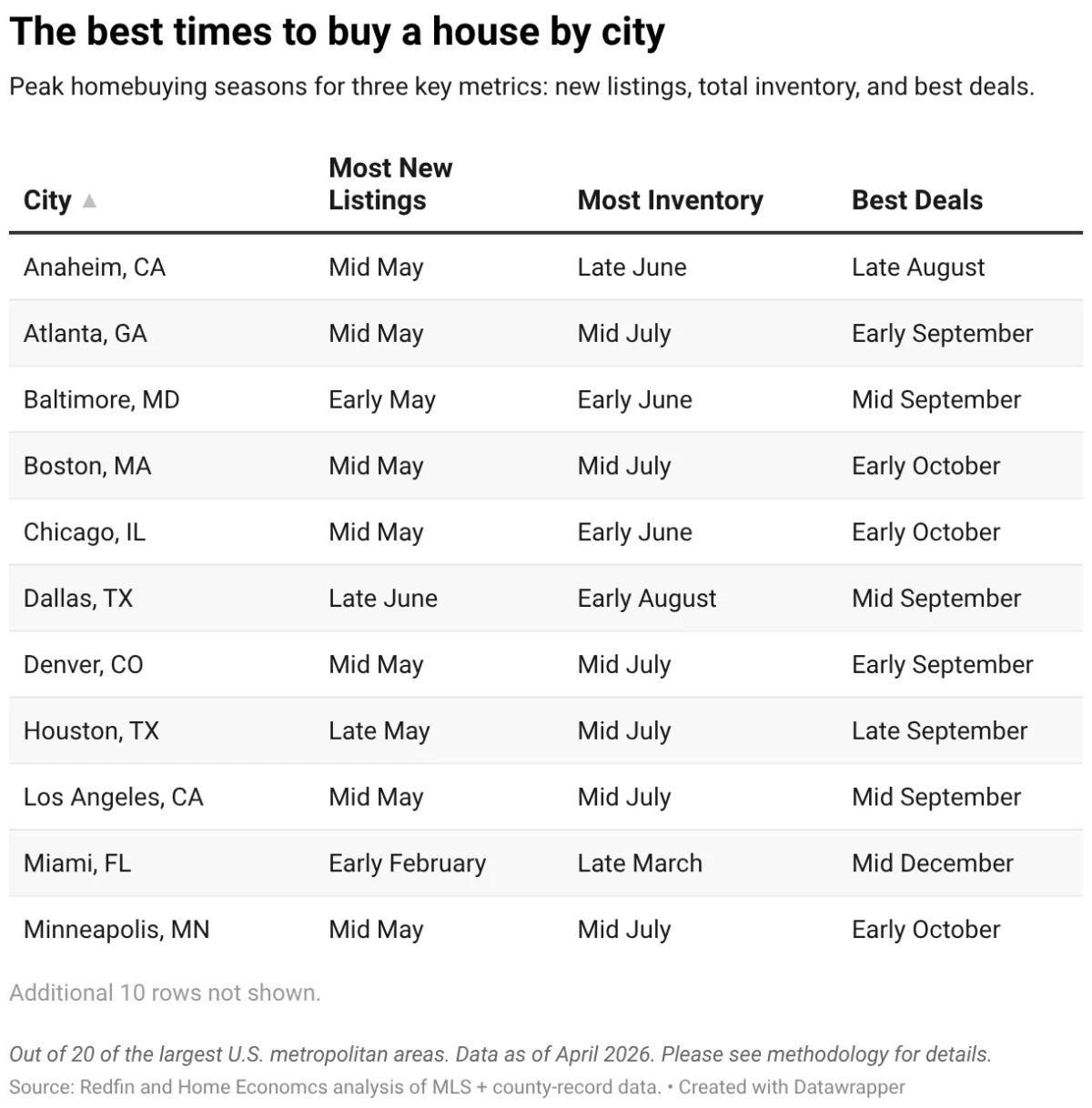
For many Americans, the dream of homeownership remains a cornerstone of financial stability, yet the path to the closing table has become increasingly complex. In the current economic landscape—defined by persistent affordability challenges, fluctuating mortgage rates, and a shifting balance of power between buyers and sellers—the question of when to purchase a property has evolved from a simple calendar check into a nuanced strategic calculation.
While conventional wisdom has long pointed toward the spring as the optimal time to enter the market, data from 2026 suggests a shift in the seasonal rhythm. For prospective homeowners, understanding the interplay between inventory levels, competitive intensity, and seller concessions is now the key to securing not just a roof over one’s head, but a sound financial investment.
The State of the 2026 Housing Market: A Summary of Key Realities
The housing market of 2026 is a study in contrasts. Nationally, the market is characterized as "slow and expensive," yet it is uniquely favorable for those with the financial wherewithal to navigate it. The most significant shift in recent years is the newfound leverage enjoyed by buyers.
Recent data indicates that there are over 51% more sellers than buyers across the country. This surplus of supply relative to demand has created a rare environment where the buyer is no longer the supplicant. Sellers, facing a cooler market, are increasingly turning to incentives to move their inventory. Consequently, we are seeing a record rate of seller concessions—ranging from covering closing costs to funding interest rate buydowns or financing necessary home repairs.
However, these opportunities exist within a framework of high costs. With the median home price hovering above $400,000 and the typical housing payment exceeding $2,600 per month, the barrier to entry remains steep. The current environment demands that buyers be more than just ready; they must be strategic.
The Seasonal Chronology: Navigating the Buying Window
To optimize a home purchase, buyers must understand the seasonal flow of the market. While local conditions vary, the national housing market generally follows a predictable cycle.
Late Spring: The Peak of Fresh Inventory
Late spring remains the most active period for new listings. As the weather warms, homeowners who were hesitant during the winter months begin to list their properties. For buyers, this provides the greatest opportunity to see "fresh" inventory—homes that are new to the market and have not yet suffered the stigma of sitting for months. However, this is a double-edged sword. Because this period coincides with peak buyer activity, it is also the season most likely to result in bidding wars and premium pricing.
Mid-Summer: The Sweet Spot for Selection
By mid-summer, the market begins to transition. The inventory built up during the spring remains, and the frantic pace of the initial spring rush begins to cool. This is often the ideal window for buyers who value choice. You are less likely to face the aggressive competition of April or May, yet the selection of homes remains robust. Current 2026 data confirms that mid-summer provides a high level of inventory, making it a prime time for those who have specific criteria and want to avoid the "FOMO" (fear of missing out) of the spring.
Early Fall: The Window for Value
As the calendar turns toward autumn, the urgency to sell intensifies for many homeowners. Sellers who haven’t moved their property by September are often motivated to make deals before the holiday season and winter slowdown. This is when price drops, discounts, and buyer concessions reach their peak. For the budget-conscious buyer, early fall offers the best chance to negotiate a lower purchase price or secure significant seller credits.
Expert Insight: Why August Stands Out
Daryl Fairweather, Chief Economist at Redfin, suggests that August serves as the ultimate "Goldilocks" month for the modern buyer.
"August is the prime time for homebuyers," Fairweather explains. "Sellers are beginning to offer more concessions, inventory is still well-stocked from spring, and there are still enough new listings to keep things fresh. But buying a house is local and personal, and different priorities produce different timelines. In general, the best time to buy is when you’re financially comfortable, have found the right home, and are ready to move."
Fairweather’s assessment underscores the danger of "timing the market." While August provides a statistical advantage, the best time to buy is ultimately defined by the buyer’s individual life circumstances rather than a specific date on the calendar.
The Geography of Timing: Why Markets Differ
The concept of a "buying season" is not universal. The degree of seasonality in a housing market is often tied to geography and climate.
In northern cities like Boston, where winter weather significantly impacts property viewings and moving logistics, the market exhibits sharp, defined swings. The contrast between the spring peak and the winter lull is dramatic, making the timing of an offer critical. Conversely, in sunbelt markets like Tampa, the seasonal fluctuations are far more muted. Consistent, year-round activity in warmer climates means that inventory and demand remain relatively stable, rendering the "best time to buy" less about the month and more about the specific property’s days on market.
Furthermore, some major urban hubs defy national trends entirely. For example, while the national peak for inventory might be summer, cities like San Francisco may see inventory peaks as late as October. Buyers in these specialized markets must consult with local experts who understand the granular micro-trends of their specific neighborhoods.
Strategies for Securing a Better Deal
In the current climate, where demand is tempered by high interest rates and cost-of-living concerns, buyers have a unique opportunity to negotiate. To capitalize on this, consider the following tactical approaches:
- Prioritize Days on Market: Focus your search on properties that have been listed for 30 days or more. These sellers are often more amenable to price reductions or concessions than those whose homes were listed just days ago.
- Request Seller Concessions: Instead of solely focusing on the purchase price, negotiate for seller-paid concessions. Using these funds to temporarily buy down your mortgage rate can significantly lower your monthly payment, which is often more beneficial in the long term than a minor reduction in the home’s sticker price.
- Perform Rigorous Due Diligence: Use the current lack of competition to your advantage by insisting on thorough inspections. With less pressure to waive contingencies, you can protect yourself from hidden costs that often arise after closing.
- Leverage Local Market Knowledge: Partner with a real estate agent who can provide data on comparable sales and current seller sentiment in your specific zip code.
The "Wait and See" Dilemma: Is Patience a Virtue?
A common question for prospective buyers today is whether they should wait for mortgage rates to drop or for prices to correct further. The allure of "timing the market" is strong, but it is rarely a successful strategy for the average consumer.
The economic reality is that if mortgage rates fall significantly, the latent demand—the massive pool of buyers currently sitting on the sidelines—will rush into the market. This surge in activity will inevitably create upward pressure on home prices, potentially erasing any savings gained from lower interest rates.
As Fairweather notes, "Housing is a major investment, and timing the market to score a discount is difficult and may not make sense for everyone. Housing is expensive, and while affordability is improving, it’s unlikely to substantially move until economic uncertainty eases and homebuilding improves. Don’t stretch your budget or rush the process if you don’t need to."
Implications for the Future
The housing market of 2026 is moving toward a state of equilibrium, but it remains a challenging environment for first-time buyers and those on tight budgets. The key takeaway for the coming months is that the market has shifted from a seller-dominated frenzy to a period of negotiation.
For those who are financially prepared—meaning they have stable employment, a sufficient down payment, and a long-term outlook—the current market offers a rare window to buy a home with fewer competing offers and more concessions. The "best time" to buy is not a fixed date, but a confluence of external market conditions and internal financial readiness. By focusing on long-term stability rather than short-term market timing, buyers can navigate the complexities of 2026 to find a home that serves as both a foundation for their lives and a cornerstone of their financial future.