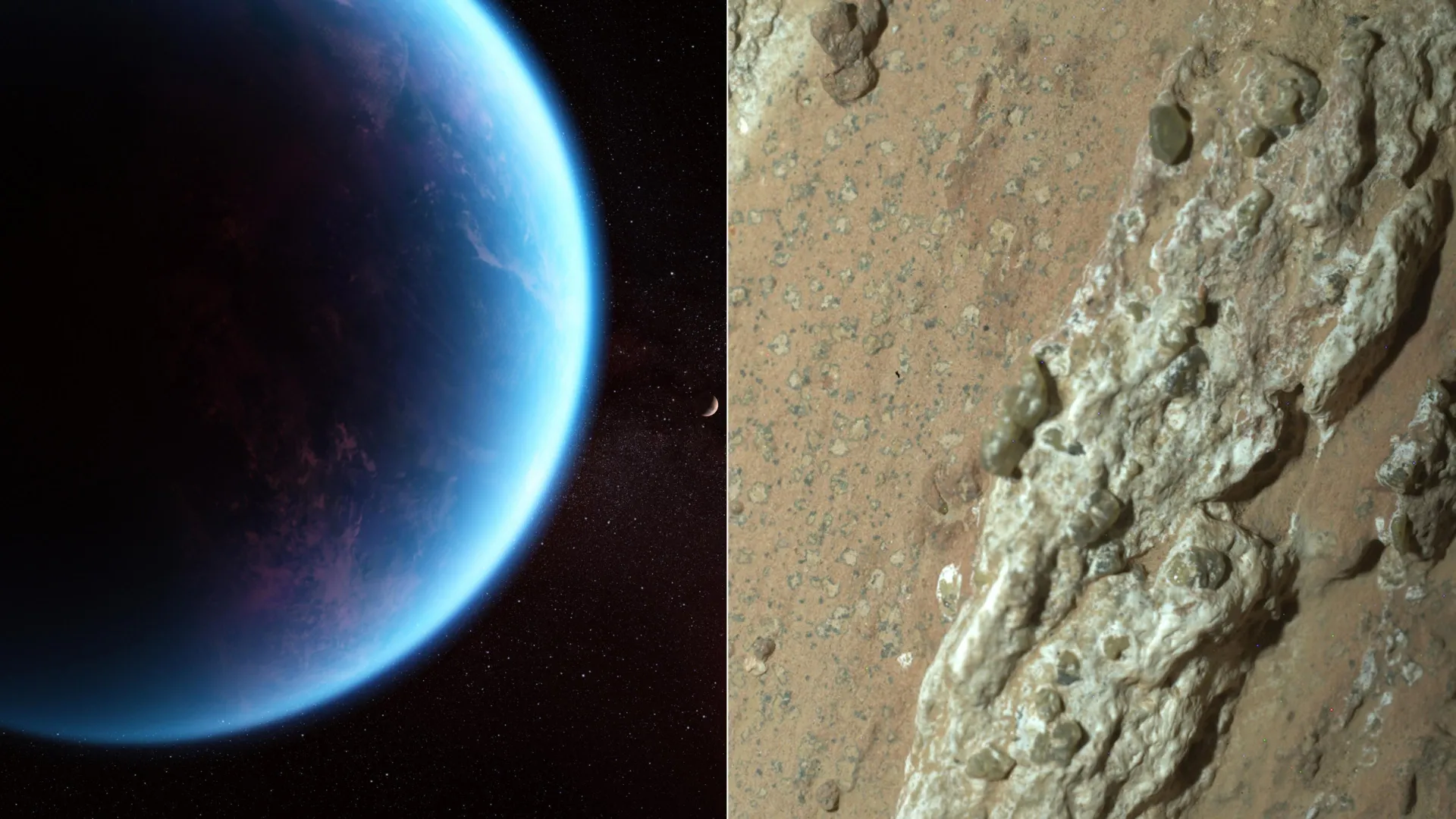
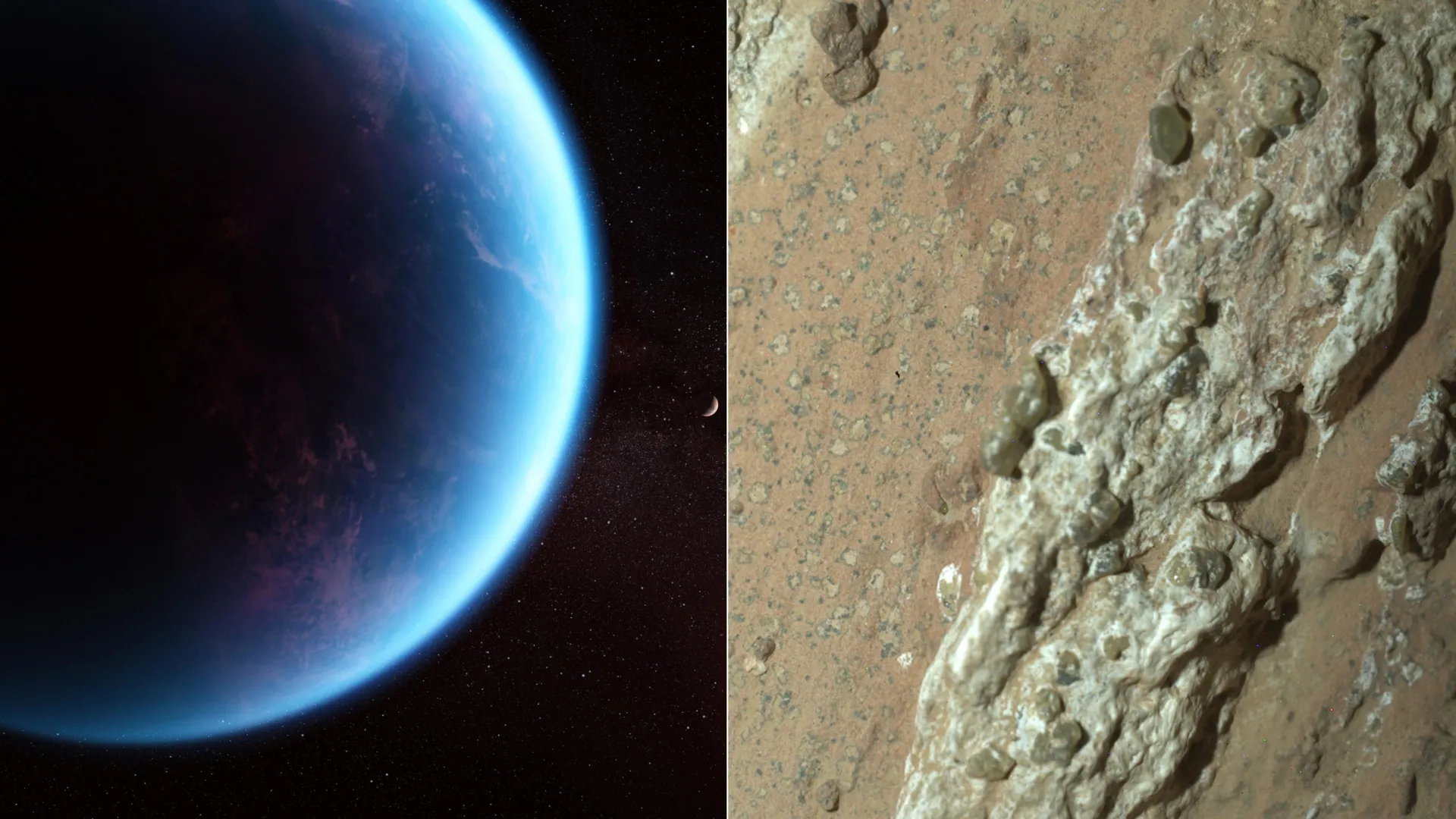
The prospect of discovering extraterrestrial life has transitioned from the realm of science fiction to a tangible, albeit elusive, scientific objective. In 2025, the global scientific community was set ablaze by two high-profile announcements that promised to rewrite our understanding of the cosmos. First came the data from the exoplanet K2-18b, suggesting the presence of atmospheric markers potentially linked to biological activity. Shortly thereafter, NASA’s Perseverance rover revealed the “Cheyava Falls” rock sample on Mars, featuring mineral “leopard spots” that mirror terrestrial microbial signatures.
These headlines, supported by statements from high-ranking officials like NASA Administrator Sean Duffy, suggested we were on the precipice of a paradigm-shifting discovery. Yet, these moments of public fervor often obscure a more complex reality: what does the wider scientific community truly believe? When the media broadcasts claims of "the strongest hints yet" of life beyond Earth, they often rely on a handful of vocal experts. This creates an illusion of a binary debate—a simplistic “for” or “against”—that rarely captures the nuanced, often skeptical, and deeply cautious temperature of the global research field.
A Chronology of Anticipation: 2025’s Pivotal Moments
The search for extraterrestrial life is defined by moments of intense, rapid-fire discovery. The year 2025 proved to be an exceptional chapter in this history, marked by two distinct, high-stakes claims that captured the world’s attention.
April 2025: The K2-18b Atmospheric Signal
In the spring of 2025, researchers analyzing data from the James Webb Space Telescope reported the detection of potential dimethyl sulfide (DMS) and dimethyl disulfide (DMDS) in the atmosphere of K2-18b, a "sub-Neptune" exoplanet located 120 light-years away. On Earth, DMS is produced almost exclusively by life, specifically marine phytoplankton. The media coverage was immediate and breathless, framing the finding as a potential smoking gun for alien life.
September 2025: The Cheyava Falls Mystery
Months later, NASA’s Perseverance rover drilled into a rock formation in the Jezero Crater on Mars known as “Cheyava Falls.” The rover’s instruments identified distinctive mineral rings—colloquially termed “leopard spots”—that bear a striking resemblance to biosignatures left by microbial life on Earth. NASA Administrator Sean Duffy described the discovery as the “closest we have ever come” to finding life on the Red Planet, a statement that effectively reset the public’s expectations regarding Martian habitability.
The Reality of Expert Opinion: Beyond the Headlines
While the public and the press were caught in a whirlwind of speculation, a team of researchers—including experts from the Centre for Scientific Community Opinion Polling and Evaluation (C-Scope) at Durham University—sought to bypass the media filter. They initiated a systematic survey of hundreds of astrobiologists globally, within days of each announcement, to determine the actual pulse of the scientific community.
The findings painted a portrait of extreme caution. When asked if the data from K2-18b provided evidence that we had "probably found extraterrestrial life," a mere 6.6% of astrobiologists agreed. A staggering 65.4% disagreed, while 28% adopted a neutral, wait-and-see stance.
The Martian discovery, while viewed with more optimism, still failed to garner a consensus. Only 15.1% of surveyed experts agreed that the Cheyava Falls sample likely contained evidence of life. While disagreement fell to 44.6%, the neutral group expanded to 40.3%. These figures suggest that the scientific community is far from convinced; rather than a stampede toward a "discovery," there is a deliberate, methodical march toward greater evidence gathering.
Quantitative Analysis: Why "Neutrality" Matters
A superficial look at these numbers might suggest that scientists are simply "skeptical." However, a deeper dive into the data reveals a critical shift in how researchers process uncertainty.
The most revealing metric in the C-Scope study was not the agreement rate, but the decline in strong disagreement. In the case of K2-18b, 35.1% of respondents strongly rejected the notion of a biological discovery. By the time the Mars announcement arrived, that figure plummeted to 11.1%.
This indicates a significant psychological shift within the field. Scientists are not necessarily becoming more convinced that aliens exist; rather, they are becoming more open to the possibility as more data points accumulate. The community is moving away from outright dismissal toward a state of “tentative openness.” This nuance is frequently lost in public discourse, where a researcher who refuses to commit to a binary "yes" or "no" is often wrongly categorized as being on one side of a partisan fence.
The Challenge of False Biosignatures
Why are astrobiologists so cautious? The answer lies in the history of "false positives." Scientists are acutely aware that the universe is capable of producing phenomena that mimic biological activity without the involvement of a single living cell.
In the case of K2-18b, the difficulty lies in the vast, interstellar distances. The atmosphere is analyzed through spectroscopy, which can be affected by stellar radiation, cosmic rays, and complex chemical reactions that we do not yet fully understand.
In the case of Mars, the problem is different. We have the rock in hand (or at least, the data from the rover’s lab), but we are limited by our own knowledge of Martian geology. Mineral rings, like the leopard spots of Cheyava Falls, can form through non-biological crystallization processes. For an astrobiologist, the central challenge is not imagining how life could have created the signal, but proving that nature could not have created it through purely geological or chemical means. This "null hypothesis" testing is the backbone of scientific rigor, and it is a process that simply cannot be rushed by press releases.
Broader Implications for Public Discourse
The disconnect between public perception and scientific opinion is not limited to astrobiology. Whether the topic is climate change modeling, the efficacy of experimental vaccines, or the safety of artificial intelligence, society frequently demands a definitive "verdict" from the scientific community.
When we treat science as a monolithic voice, we risk undermining the very mechanism that makes science robust: healthy, evidence-based disagreement. By framing scientific opinion as a binary, we ignore the vital role of the "neutral" scientist—the researcher who says, "The evidence is insufficient to draw a conclusion, and here is why."
Organizations like C-Scope are now working to formalize the measurement of expert opinion to provide a more accurate reflection of where the consensus truly lies. The goal is not to replace hard data with polling, nor to democratize truth—science, after all, is not a popularity contest. Rather, the goal is to map the terrain of uncertainty. By understanding how experts weight different types of evidence, the public can better appreciate that the path to discovery is not a straight line, but a jagged, iterative process of trial, error, and gradual, hard-won refinement.
Conclusion: The Virtue of Patience
The search for life elsewhere is perhaps the most profound undertaking in human history. It is understandable that every tremor of data causes the world to hold its breath. However, as the experts themselves have demonstrated, the true spirit of science resides in the space between the announcement and the proof.
As we look toward future missions—the potential return of Mars samples to Earth, or the next generation of space telescopes capable of peering deeper into exoplanetary atmospheres—we must temper our enthusiasm with the realization that the "strongest hints" are merely the starting line. The scientific community is not waiting for a discovery to validate a belief; they are waiting for the weight of evidence to become so heavy that, eventually, skepticism itself becomes the more extraordinary claim. Until then, the silence of the experts is not a sign of confusion, but a testament to the rigorous, deliberate standards that protect the integrity of our search for truth among the stars.