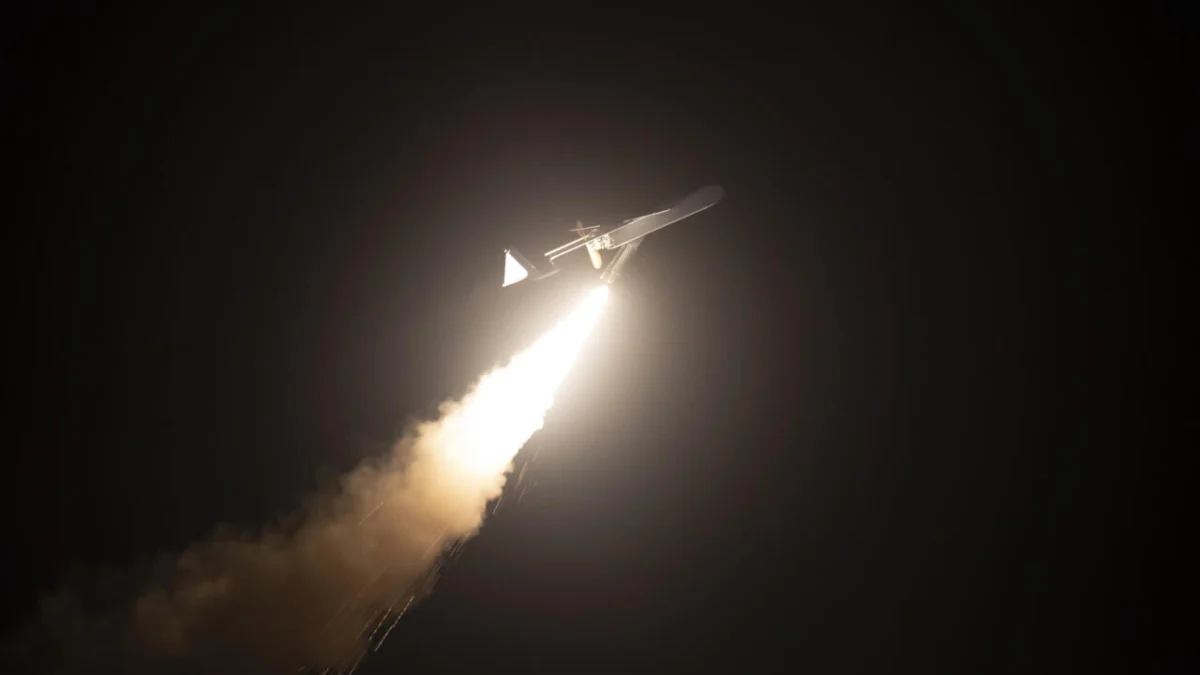
The night sky over the Russian capital was illuminated by a terrifying spectacle of modern warfare on Tuesday as a staggering fleet of 650 drones descended upon Moscow and its surrounding regions. In what Russian authorities are describing as the second-largest aerial assault on the capital since the inception of the conflict two years ago, the sheer volume of incoming projectiles has sent shockwaves through the Russian security apparatus and highlighted a significant shift in the strategic calculus of the ongoing war.
The relentless overnight barrage, which left one man dead and at least six others wounded, serves as a grim indicator that the conflict has entered a new phase of intensity. As the cold grip of winter approaches, both Kyiv and Moscow have seemingly abandoned all restraint, prioritizing the destruction of infrastructure and the disruption of urban normalcy over localized battlefield gains.
The Chronology of the Assault
The attack began under the shroud of darkness, catching the Moscow region in a multi-wave drone saturation campaign. According to reports from the Russian state news agency TASS and statements from local officials, the first radar signatures of the incoming fleet were detected shortly after midnight.
Phase One: Saturation and Defense
As the drones—predominantly low-flying, long-range unmanned aerial vehicles—entered the airspace surrounding the Moscow Oblast, Russian air defense systems were activated in a frantic effort to create a defensive perimeter. Moscow Mayor Sergei Sobyanin provided a breakdown of the engagement, noting that while the vast majority of the 650 drones were neutralized by electronic warfare measures and kinetic interception, the sheer density of the swarm posed an unprecedented challenge to the city’s multi-layered defense shield.
Phase Two: Impact and Casualties
Despite the high success rate claimed by the Kremlin, the sheer scale of the swarm ensured that some units reached their targets. Governor Andrei Vorobyov confirmed that the strikes caused significant damage to civilian infrastructure, including several residential homes on the outskirts of the city. A 20-year-old man was confirmed dead in one of these settlements, marking a sobering human cost to a night of industrial-scale drone warfare. By the early hours of Tuesday, emergency services were still navigating the debris fields, with Ria Novosti reporting that at least six individuals required hospitalization for injuries sustained during the bombardment.
Supporting Data: An Unprecedented Scale
To understand the severity of this incident, one must look at the quantitative data regarding the drone usage. Historically, drone attacks on the Russian capital have been surgical in nature—often involving fewer than a dozen craft aimed at high-profile symbols of power. The utilization of 650 drones in a single operational window suggests a massive industrial mobilization.
- The Volume Factor: This is the second-largest strike in two years, trailing only behind massive coordinated barrages that characterized the early, chaotic months of the war.
- The Defense Response: Of the 650 launched, Mayor Sobyanin noted that 105 were intercepted in the immediate vicinity of Moscow city proper. This indicates that while the outer defensive rings caught the bulk of the swarm, the "inner city" defenses were pushed to their absolute limits.
- The Strategic Shift: The use of such a high volume of drones suggests that the aggressor is moving away from precision targeting in favor of "saturation tactics." By flooding the air defense systems, the objective is to deplete interceptor munitions and force the Russian military to expend high-cost missiles on inexpensive, mass-produced drones.
Official Responses and Political Rhetoric
The response from the Kremlin has been one of indignation combined with an ominous promise of retaliation. Mayor Sobyanin’s office has focused on the resilience of the city’s defense, emphasizing that the majority of the threat was mitigated. However, the Kremlin’s broader narrative is shifting.
In a press briefing following the attacks, military spokespeople in Moscow indicated that this incident would not go unanswered. The Russian government has explicitly stated its intention to ramp up long-range strikes against critical infrastructure, specifically naming targets in Kyiv. This follows a broader trend of "tit-for-tat" strikes that have targeted energy grids, transport hubs, and port facilities throughout the year.
The rhetoric from Moscow is clear: the safety of their own capital is now inextricably linked to the destruction of the opposing side’s energy grid. As temperatures drop, the vulnerability of the civilian population to power cuts and heating failures has become the central leverage point in this conflict.
Implications for the Future of the Conflict
The events of this past Tuesday are not merely a tactical footnote; they represent a fundamental pivot in the operational theater of the war.
1. The Weaponization of Winter
With the onset of winter, the conflict is shifting from a war of attrition on the front lines to a war of survival for civilian populations. By targeting energy grids, both sides are attempting to break the domestic will of the opposing nation. The strike on Moscow is likely a direct response to the massive Russian attack on Ukraine’s energy grid that occurred just days prior, which resulted in widespread power cuts across Ukrainian provinces.
2. The Technological Arms Race
The sheer volume of drones used indicates that both Russia and Ukraine have successfully industrialized their drone production. This is no longer a war of specialized, high-tech weaponry; it is a war of mass production. The ability to deploy 650 drones simultaneously requires a sophisticated supply chain, logistical network, and an abundance of low-cost components—many of which are sourced from global commercial markets.
3. The Erosion of the "Sanctuary" Concept
For a long time, the Russian capital was viewed as a sanctuary, largely removed from the direct, daily horrors of the frontline. This perception has been shattered. As these attacks become more frequent and larger in scale, the social contract within Russia is facing a new kind of pressure. The citizens of Moscow, who have largely been able to maintain a sense of normalcy, are now finding that the war is not a distant, abstract concept, but a nightly reality.
4. Escalation Risks
Perhaps the most concerning implication is the rapid pace of escalation. When the threshold for "acceptable" strikes moves from a few drones to hundreds, the potential for a catastrophic miscalculation increases exponentially. If a drone were to strike a nuclear-adjacent facility, a high-level government installation, or a heavily populated apartment block, the call for a "decisive" response from either side could lead to a sudden and uncontrollable expansion of the conflict’s geographic scope.
Conclusion: A Continent on Edge
The massive drone attack on Moscow is a grim milestone. It reflects a war that has moved far beyond its initial territorial objectives, evolving into a systemic attempt to dismantle the industrial and civilian foundations of the enemy. As the international community watches with growing anxiety, the cycle of retaliation continues to accelerate.
For the people on the ground—whether in the outskirts of Moscow or in the darkened streets of Kyiv—the strategy of "infrastructure warfare" means that the coming winter will be long and arduous. As governments trade strikes with increasing frequency and intensity, the prospect of a diplomatic resolution seems to fade into the background, eclipsed by the sound of sirens and the hum of unmanned engines in the night sky. The challenge now for global leaders is to find a way to de-escalate before this cycle of mass-scale strikes leads to a point of no return.