In the shadow of the Caucasus Mountains, where the ancient traditions of a deeply Christian society meet the shifting winds of modern geopolitics, a quiet revolution is unfolding. Armenia, a nation historically rooted in rigid social structures and conservative values, is playing host to an increasingly vibrant—yet perilous—drag scene. While the art form has become a mainstream staple of entertainment across the European Union, in Yerevan, it remains a radical, underground act of defiance.
Performers in Armenia operate under the constant weight of social stigma, the threat of physical violence, and the specter of institutional police pressure. Many have been estranged from their families, finding sanctuary only in the transient, neon-lit spaces of clandestine clubs. Yet, these artists persist, building a community that has become a beacon for local youth and an unlikely draw for international observers, creating a microculture that is reshaping the boundaries of Armenian expression.
Main Facts: The Underground Resistance
The Armenian drag community is a study in contrasts. By day, these performers often navigate a society that views their existence with suspicion or outright hostility. By night, they transform into icons of avant-garde expression. This subculture is not merely about performance; it is a political statement in a country where the public sphere is still heavily dominated by traditionalist expectations.
The community is characterized by a fierce sense of solidarity. Because they lack the mainstream protections afforded to LGBTQ+ communities in Western Europe, the Armenian drag scene has developed its own internal ecosystem of support. From DIY costumes to underground event coordination, the infrastructure of this scene is entirely home-grown.
The growth of this community is intrinsically linked to broader shifts in the Armenian sociopolitical landscape. As the government in Yerevan pivots away from Moscow’s sphere of influence and seeks closer integration with the European Union, the cultural atmosphere in the capital has become more porous. This is compounded by the influx of tens of thousands of Russians fleeing the war in Ukraine—a demographic shift that has brought new, more liberalized perspectives into the heart of Armenian society, inadvertently providing oxygen to local progressive movements.

Chronology: A Trajectory of Transformation
The evolution of the Armenian drag scene has not been linear. While informal expressions of gender non-conformity have existed for decades, the current "scene" began to coalesce in the early 2020s.
- 2020–2021: The post-war climate in Armenia, characterized by political instability and soul-searching, forced a reassessment of national identity. This period saw the first organized, albeit highly secretive, drag performances in private venues.
- 2022: The Russian invasion of Ukraine marked a significant turning point. The arrival of a massive, predominantly young and urban Russian diaspora in Yerevan introduced new audiences and collaborators to the local arts scene.
- 2023–2024: Drag began to transition from purely private gatherings to semi-public, ticketed events. The scene started gaining visibility on social media, prompting both an increase in support from younger Armenians and a sharp backlash from conservative factions.
- 2025–2026: The current era. The scene is now a fixture of the "alternative" Yerevan nightlife. Despite the increased visibility, the threat of violence remains high, with performers regularly receiving threats, necessitating a sophisticated security apparatus for events.
Supporting Data and Societal Context
Understanding the persistence of the Armenian drag scene requires acknowledging the country’s demographic and cultural pressures. According to recent sociological insights, the tension between the "old guard" and the "new generation" is at an all-time high.
The Armenian Apostolic Church remains a pillar of national identity, and its influence on social policy cannot be overstated. Drag, as an art form that inherently questions gender binaries, is viewed by religious hardliners as an affront to the "traditional Armenian family." However, data on youth engagement in Yerevan suggests a generational divide: residents under the age of 30 are significantly more likely to support LGBTQ+ visibility than their parents.
The "refugee effect" has also provided a statistical boost to the scene. The arrival of Russian expatriates—many of whom are part of the creative and tech industries—has created a demand for diverse nightlife options. This has allowed local drag queens to find employment, mentorship, and a platform that was previously unavailable in the strictly local market.
Official Responses and Institutional Friction
The institutional response to the rise of drag in Armenia has been one of calculated indifference or active obstruction. While there is no explicit national ban on drag performance, the legal environment is often leveraged to silence these artists.

Law enforcement frequently utilizes "public order" statutes to shut down events or harass organizers, citing concerns over "morality" or "potential civil unrest." There is a notable absence of legal protection for performers, leaving them vulnerable to harassment by far-right groups that operate with a degree of impunity.
Human rights organizations have repeatedly flagged the situation in Armenia, noting that the state’s failure to condemn anti-LGBTQ+ rhetoric creates a "permissive environment for hate speech." Official government rhetoric, meanwhile, tends to focus on the country’s European aspirations, often ignoring the internal contradictions regarding human rights and minority protections. While the government is eager to signal its alignment with EU democratic values, the reality on the ground—particularly for the LGBTQ+ community—remains tethered to older, more repressive norms.
Implications: The Future of a Microculture
The existence of a defiant drag scene in a conservative bastion like Armenia carries profound implications for the country’s future. It serves as a litmus test for the success of Armenia’s democratic transition.
- Cultural Integration: The drag scene is effectively forcing a conversation about gender and individual rights that many in the political class would prefer to avoid. By asserting their presence, these artists are dragging the country toward a more pluralistic dialogue.
- Geopolitical Soft Power: As Armenia seeks to distance itself from the Kremlin’s influence, the development of a vibrant, diverse, and modern arts scene is a critical component of "Europeanization." The ability to foster a space where freedom of expression is protected is a key metric by which international bodies evaluate Armenia’s progress.
- Resilience and Migration: One of the most significant implications is the "brain drain" of the creative class. If the state continues to allow the persecution of these artists, it risks pushing its most talented, forward-thinking youth to leave the country permanently. The resilience of the drag scene is currently keeping that talent within Armenia, but this is a precarious balance.
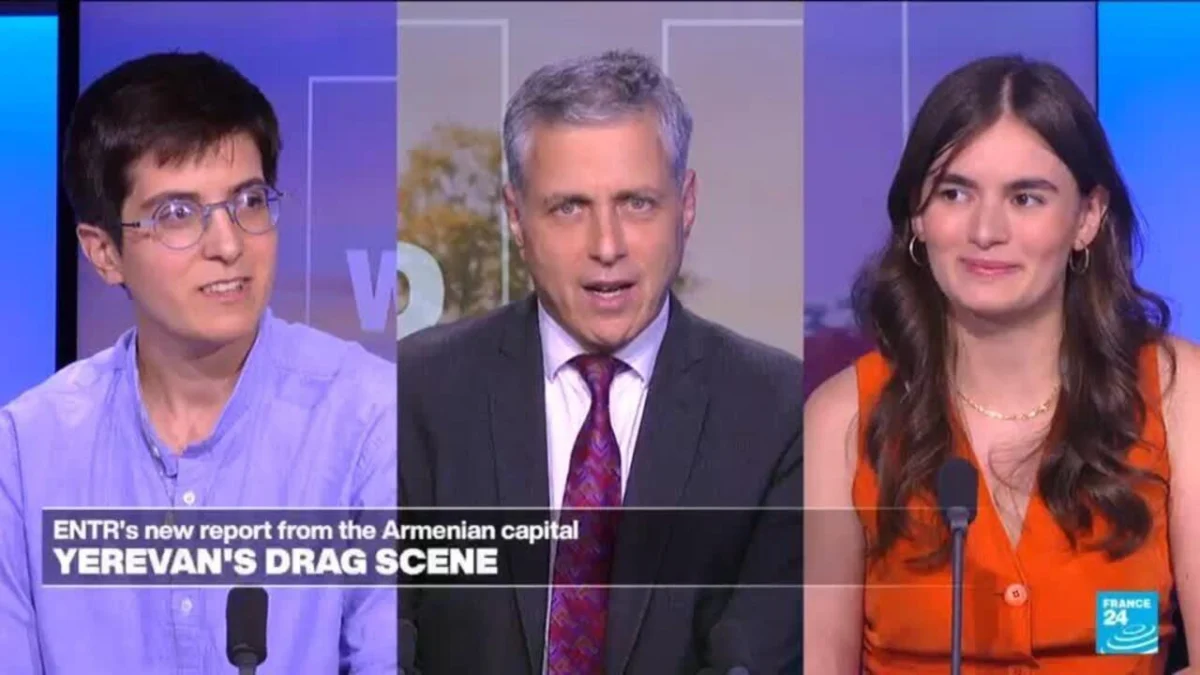
In the upcoming documentary produced by ENTR with support from the Pulitzer Center, journalists Renée Bertini and Kal Berjikian, along with François Picard, capture this fragile, electric moment in Armenian history. They provide an intimate look at the lives of those who risk everything to perform.
Ultimately, the Armenian drag scene is more than just sequins and lip-syncing; it is a manifestation of the human desire for self-actualization against the crushing weight of tradition. Whether this microculture will be allowed to flourish and eventually reshape the mainstream, or whether it will be forced further into the shadows, remains one of the most compelling questions of Armenia’s ongoing evolution. As the country stands at the crossroads of East and West, its drag queens are holding a mirror up to society—one that forces an entire nation to look at its reflection and decide what kind of future it truly wants to inhabit.