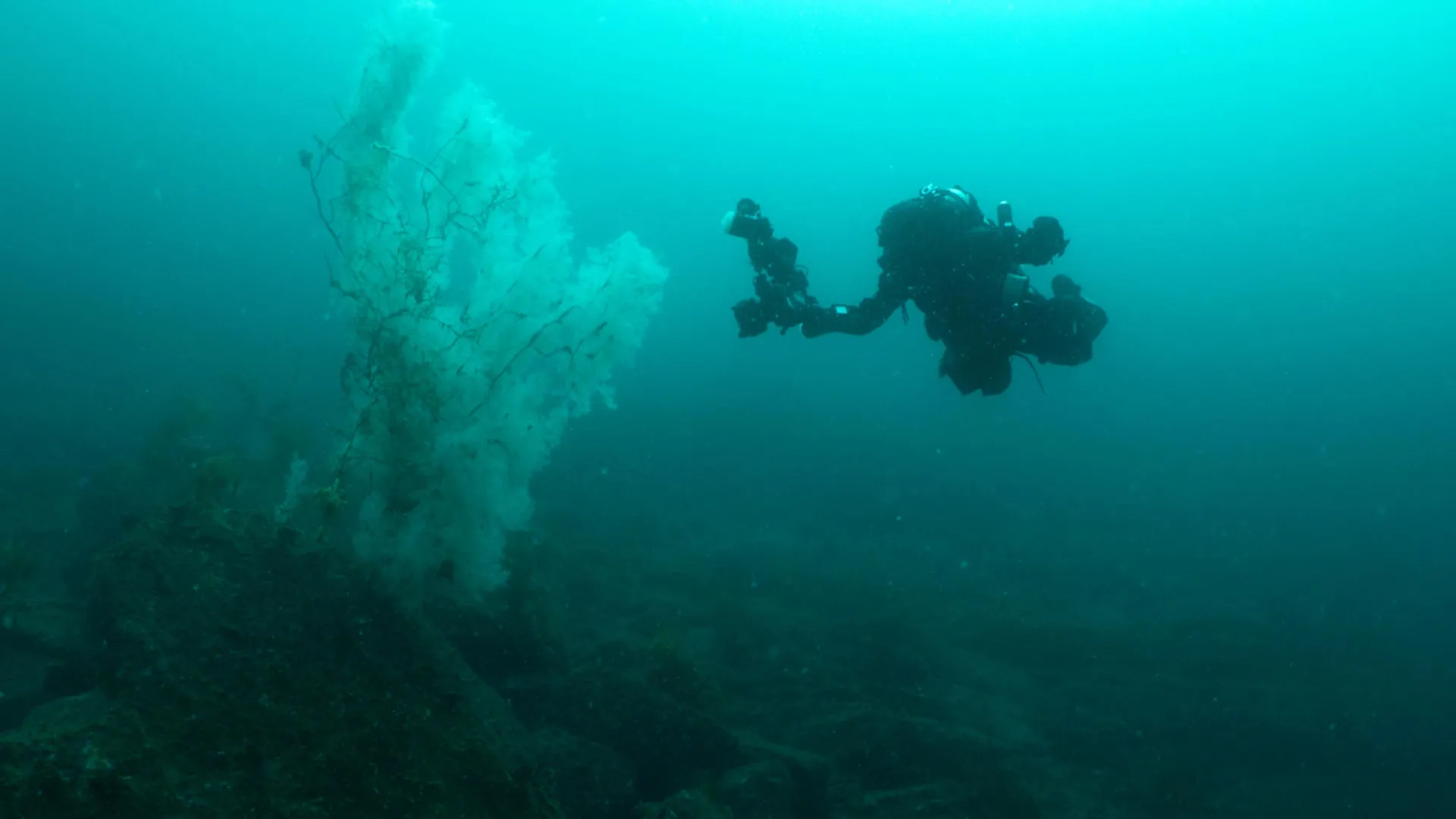
In the silent, light-starved depths of New Zealand’s remote Fiordland, a monumental discovery has come to light, challenging our understanding of marine longevity and the hidden architecture of the Southern Ocean. Researchers from Te Herenga Waka—Victoria University of Wellington, in collaboration with the Department of Conservation (DOC) and the Fiordland Marine Guardians, have identified a gargantuan black coral colony. Standing 4 meters (13 feet) tall and spanning 4.5 meters (15 feet) in width, the specimen is a relic of a bygone era, estimated to be between 300 and 400 years old.
This colossal organism, which likely began its life while the world was grappling with the early stages of the Enlightenment, now stands as a symbol of the fragile, slow-motion majesty of the deep sea. The discovery is not merely a record-breaking statistic; it serves as a critical data point in the urgent mission to map and preserve the biodiversity of Aotearoa’s most iconic, yet inaccessible, marine environments.
The Main Facts: A Titan Beneath the Waves
The discovery was made during a routine research expedition aimed at cataloging the biodiversity of the fiords. While surveying the rugged, dark underwater cliffs characteristic of the region, the dive team encountered a structure that initially defied their expectations of scale.
Black corals (Antipatharia) are typically recognized for their delicate, branching structures. While they can grow to significant sizes in nutrient-rich currents, finding a colony that reaches 4 meters in height is an extraordinary rarity. Most specimens encountered by scientific divers range between one and three meters. This particular colony, by virtue of its sheer volume, acts as a structural anchor for the local ecosystem, providing complex habitats for a myriad of fish, crustaceans, and other sessile organisms.
The coral’s age, estimated at 300 to 400 years, implies that it has survived centuries of environmental flux in the fiords. Its survival is a testament to the stability of the deep-water habitat and the necessity of maintaining the pristine quality of these waters. Under the New Zealand Wildlife Act, black coral is a protected species; it is strictly prohibited to collect, damage, or disturb these organisms, which are as vital to the ocean floor as ancient forests are to the land.
Chronology of the Expedition and Discovery
The finding was the result of a multi-agency effort aimed at long-term ecological monitoring. The timeline of this discovery sheds light on the methodical nature of deep-sea exploration.
- Early Planning Phase: The expedition was conceived as part of a broader project to map the distribution of protected coral species across the Fiordland marine area. This partnership between academia and government conservationists was designed to fill gaps in existing biological surveys.
- The Dive Operations: Working in the challenging, low-light conditions of the fiords, the team utilized specialized SCUBA equipment and rigorous safety protocols. The darkness of the fiords—caused by the tannin-rich freshwater layer that blocks sunlight—requires divers to operate with artificial lighting, which often limits the visual field.
- The Encounter: During a descent along a vertical rock face, the team members realized the scale of the object in front of them. The "looming" structure, which initially looked like a rock formation, revealed its biological nature upon closer inspection.
- Documentation: The team spent considerable time photographing and measuring the colony. Given the sensitivity of the organism, they avoided physical contact, using laser-photogrammetry and manual measurement techniques to ensure accuracy without causing harm.
- Post-Expedition Analysis: Following the return to the surface, the data was cross-referenced with historical records. It was quickly confirmed that no other documented black coral in New Zealand waters matched these dimensions, cementing its status as a record-breaking find.
Supporting Data: Why Size Equals Significance
To understand why this discovery has sent ripples through the marine science community, one must look at the biology of black corals. These organisms are notoriously slow-growing. Unlike many surface-dwelling plants or animals that can reach maturity in a matter of years, black corals may add only millimeters of growth per year.
The Breeding Stock Theory
Large, ancient colonies are essential for the survival of the species. As "breeding stock," these older corals possess a higher reproductive capacity and genetic diversity. They are the elders of the reef, having survived centuries of environmental shifts. Losing such a colony would represent a loss of centuries of biological history and a significant reduction in the localized reproductive success of the species.
Environmental Mapping and Protection
The data collected from this specimen will be fed into a comprehensive spatial model. By understanding the bathymetry (depth) and current flow patterns that favored this specific growth site, researchers hope to predict where other, as-yet-undiscovered giants might exist. This "predictive mapping" is the primary tool used by the Fiordland Marine Guardians to advise on boat anchorage and fishing zones.
"Pinpointing where large corals occur means we can better protect them by letting people know where not to anchor their boats or drop pots," explains Professor James Bell. This simple act—redirecting maritime traffic—is the most effective form of conservation for sedentary, long-lived species.
Official Responses: Voices from the Field
The discovery has resonated deeply with those who have dedicated their careers to the protection of New Zealand’s marine heritage.
Professor James Bell: A Career Milestone
Professor Bell, a veteran marine biologist at Te Herenga Waka—Victoria University of Wellington, has spent 25 years studying the underwater world. His reaction to the find was one of professional awe. "It’s by far the largest black coral I’ve seen in my 25 years as a marine biologist," he stated. For a scientist who has dedicated his life to this field, the encounter was a rare "cool" moment that transcended the standard rigors of academic research. He emphasized that the discovery has reframed his expectations of what the Fiordland environment can support.
Richard Kinsey: The Ranger’s Perspective
Richard Kinsey, a senior biodiversity ranger at the Department of Conservation, provided a poignant account of the moment of discovery. "To see such a large coral looming out of the darkness was pretty special," Kinsey remarked. His 20-year tenure as a ranger in the fiords has made him intimately familiar with the region’s biodiversity, yet even he was struck by the anomalous scale of this specimen. His perspective highlights the human element of the discovery—the wonder of encountering something so ancient and so hidden from the public eye.
Implications: The Future of Conservation in the Fiords
The discovery of the 4-meter black coral is not an endpoint, but a catalyst for future research. It raises significant questions about how many other such giants remain hidden and how their protection can be integrated into the broader management of the Fiordland Marine Area.
Public Involvement and Citizen Science
The research team is actively calling for public assistance. Recognizing that recreational divers and local boaters often visit areas that researchers cannot, Professor Bell and his team are inviting reports of sightings. "We’d love to receive reports from anyone who knows of particularly large black corals that are greater than 4m so we can map their distribution," he stated. This crowdsourced approach is vital for gathering enough data to influence policy decisions at the government level.
Debunking the "Black" Myth
The discovery also serves as a public education opportunity. Despite their name, black corals are not black on the exterior. The living tissue is typically white, cream, or sometimes bright yellow/orange. The name derives from the black, keratin-like skeleton that remains after the living tissue dies or is removed. This common misconception often leads to confusion among the public regarding what they are looking at, and the team hopes that highlighting the white, living exterior of these animals will foster a greater sense of stewardship among recreational users of the fiords.
The Legal Framework of Protection
The Wildlife Act provides the backbone for the protection of these corals, but enforcement in remote areas is difficult. The challenge for the Department of Conservation lies in education—ensuring that boaters understand that a "rock" on the sonar might actually be a 400-year-old living organism that could be shattered by an anchor.
By mapping the distribution of these giants, the Department of Conservation, the University, and the Fiordland Marine Guardians are creating a "no-go" atlas. This atlas will be used to guide tourism operators, commercial fishers, and private vessels toward safer areas, ensuring that the legacy of this 4-meter titan continues for another century.
Conclusion: A Living Legacy
The 4-meter black coral of Fiordland is a sentinel of the deep, a silent witness to the changing tides of the Pacific. Its existence reminds us that there is still much to discover within our own borders and that the most impressive natural wonders are often those that require the most patience and the most protection.
As the team at Victoria University of Wellington continues to map the fiords, this massive coral will remain a focal point of their work. It stands not only as a record of growth but as a record of resilience. By integrating traditional ecological knowledge with modern mapping technology and community-based reporting, New Zealand is setting a global standard for how to protect the most vulnerable and long-lived inhabitants of our oceans. The next step is clear: to ensure that when the next generation of marine biologists dives into the dark, cold waters of the fiords, they find these ancient giants exactly where they left them—thriving in the silence of the deep.