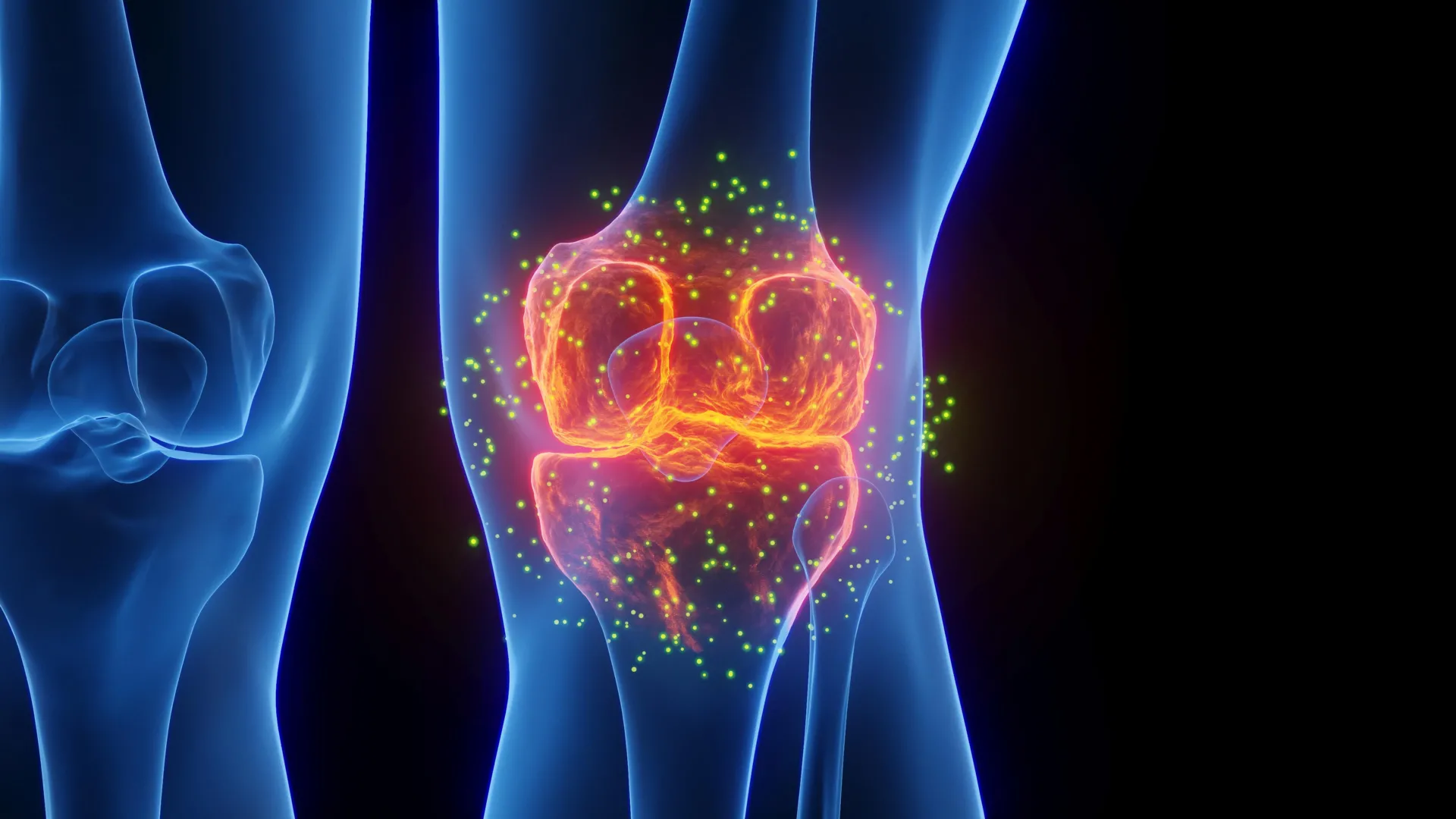
For millions of people living with the persistent, grinding ache of osteoarthritis, the journey toward pain relief has long been a binary choice. Patients typically cycle through a predictable ladder of conservative interventions—physical therapy, anti-inflammatory medications, and corticosteroid injections—only to reach a "dead end" where the only remaining option is total knee replacement surgery.
However, a revolutionary, minimally invasive procedure known as Genicular Artery Embolization (GAE) is emerging as a critical bridge for those stuck in this therapeutic gap. By targeting the biological source of inflammation rather than replacing the joint itself, GAE is offering patients a chance to reclaim their mobility without the grueling recovery associated with major orthopedic surgery.
The Patient Perspective: A Life Reclaimed
For 74-year-old Cynthia Schraf-Fletcher, the prospect of another major knee surgery was daunting. Having previously undergone a total knee replacement on her left leg, she was all too familiar with the physical and emotional toll of the procedure, including the potential for complications. When chronic pain began to compromise her right knee, she sought an alternative.
Nearly a year after undergoing GAE, Schraf-Fletcher describes her results as "remarkably successful." She notes that the improvement in her right knee is comparable to the relief she experienced following her left knee replacement, yet without the surgical trauma.
"I couldn’t be more pleased," says Schraf-Fletcher, whose procedure was performed by Dr. Leigh Casadaban, an assistant professor of radiology at the University of Colorado Anschutz School of Medicine. Today, the activities that once defined her retirement—gardening, walking, and riding a stationary bicycle—are no longer sources of agony, but rather moments of joy. Her experience highlights a growing sentiment among patients: they are looking for efficacy that respects their quality of life.
How Genicular Artery Embolization Works: The Science of Inflammation
At its core, GAE is an outpatient procedure designed to disrupt the cycle of chronic inflammation. Osteoarthritis is not merely a mechanical "wearing down" of cartilage; it is an active, inflammatory process. As the joint degrades, the body responds by growing abnormal, microscopic blood vessels (neovascularization) in the synovial lining of the joint. These vessels are accompanied by nerve endings that carry pain signals to the brain, exacerbating the patient’s discomfort.
GAE addresses this by reducing blood flow to these specific, inflamed areas. By targeting the genicular arteries—the primary blood supply to the knee—physicians can effectively "starve" these abnormal vessels, thereby decreasing localized swelling and chronic pain.
"For treating osteoarthritis in the knees, we often think of medications, physical therapy, maybe a steroid injection, and then on the far end of the spectrum is a total knee replacement," explains Dr. Casadaban, a vascular interventional radiologist. "There really hasn’t been anything for patients in between. GAE is a promising minimally invasive procedure that may fill that spot for people who have failed conservative treatments but are not yet ready to have a major surgery."
Chronology of a Procedure
The procedure is an elegant exercise in precision, typically lasting between one and two hours under conscious sedation.
- Access: The interventional radiology team makes a small incision near the crease of the leg.
- Navigation: Using advanced X-ray imaging and contrast dye for real-time guidance, the physician advances a tiny catheter through the femoral artery until it reaches the complex network of genicular arteries surrounding the knee.
- Embolization: Once the catheter is positioned, the team releases microscopic beads—so small they are barely visible to the naked eye—into the targeted vessels. These beads act as a physical blockade, permanently stopping the blood flow to the abnormal, pain-contributing vessels.
- Recovery: After a brief period of monitoring, patients are typically cleared to return home the same day. While doctors advise "taking it easy" for a few days, the recovery time is a fraction of the months-long rehabilitation required for knee replacement.
Supporting Data and Clinical Efficacy
The medical community’s interest in GAE has surged since its development in Japan over a decade ago. Since 2021, the U.S. Food and Drug Administration (FDA) has granted "breakthrough device status" to multiple technologies related to GAE, signaling the agency’s recognition of its potential to address an unmet clinical need.
The clinical data is increasingly compelling. According to Dr. Casadaban, the procedure is most effective for patients with mild to moderate osteoarthritis, though even those with advanced disease may see significant improvements.
"We find about 70% of patients have phenomenal results," she says. "They cut their pain scores in half, sometimes more. We have a few patients with no pain at all after the procedure. Patients that have tried a lot of other treatments and haven’t had pain relief are happy to get back to their normal activities."
Long-term studies are further validating the durability of the treatment. Data from Japan has demonstrated that the effects of a single outpatient GAE procedure can last for up to four years. In the United States, two-year data sets are already showing similarly encouraging outcomes. "That really speaks to the theory that we’re hopefully modifying something in the joint," Dr. Casadaban notes.
Ongoing Research and Innovation
The field is currently in an active phase of discovery. Dr. Casadaban is spearheading two clinical trials at the University of Colorado Anschutz School of Medicine to further refine the procedure.
One study is investigating changes in the composition of knee fluid following GAE, seeking to understand the biochemical shifts that occur when the inflammation is reduced. A second study is evaluating the "Nexsphere-F," a temporary arterial treatment device designed to block the small blood vessels that contribute to pain. By comparing different materials and techniques, researchers hope to standardize the procedure and maximize success rates for a broader range of patients.
Implications: A New Frontier in Musculoskeletal Care
The success of GAE in the knee is prompting clinicians to look toward other joints. Osteoarthritis is a systemic issue, and the biological principles that make GAE effective for the knee are theoretically applicable to other musculoskeletal disorders.
Researchers are now exploring the potential of using similar embolization techniques for conditions such as:
- Frozen Shoulder: Where inflammation and stiffening of the shoulder joint cause significant mobility issues.
- Tennis Elbow: A condition often resistant to conventional therapies.
- Plantar Fasciitis: A common cause of chronic heel pain.
As the medical community continues to refine these techniques, the focus is shifting from "replacing" parts to "remodelling" the biological environment of the joint. For patients like Cynthia Schraf-Fletcher, this shift represents more than just a medical advancement—it represents a return to a life without the constant shadow of pain.
While total knee replacement remains a vital and successful procedure for many, GAE offers a sophisticated, evidence-based alternative that preserves the native joint. As the procedure gains wider adoption, it is likely to become a cornerstone of pain management, effectively filling the long-standing void between conservative care and major surgery. By empowering patients with options, the medical community is not just treating joints; it is restoring independence.