Main Facts: A Seismic Shift in Florida’s Political Landscape
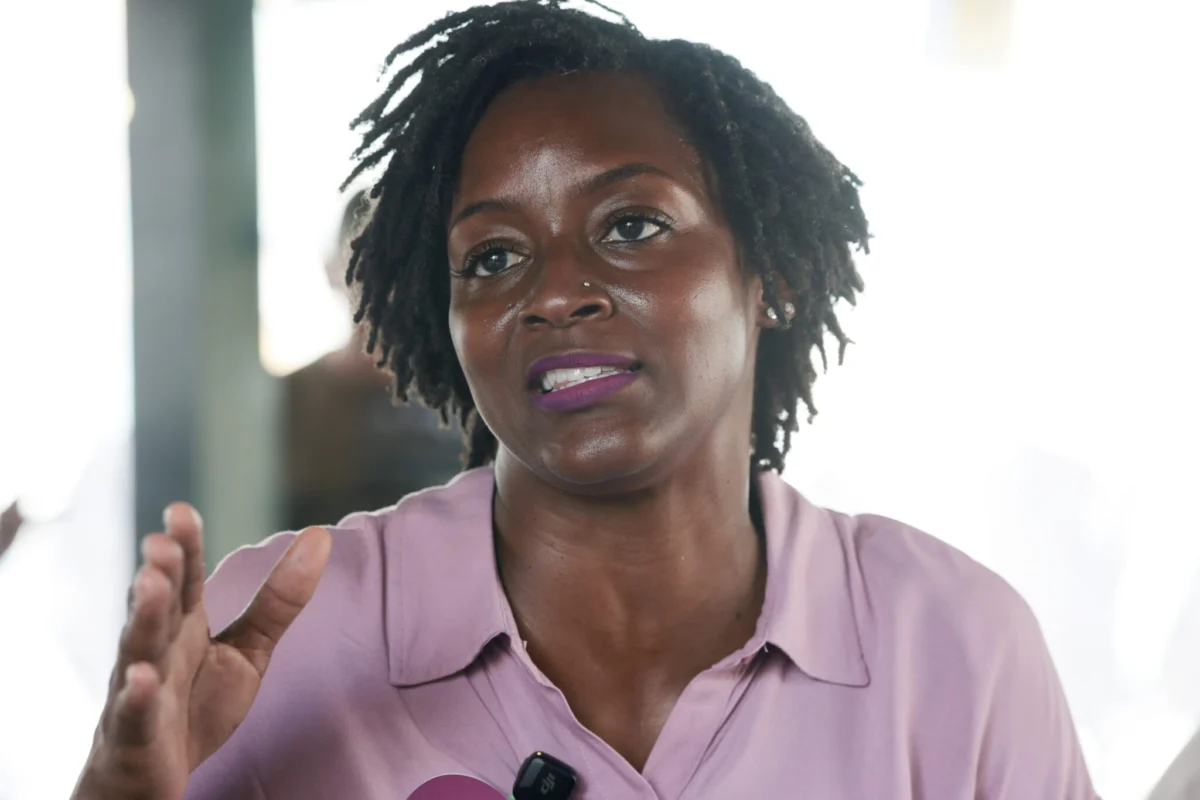
In a result that has sent shockwaves through the national Democratic establishment, Florida’s primary voters have chosen a path of unapologetic progressivism over moderate pragmatism. State Representative Angie Nixon, a self-described democratic socialist and grassroots organizer, secured a stunning upset victory over Alex Vindman, a former national security professional and a prominent figure in the first impeachment of Donald Trump.
Nixon’s victory is not merely a local triumph; it represents a profound rejection of the "candidate-from-central-casting" model often favored by national party leadership. Despite being outspent by a staggering margin of sixteen-to-one, Nixon tapped into a deep-seated desire among the Democratic base for a candidate who prioritizes bold economic reforms and aggressive advocacy over centrist compromise.
The win sets the stage for a high-stakes general election battle. Nixon will now face U.S. Senator Ashley Moody, the former Florida Attorney General who was appointed to the seat by Governor Ron DeSantis. The vacancy was created after longtime Senator Marco Rubio resigned to join the Trump administration as Secretary of State. While political analysts initially viewed the seat as a "Safe Republican" hold, Nixon’s victory has reframed the contest as a referendum on the populist movement in the American South.
Chronology: From Impeachment Fame to Primary Defeat
The path to this primary upset began with the reshuffling of Florida’s political hierarchy following the 2024 presidential election. When President Donald Trump selected Marco Rubio as his Secretary of State, it left a massive void in Florida’s legislative representation. Governor Ron DeSantis moved quickly to consolidate power, appointing his close ally, Ashley Moody, to fill the remainder of Rubio’s term.
The Rise of the Establishment Favorite
Alex Vindman entered the race with what appeared to be an insurmountable advantage. A retired Army Lieutenant Colonel, Vindman became a household name in 2019 when he testified before Congress regarding President Trump’s phone call with Ukrainian President Volodymyr Zelenskyy. His perceived integrity and national security credentials made him a darling of the "Never Trump" movement and the Democratic donor class.
By early 2025, Vindman had secured the backing of Senate Minority Leader Chuck Schumer and the Democratic Senatorial Campaign Committee (DSCC). His campaign was designed to appeal to the "moderate middle"—independent voters and disaffected Republicans in the suburbs of Orlando, Tampa, and Miami who were weary of political polarization.
The Grassroots Insurgency
While Vindman focused on national media appearances and high-dollar fundraisers, Angie Nixon was building a coalition from the ground up. Nixon, who has served in the Florida House of Representatives, built her reputation as a firebrand. In May, she gained national attention for her vocal protest against the Republican-led redistricting of Florida’s congressional maps. During a legislative hearing, Nixon used a megaphone to disrupt proceedings, an act that led to a formal reprimand from an ethics committee but cemented her status as a hero among voting rights activists.
Nixon officially joined the Democratic Socialists of America (DSA) shortly before the primary, signaling her intent to run on a platform of universal healthcare, subsidized childcare, and a radical restructuring of the state’s economy. While the establishment viewed her as "unelectable" in a state that has trended Republican for a decade, Nixon’s message resonated in urban centers and among younger, more diverse cohorts of the electorate.
Supporting Data: The Financial and Demographic Divide
The statistics of the race highlight just how improbable Nixon’s victory truly was. According to FEC filings, the disparity in resources was historic:
- Fundraising: Alex Vindman raised approximately $16 million, bolstered by a national network of small-dollar donors and PAC contributions. In contrast, Angie Nixon raised just under $1 million, relying almost exclusively on grassroots donations and local community support.
- Spending: By the end of July, Vindman had spent over $9 million on television advertisements and sophisticated data modeling. Nixon’s campaign, lacking the funds for a sustained airwar, focused on door-knocking, community organizing, and social media engagement.
- Endorsements: Vindman carried the weight of the party hierarchy, including endorsements from several "Blue Dog" Democrats and national security figures. Nixon was propelled by the "Squad," receiving high-profile endorsements from Representatives Rashida Tlaib (D-MI) and Ilhan Omar (D-MN), as well as the Working Families Party.
The results suggest a "enthusiasm gap" that money could not bridge. Early exit polling indicates that Nixon dominated in the precincts with the highest turnout among Black and Latino voters, as well as in university towns. Her advocacy for a ceasefire in Gaza and her criticism of U.S. foreign policy also appeared to galvanize a segment of the youth vote that had previously felt alienated by the party’s moderate wing.
Official Responses: A Party Divided
The aftermath of the primary has been marked by a mix of celebration from the progressive left and apprehension from the party’s centrist wing.
Angie Nixon, in her victory speech, framed the win as a mandate for change. "If you’re surprised by tonight’s election results, you haven’t been paying enough attention to what’s happening in the South," she told a jubilant crowd of supporters. "This isn’t just about one seat; it’s about a movement that says we will no longer accept the crumbs of the establishment. We are fighting for the basic needs of every Floridian."
Alex Vindman showed grace in defeat, issuing a statement aimed at unifying the party for the general election. "Rep. Nixon ran a strong, spirited campaign that clearly spoke to the hearts of many Floridians," Vindman said. "While we had different visions for the path forward, our goal remains the same: defeating Ashley Moody. I will be standing by her side in that fight."
The Working Families Party, a key architect of Nixon’s ground game, used the victory to issue a warning to the Democratic leadership. Britney Whaley, the southeast regional director, stated: "Tonight’s election results must be a wake-up call to a political establishment that believes a populist message can’t win in the South. Angie’s campaign proves voters will respond to a bold economic vision that meets their basic needs."
Republican Response: The GOP camp, meanwhile, viewed the result with undisguised optimism. Spokespeople for Senator Ashley Moody suggested that Nixon’s "radical" platform would make the general election an easy win for the Republicans. "The Florida Democratic Party has officially abandoned the mainstream," a GOP strategist noted. "They have nominated a candidate whose views are far out of step with the hardworking families of this state."
Implications: Can a Socialist Win in a Reddening Florida?
The Nixon-Vindman primary serves as a microcosm of the larger identity crisis facing the Democratic Party. Since 2016, Florida has undergone a significant political transformation. Once the ultimate "purple" swing state, it has shifted decidedly to the right. Donald Trump’s decision to move his permanent residence to Mar-a-Lago and Governor DeSantis’s overwhelming re-election in 2022 served as indicators that the state’s political center of gravity had moved.
The "Electability" Argument
The central question now is whether Nixon’s progressive platform can survive a general election in a state where "socialism" is often used as a political cudgel, particularly among the influential Cuban-American and Venezuelan-American communities in South Florida. The GOP has already begun crafting a narrative that links Nixon’s "democratic socialist" label to the failed regimes of Latin America—a strategy that proved highly effective for Republicans in the 2020 and 2024 cycles.
Impact on National Strategy
Nixon’s victory may force the Democratic National Committee (DNC) to rethink its strategy for the South. For years, the prevailing wisdom was that Democrats could only win in Southern states by running "moderate" or "conservative-leaning" candidates. Nixon’s success suggests that a "base-first" strategy—one that focuses on energizing non-voters and marginalized communities with populist economic rhetoric—might be a viable alternative.
The Senate Balance of Power
With the U.S. Senate closely divided, every seat is critical. National Democrats now face a dilemma: do they invest heavily in Nixon, a candidate who defies their preferred mold, or do they retreat and focus resources on "safer" bets in the Rust Belt? If Nixon can maintain her grassroots momentum and successfully defend her policies against the inevitable GOP onslaught, she could provide a blueprint for a new kind of Southern progressivism.
However, if she loses by a wide margin, it will likely reinforce the establishment’s belief that Florida is a lost cause for the left. For now, Angie Nixon has proven that, at least within the Democratic primary, the hunger for radical change outweighs the safety of the status quo. The coming months will determine if that hunger extends to the rest of the Sunshine State.