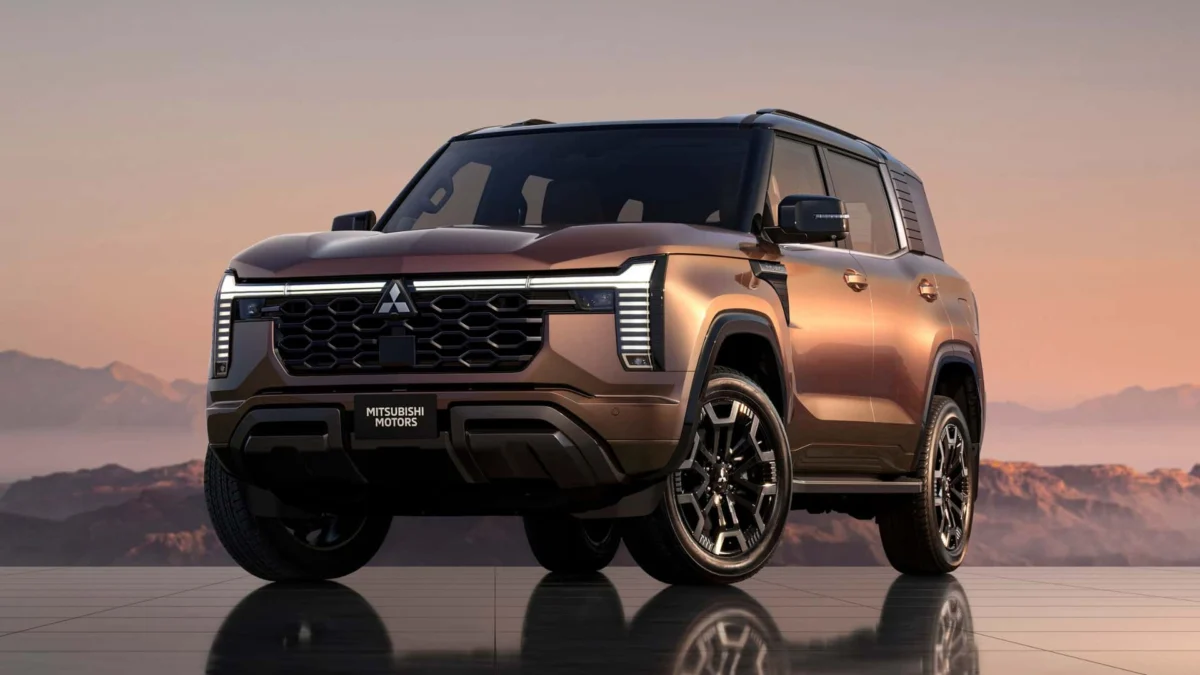
The automotive world is buzzing with the return of an icon. After years of speculation and yearning from off-road enthusiasts, the Mitsubishi Pajero is officially back for the 2027 model year. However, this is not the humble, accessible workhorse that once dominated rallies and suburban driveways alike. The reborn Pajero arrives with a sophisticated, premium identity that distances itself from its budget-conscious predecessors, signaling a strategic pivot for the Japanese manufacturer.
As pricing details emerge from the Australian market, the implications of this shift are becoming clear. The new Pajero is not merely a nostalgia play; it is a direct challenge to the established heavyweights of the body-on-frame SUV segment. This repositioning raises a critical question for enthusiasts in North America: If and when the "Montero"—as it is known in some markets—arrives in the United States, will it retain its legendary status while commanding a premium price tag?
A Strategic Pivot: The Main Facts
The 2027 Mitsubishi Pajero has shed its entry-level skin. According to reports from the Australian market, the vehicle’s pricing structure places it firmly in competition with high-end, adventure-ready SUVs. The entry-level GLS variant starts at $68,490 AUD (approximately $45,000 USD before taxes and additional fees). The ladder continues upward, with a seven-seat configuration priced at $69,990 AUD, the well-appointed Exceed at $79,990 AUD, and the flagship GSR model topping the range at $84,990 AUD.
This pricing represents a tectonic shift. Compared to the outgoing Pajero Sport, the new GSR model commands a staggering $20,000 AUD premium. Mitsubishi is clearly betting that the market’s appetite for rugged, high-capability SUVs—fueled by the success of vehicles like the Toyota Land Cruiser and Ford Everest—is strong enough to support this move upmarket.
A Legacy of Grit: Chronology of the Pajero Nameplate
To understand the significance of this launch, one must look back at the Pajero’s storied history. First introduced in 1982, the Pajero became synonymous with the Dakar Rally, winning the grueling competition a record 12 times. It was a vehicle that bridged the gap between daily utility and extreme off-road capability.
- 1982–1991 (First Generation): The original Pajero established the formula: a robust ladder-frame chassis, a focus on reliability, and an approachable price point that democratized four-wheel-drive exploration.
- 1991–1999 (Second Generation): This era introduced the legendary Super Select 4WD system, which allowed drivers to switch between two-wheel and four-wheel drive at speed. It cemented the Pajero’s reputation as a pioneer in off-road technology.
- 1999–2006 (Third Generation): A radical departure saw the Pajero move to a unibody construction with a built-in ladder frame, improving on-road manners without sacrificing off-road prowess.
- 2006–2021 (Fourth Generation): The long-running fourth generation served as the final chapter of the classic era, eventually bowing out as the market shifted toward unibody crossovers.
- 2027 (The Rebirth): After a hiatus, the 2027 model returns to the core values of the nameplate, utilizing a modern ladder-frame architecture to reclaim its spot among the world’s most capable off-roaders.
Engineering the Future: Supporting Technical Data
The high price point is not without justification. Under the hood, the 2027 Pajero features a 2.4-liter turbodiesel engine that generates 204 horsepower and a robust 354 pound-feet of torque. This powerplant is mated to a sophisticated eight-speed automatic transmission, designed to provide both towing capability and refined highway cruising.
However, the real "hardware" story lies in the drivetrain. The vehicle utilizes Mitsubishi’s proprietary Super Select 4WD-II system, a carryover of the brand’s rally-derived expertise. This system, combined with genuine low-range gearing and a locking rear differential, ensures that the Pajero can handle terrain that would strand more suburban-focused SUVs. The vehicle’s chassis is tuned for longevity and high-load capacity, catering to the overlanding community that prioritizes mechanical durability over digital gimmicks.
Market Context: How the Pajero Stacks Up
In the Australian market, the Pajero’s pricing has been calibrated to carve out a specific niche. It effectively sits between the mainstream offerings and the true luxury-tier off-roaders.
For instance, the Ford Everest, a popular contender in the region, starts at $58,990 AUD for the base model, with its more powerful V6 variants starting at $66,990 AUD. The Toyota Land Cruiser Prado—the gold standard in this segment—commands a higher entry price of $73,200 AUD. By positioning the entry-level Pajero at $68,490 AUD, Mitsubishi is effectively forcing consumers to weigh the brand’s heritage and the Super Select 4WD-II system against the established market dominance of Toyota and the value proposition of Ford.
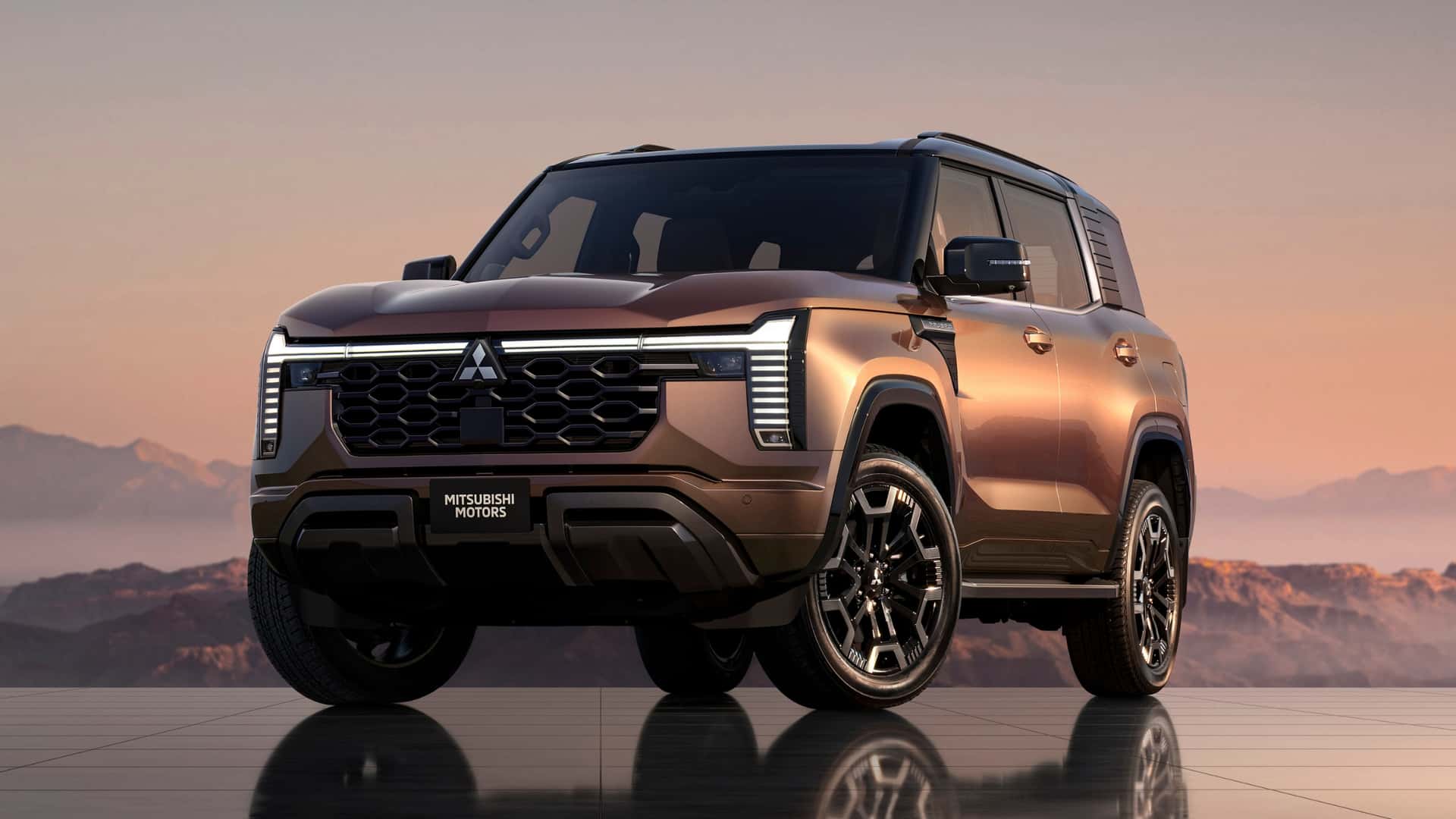
Higher up the trim ladder, the $79,990 AUD Exceed and $84,990 AUD GSR models push the Pajero into territory where consumers expect high-end finishes, advanced driver-assistance systems, and premium materials. Mitsubishi is clearly aiming to capture the buyer who wants the capability of a Land Cruiser but seeks the unique styling and off-road character that only a Pajero can provide.
Official Stance and Global Strategy
Mitsubishi has remained characteristically guarded regarding the North American launch of the Pajero. A spokesperson for the company recently reiterated that they are "still evaluating" how the revived nameplate would fit into the brand’s global product strategy for the United States.
The primary hurdle for the US market is the regulatory landscape and the shifting demand for diesel powertrains. While the Australian model relies on a turbodiesel, a North American version would almost certainly require a gasoline-powered engine—likely a high-output turbocharged four-cylinder or a hybrid powertrain—to meet emissions standards and consumer expectations.
Furthermore, Mitsubishi’s current US lineup is focused on affordable, family-oriented crossovers. Introducing a premium, body-on-frame off-roader would require a significant marketing pivot and potentially a re-evaluation of the brand’s dealership experience.
The Implications: What It Means for the US
If the Pajero does cross the Pacific to the US, the Australian pricing provides a blueprint for what customers can expect. A straight currency conversion suggests a starting price in the $45,000 to $50,000 range, but once shipping, tariffs, and localized marketing are factored in, it is likely that the "Montero" would enter the market at a starting price closer to $55,000.
This puts the vehicle in direct competition with the 2027 Toyota Land Cruiser (starting at roughly $59,580), the Ford Bronco Badlands (approx. $50,885), and the Jeep Wrangler Rubicon (approx. $51,735). In this crowded segment, the Pajero would need to lean heavily into its brand heritage.
The primary implication is that Mitsubishi is no longer interested in being the "cheap" alternative. The 2027 Pajero is designed to be a flagship—a halo product that restores the company’s reputation for off-road engineering excellence. Whether this gamble pays off in the US will depend on whether American buyers are willing to pay a premium for a brand that has been absent from the true off-road space for over a decade.
Conclusion: A New Chapter
The 2027 Mitsubishi Pajero represents a bold, calculated risk. By choosing to prioritize capability and premium positioning over volume-driven pricing, Mitsubishi is signaling a transformation. The vehicle is a testament to the fact that legends do not simply fade away; they evolve. As the automotive industry pushes toward electrification and automation, there is a lingering, fervent demand for mechanical, authentic, and rugged vehicles.
Whether the Pajero finds its way to American showrooms or remains a gem of the global market, one thing is certain: the icon is back, and it is ready to reclaim its place in the dirt, the mud, and the history books. For those who value the spirit of adventure over the compromise of a standard crossover, the 2027 Pajero is a reminder that some names are truly worth the wait.