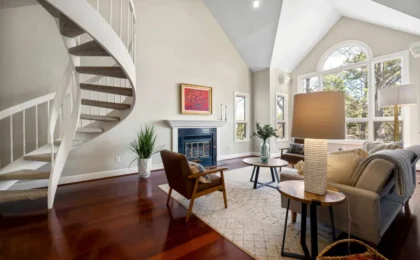
For many homeowners, the phrase "smart home" conjures images of chaotic control panels, wall-to-wall touchscreens, and a frantic race to troubleshoot flickering Wi-Fi connections. This misconception often leads to "tech-aversion"—a hesitation to adopt modern conveniences for fear of sacrificing the serene, decluttered aesthetic of a well-designed living space.
However, the evolution of home automation has shifted away from the "gadget-heavy" era toward a philosophy of invisible utility. True smart home integration is no longer about collecting devices; it is about the seamless automation of daily routines. A minimalist smart home operates on a "set it and forget it" principle, focusing on high-impact technology that lowers utility costs, enhances security, and blends into your interior design without disrupting the visual flow.
Whether you are navigating the competitive real estate markets of Columbus, OH, Miami, FL, or Denver, CO, the goal remains the same: elevating your quality of life without cluttering your countertops or your mind.
1. Intentional Problem-Solving: The Foundation of Minimalism
The primary error most consumers make is purchasing technology based on novelty rather than necessity. In the minimalist framework, every device must serve a specific purpose. If a piece of hardware does not solve an existing friction point in your daily life, it is not a convenience—it is a chore.
The Three-Question Rule
Before committing to a smart device, homeowners should apply a rigorous evaluation process:
- Does this solve a specific, recurring annoyance? (e.g., forgetting to lock the door or wasting time adjusting the thermostat.)
- Does this reduce maintenance rather than increase it? (If the device requires constant firmware updates or frequent battery changes, it may be a net negative.)
- Can this be automated to the point of being "invisible"? (The goal is for the home to react to your presence, not for you to react to the home’s interface.)
Ashley Williams, Founder of Serenity Smart Homes, emphasizes this philosophy: "The most minimalist smart home upgrade is the one you buy for a problem you actually have, not a gadget you saw on sale. Before you add anything, ask what it lets you stop doing—stop worrying about the door being unlocked, stop wondering if you left the curling iron on. If a device doesn’t take a task off your plate, it’s not simplifying your home; it’s just one more thing to charge, update, and troubleshoot."
2. High-Utility, Non-Invasive Additions
The most effective smart home upgrades are those that require no structural modifications. By utilizing modular technology, homeowners and renters alike can modernize their living spaces without the need for drilling, wiring, or permanent installations.
Streamlining Through Smart Plugs and Lighting
Paul Burke, Director of Marketing & Experiences at Oakwood Management—a leader in property management in Columbus, Ohio—notes that non-invasive technology is the gold standard for modern living. "From a management perspective, we love smart upgrades that provide massive daily utility without requiring invasive installations. Smart plugs and wireless lighting strips allow residents to customize their environment, set routines, and hide unsightly cords completely out of sight."
Key benefits of non-invasive tech include:
- Retrofitability: Smart plugs turn "dumb" appliances (like coffee makers or lamps) into automated assets.
- Portability: For renters, these devices move with you, ensuring your investment in comfort isn’t left behind at the end of a lease.
- Aesthetic Preservation: Wireless LED strips can be tucked behind furniture or under cabinetry, providing ambient lighting without the visual clutter of traditional lamps.
3. Prioritizing Efficiency: The Climate Control Case Study
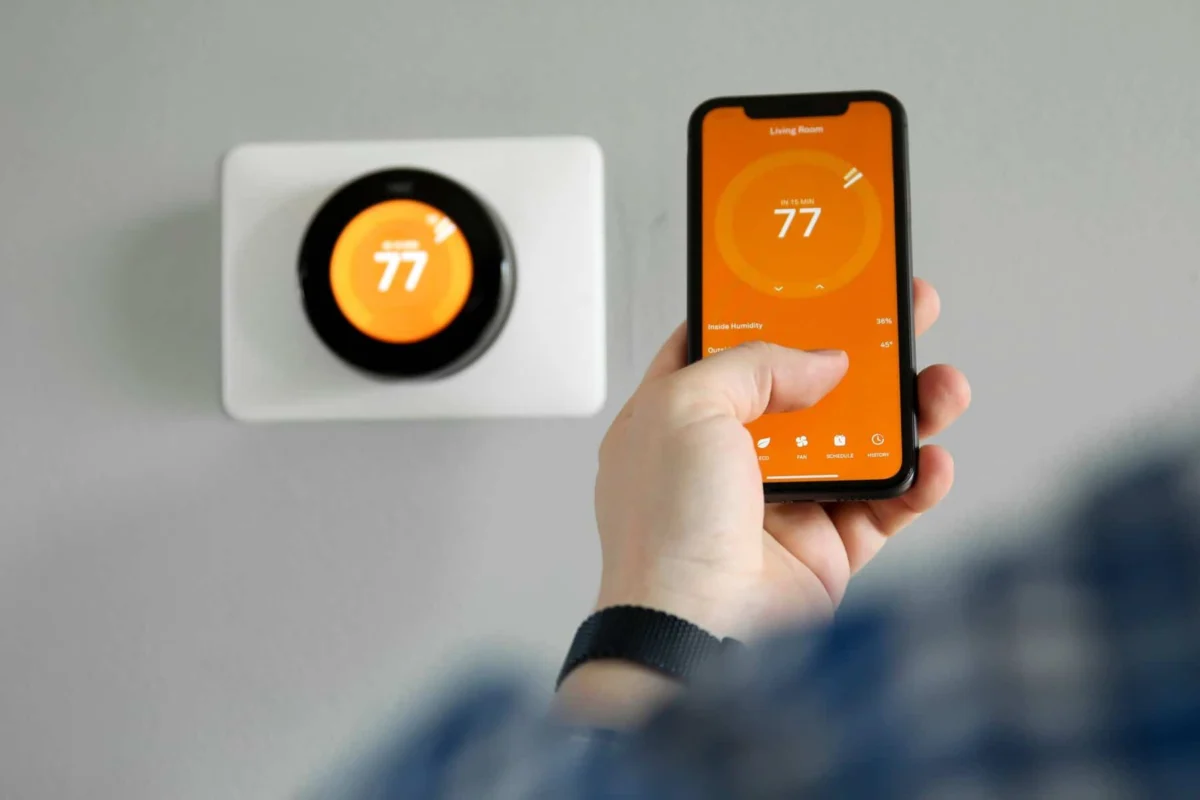
While color-changing bulbs often steal the spotlight, the true "heavy lifters" of the smart home operate in the background. Smart thermostats, for instance, offer one of the highest returns on investment (ROI) by optimizing the home’s HVAC usage based on occupancy patterns.
Liran Koren, owner of Luxury Property Care, underscores the financial implications for property owners: "Many rental owners assume the smartest investment is adding more technology, but we’ve found the opposite is often true. A simple, user-friendly smart thermostat delivers one of the highest returns because it lowers energy waste, helps protect one of the home’s most expensive systems, and doesn’t require tenants to learn a complicated new device."
The Economic and Mechanical Impact
- Reduced Energy Consumption: By intelligently adjusting temperatures when the home is empty, households can reduce energy bills by 10% to 15% annually.
- HVAC Longevity: Consistent, scheduled usage prevents the "short-cycling" that often damages high-cost HVAC systems.
- Predictive Maintenance: Many modern thermostats can alert homeowners to unusual system behavior before a total failure occurs.
4. Invisible Security: The Modern Entryway
The traditional deadbolt is a point of friction for many. Fumbling for keys, particularly when carrying groceries or managing young children, is a minor but consistent stressor. Smart locks have evolved into sleek, low-profile devices that can often be installed using existing hardware, providing a "hands-free" entry experience that feels like magic rather than mechanics.
Security and Convenience Synergies
- Keyless Access: Use temporary digital codes for service providers or guests, eliminating the risk of lost keys.
- Status Monitoring: Check the status of your door from anywhere in the world, providing peace of mind during travel.
- Integration: Smart locks can be programmed to trigger other "scenes," such as turning off interior lights or adjusting the thermostat the moment you lock the door upon leaving.
5. Standardizing the Ecosystem
The greatest barrier to a minimalist home is "app fatigue"—the need to toggle between five different applications to perform basic tasks. To maintain a truly minimalist environment, the smart home must function as a unified ecosystem.
Best Practices for Integration:
- Select a Single Platform: Whether you choose Apple Home, Google Home, or Amazon Alexa, ensure all devices are natively compatible with that ecosystem.
- Centralize Control: Utilize voice assistants or a single wall-mounted interface to bypass the need for individual device apps.
- Automate, Don’t Manualize: The goal is for the home to respond to sensors (motion, geofencing, or time of day) rather than requiring manual commands.
FAQ: The Minimalist’s Guide to Smart Home Upgrades
Q: Do I need a central smart home hub to get started?
A: Not necessarily. Many modern devices use Wi-Fi or Bluetooth to communicate directly with your router. However, as your setup grows, a central hub (like an Apple TV, Amazon Echo, or Google Nest) becomes invaluable for managing complex automations and ensuring all devices communicate seamlessly.
Q: Can I install these upgrades if I am renting?
A: Absolutely. The focus on "non-invasive" tech means prioritizing devices that require no tools for installation. Smart plugs, bulbs, and retrofitted smart locks are ideal because they can be removed in seconds without damaging the property, keeping you compliant with your lease agreement.
Q: Will smart devices slow down my Wi-Fi?
A: While a few devices won’t impact your network, a dense network of smart gadgets can lead to congestion. If you plan on having more than 20 devices, consider upgrading to a mesh Wi-Fi system. Additionally, look for devices that use "Thread" or "Zigbee" protocols, which offload traffic from your main Wi-Fi network.
Q: How do smart plugs make older appliances "smart"?
A: A smart plug acts as a physical gatekeeper for electricity. By keeping an appliance in the "on" position, the smart plug can cut or restore power based on a schedule, a timer, or a voice command, effectively automating "dumb" devices like coffee makers, space heaters, or fans.
Q: How can I ensure my home is secure from cyber threats?
A: Security is paramount. Change all default manufacturer passwords immediately. Enable two-factor authentication (2FA) for all accounts, keep your firmware updated, and consider creating a "Guest" or "IoT" network on your router specifically for your smart devices, separating them from your personal computer and phone data.
Q: Does smart home technology actually increase property value?
A: Yes. Studies suggest that integrated smart home features can increase a property’s value by 1% to 5%. More importantly, these features often decrease "time on market." Buyers are increasingly looking for homes that are "future-ready," with smart thermostats, video doorbells, and security systems topping the list of desired features.
Conclusion: Embracing the Invisible
The future of the smart home is not in the hardware we can see, but in the experiences we don’t have to think about. By focusing on practical, high-impact, and non-invasive technology, homeowners can build a sanctuary that works for them—quietly, efficiently, and elegantly. Minimalism is not about owning less; it is about making sure that what you do own serves a purpose that simplifies, rather than complicates, your life.