When the mercury climbs and New York City transforms into a sweltering heat island, the quest for a cooling beverage often shifts from a simple refreshment to a survival strategy. For many, this has traditionally meant a trek to the nearest convenience store for a mass-produced, neon-colored slushie—a nostalgic treat, but one lacking in quality or customization. However, the home appliance market is currently undergoing a shift, moving away from simple blenders toward specialized frozen-drink technology. The latest entrant in this space, the Ninja Slushi Twist, aims to bring the professional slushie machine experience directly to the kitchen counter.
Main Facts: Doubling Down on Frozen Convenience
Ninja’s latest offering, the Slushi Twist, is a significant departure from its predecessor, the original Ninja Slushi. While the first iteration established Ninja as a serious contender in the frozen-beverage niche, the "Twist" model addresses the primary pain point of the original: volume and variety.
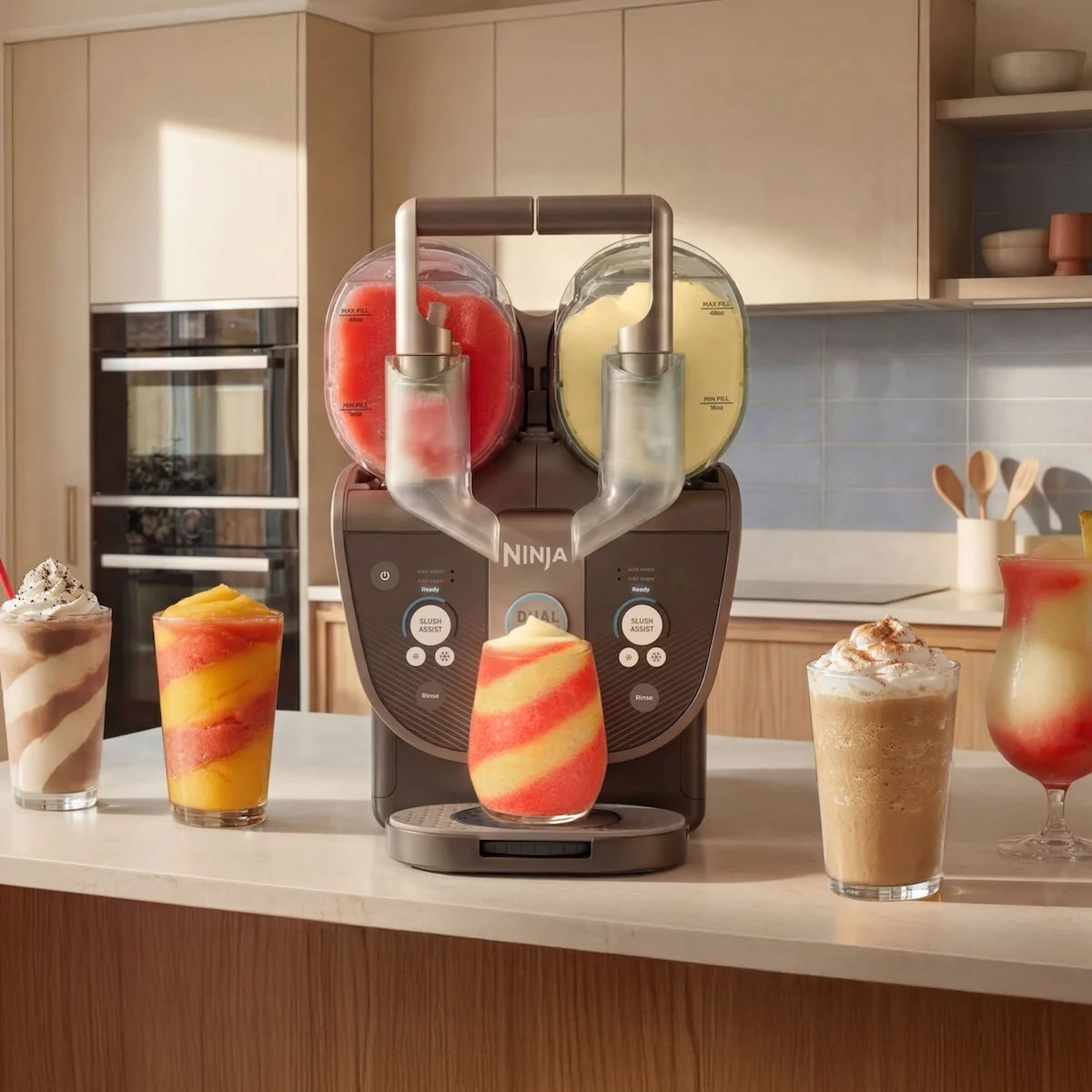
The machine features two independent 48-ounce vessels. This architecture allows for the simultaneous preparation of two entirely different frozen textures and flavor profiles. Whether the user intends to mix a boozy margarita on one side and a non-alcoholic strawberry daiquiri on the other, or pair a thick, indulgent chocolate milkshake with a light, icy coffee frappe, the machine handles both cycles independently.
At its core, the device relies on what Ninja brands as “Dual SlushAssist” technology. This intelligent sensing system monitors the consistency and temperature of each chamber in real-time, adjusting the freezing rate to ensure that a creamy dairy-based drink doesn’t over-freeze, while a water-based slush maintains its signature icy crunch. The retail price is set at $399.99, positioning it as a premium lifestyle appliance rather than a standard kitchen utility.
Chronology: From Novelty to Necessity
The trajectory of at-home beverage appliances has evolved rapidly over the last decade. Historically, homeowners relied on high-powered blenders to crush ice, which often resulted in uneven textures—too watery at the bottom, too chunky at the top.
The Rise of Specialized Appliances
- The Era of the "Crush": The early 2010s were dominated by heavy-duty blenders that promised "ice-cream shop" results but required constant manual intervention (the "tamper" dance).
- The Original Ninja Slushi Launch: When Ninja entered the dedicated slushie machine market, it disrupted the category by using an internal chilling system rather than just blades. It successfully replicated the texture of commercial gas-station drinks.
- The Feedback Loop: User feedback on the original model was largely positive regarding quality, but vocal about its limitations. During summer gatherings, hosts found themselves tethered to the machine, making batch after batch to keep up with demand.
- The "Twist" Innovation: Developed to solve the "host’s dilemma," the Slushi Twist was designed for entertaining. By doubling the capacity and adding a swirl dispenser, Ninja has transitioned the product from a solitary treat-maker to a centerpiece for social gatherings.
Supporting Data: Engineering the Perfect Freeze
The technical specifications of the Slushi Twist are designed to bridge the gap between commercial equipment—which often costs thousands of dollars—and residential convenience.
Performance Metrics
- Capacity: Each chamber holds 48 ounces, resulting in a total capacity of 96 ounces. Ninja states this is sufficient to serve more than 10 drinks per full-load cycle.
- Adaptability: The machine is capable of processing milk-based products, coffee concentrates, juices, and alcohol-infused mixtures.
- Cleaning Efficiency: One of the most common criticisms of home slushie machines is the "cleanup nightmare." The Slushi Twist incorporates a "Rinse" cycle that uses warm water to flush the internal augers and mixing chambers, significantly reducing the maintenance burden.
- Dispensing Versatility: The unit includes a specialized dial that allows users to dispense one flavor or, via a "twist" mechanism, swirl both flavors simultaneously. This provides a professional presentation for layered beverages.
Comparative Analysis
| Feature | Traditional Blender | Original Ninja Slushi | Ninja Slushi Twist |
|---|---|---|---|
| Texture Consistency | Variable (Ice chunks) | High (Uniform) | High (Dual-sensing) |
| Capacity | Single Batch | Single Chamber | Dual Chambers |
| Effort Required | High (Manual) | Moderate | Low (Automated) |
| Versatility | Smoothies/Soups | Slushies | Slushies/Frappes/Shakes |
Official Responses and Market Positioning
Ninja, a brand under the SharkNinja umbrella, has positioned the Slushi Twist as a "smart" appliance. In official product briefings, the company emphasizes the "Dual SlushAssist" technology as the differentiator. By automating the freezing process, they claim to remove the "guesswork" that often leads to spoiled batches or broken machines in other brands.
While the company acknowledges the $399.99 price point is high, they argue that the value proposition lies in the cost-savings of home-made versus store-bought beverages. If a user consumes high-end coffee shop frappes or frozen cocktails at a restaurant, the machine’s cost is amortized relatively quickly over the summer season.
Furthermore, the company has leaned heavily into the "entertaining" narrative. By catering to the host, Ninja is tapping into the "homebody economy"—a post-pandemic trend where consumers prefer to invest in high-end experiences within their own living spaces rather than going out.
Implications: The Future of Home Mixology
The arrival of the Slushi Twist suggests a broader shift in the home appliance market: the "professionalization" of the kitchen. Consumers are no longer satisfied with general-purpose tools; they are seeking appliances that deliver specific, high-quality results.
The Challenges of Space and Cost
However, the machine does present practical hurdles. At a significant size footprint, it is not a "tuck-away" appliance. It is designed to live on the counter, which necessitates a lifestyle commitment from the user. For smaller urban apartments—like those in the NYC market where the test was conducted—counter space is the most valuable commodity in the home.
Additionally, at $399.99, the device enters the category of "luxury convenience." For the occasional user, this is a steep barrier to entry. The implications for the industry are clear: companies must prove that their machines can perform multiple roles to justify the footprint and price. The Slushi Twist succeeds here by being more than a slushie maker; by handling milkshakes, frozen coffee, and smoothies, it justifies its presence as a multi-functional drink station.
The Social Aspect
Perhaps the most significant implication is how this technology changes social dynamics. When hosting, the ability to offer a "signature swirl" or a customized cocktail/mocktail combination adds a layer of sophistication to home entertaining. It removes the host from the kitchen, allowing them to participate in the event rather than serving as the designated bartender.
Final Verdict: Is It Worth the Investment?
The Ninja Slushi Twist is an impressive piece of hardware that effectively solves the limitations of previous home-frozen-drink technology. Its dual-chamber design, combined with intelligent temperature sensing, ensures a high-quality product every time.
However, potential buyers should weigh three factors:
- Frequency of Use: If frozen drinks are a weekend ritual or a regular part of hosting, the machine is a worthwhile investment. If it is intended for a one-off summer party, the storage space and cost may be prohibitive.
- Space Constraints: Prospective owners should measure their counter depth and height before purchasing. The machine is substantial.
- Maintenance: While the rinse cycle is effective, the machine requires a level of care similar to a high-end espresso maker.
Ultimately, the Slushi Twist represents the next logical step in the "smart kitchen" evolution. It takes a process that was once tedious and prone to error and transforms it into a push-button experience. As we see more of these specialized, high-performance appliances hit the market, the line between a professional bar or cafe and the modern home kitchen continues to blur, offering consumers the luxury of choice, flavor, and convenience without ever having to leave their front door.