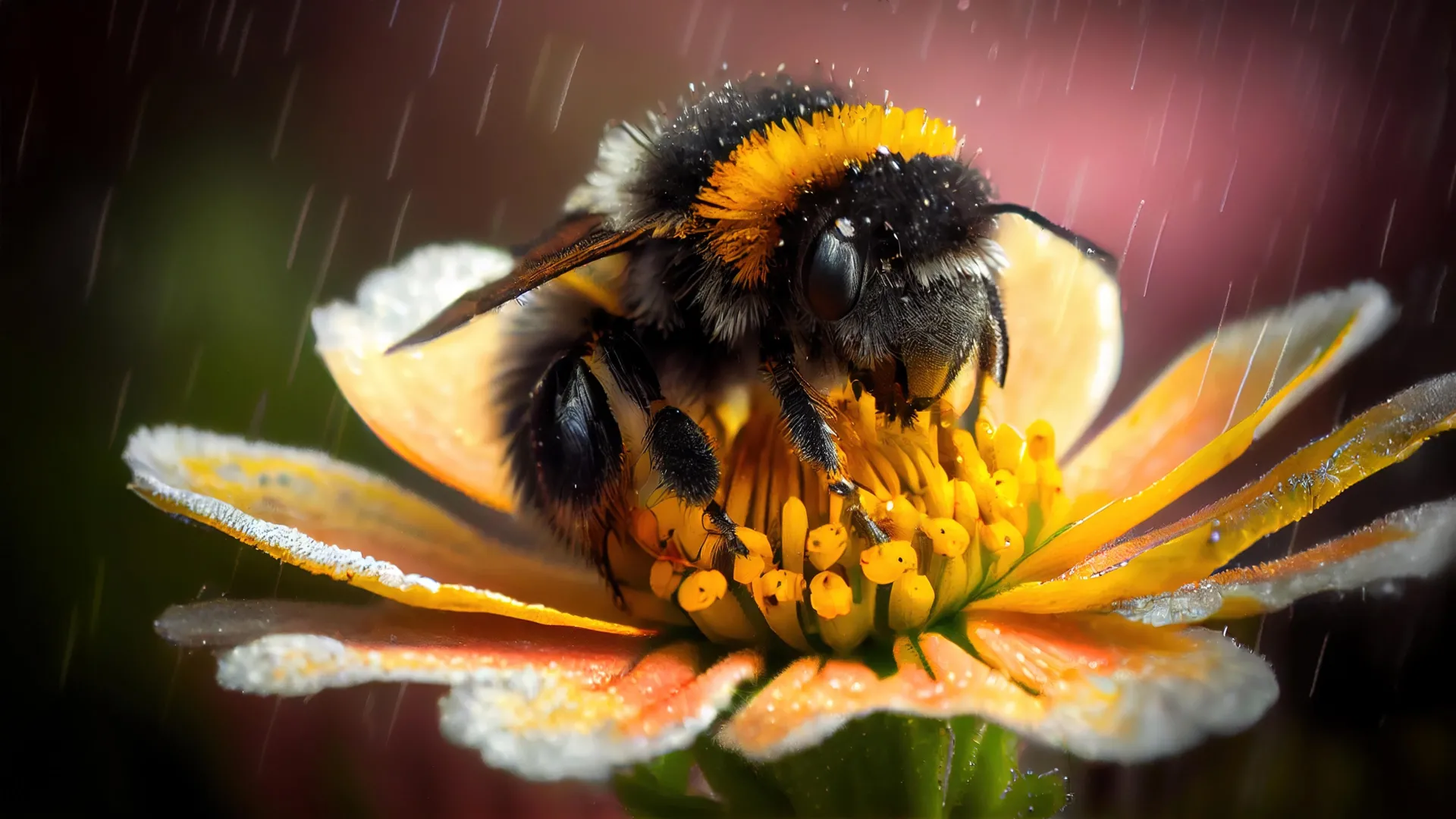
Despite their diminutive stature—often measuring a mere inch in length—bumblebees act as the silent titans of the global food supply. These fuzzy, industrious pollinators are responsible for the fertilization of approximately one-third of the world’s crops, ranging from the berries on our breakfast tables to the soybeans that power global livestock industries. However, this critical ecological service is currently under siege. As modern agriculture faces the dual pressures of feeding a burgeoning global population and mitigating the fallout of climate change, the very tools designed to secure our harvests may be undermining the pollinators essential to them.
Recent scientific breakthroughs have shed light on a troubling reality: next-generation pesticides, specifically those designed for targeted efficiency, are causing profound molecular damage to bumblebee populations. New research from the Georgia Institute of Technology indicates that even low-level exposure to these chemicals can fundamentally alter the gene expression of bees, potentially threatening the long-term viability of entire colonies.
The Molecular Crisis: Understanding the Pesticide-Pollinator Conflict
The tension between pest management and ecological preservation has defined 21st-century agriculture. To secure high yields, farmers rely on sophisticated chemical agents to suppress sap-feeding insects like aphids, which can devastate crops such as corn and soybeans. Among these agents is sulfoxaflor, a "next-generation" pesticide introduced in 2013.
Sulfoxaflor was touted for its precision, designed to be highly effective against specific pests while ostensibly posing lower risks to non-target species compared to older, broader-spectrum chemicals. However, the scientific community has long harbored concerns regarding its toxicity to pollinators. While the chemical’s ability to terminate aphids is well-documented, its physiological "footprint" on bees has remained a subject of intense investigation. Scientists are now moving beyond observing mortality rates, instead peering into the molecular machinery of the bees themselves to understand the insidious, sublethal effects of these chemicals.
Chronology of a Discovery: Tracking Genetic Interference
The path to uncovering these biological impacts was rigorous and multifaceted. Funded by the U.S. Department of Agriculture (USDA), the study conducted by the Georgia Institute of Technology sought to bridge the gap between microscopic chemical exposure and macroscopic population decline.
The Experimental Framework
The research team, led by then-postdoctoral fellow Sarah Orr, initiated the study by exposing worker bumblebees to controlled, low doses of sulfoxaflor. These doses were calibrated to mirror what a bee might realistically encounter in a field environment—levels often deemed "safe" by regulatory standards that focus primarily on immediate survival rather than long-term reproductive health.
Molecular Analysis
Following exposure, the researchers employed high-tech analytical methods to observe the bees’ internal responses:
- Flash Freezing: Tissue samples were rapidly frozen to preserve the biological state of the bees at the moment of analysis.
- RNA Sequencing: The team analyzed the RNA of the bees to quantify shifts in gene expression. This allowed researchers to identify which genes were being "turned on" or "turned off" by the presence of the pesticide.
- Computational Modeling: Using complex algorithms, the team mapped these genetic changes to biological systems, identifying which pathways were most disrupted by the chemical’s presence.
The Ovarian Connection
The most alarming findings were located within the ovarian tissue of the worker bees. The data revealed significant alterations in gene activity related to reproductive function. By interfering with the genetic signaling required for healthy development, the pesticide appears to act as a reproductive suppressant. This is a critical discovery; even if a pesticide does not kill a bee outright, a reduction in the number of offspring produced—or a degradation in the health of those offspring—can trigger a slow-motion collapse of the colony.
Supporting Data: Connecting the Micro to the Macro
The implications of this study are profound. As Michael Goodisman, a professor in the School of Biological Sciences at Georgia Tech, noted, the difficulty in environmental science has historically been linking molecular observations to real-world consequences.
"What makes this study exciting is that it connects molecular changes in gene expression to real-world consequences for individual bees and their colonies," Goodisman explained. "That type of connection is rare and gives us a much clearer picture of how pesticides affect bees."
The data suggests that when the internal "instructions" (gene expression) of an organism are modified by chemical stressors, the downstream effects are cumulative. A colony is a superorganism; if the worker bees are suffering from reproductive impairment or altered behavioral patterns due to pesticide exposure, the colony’s ability to forage, nurse, and expand is compromised. In a high-stakes agricultural environment, these subtle biological shifts can translate into massive failures in crop pollination services.
Official Perspectives: The Scientist’s Dilemma
The challenge presented by these findings is not merely biological; it is a policy and logistical dilemma. Modern agriculture requires robust pest control to prevent famine and economic instability. However, the reliance on chemicals that disrupt the very pollinators needed to produce food creates a "feedback loop of failure."
Dr. Sarah Orr, now an assistant professor at the University of Tampa, emphasizes the need for a nuanced approach. "We need pesticides to control crop pests, but they can also harm essential non-target insects like bumblebees," she states. "As a scientist, my goal is to identify practical solutions that support pest management while also protecting beneficial insects and the food systems that depend on them."
The official stance of the research team is one of pragmatic urgency. They argue that current regulatory frameworks, which focus heavily on whether a pesticide kills an insect within 48 to 96 hours, are insufficient. They advocate for a more holistic assessment—one that accounts for the "sublethal" effects of chemicals, such as changes in gene expression, fertility, and cognitive function. If the regulatory bar is not raised to include these metrics, the agriculture industry may continue to inadvertently erode its own foundations.
Broader Implications: A Multi-Threat Environment
The findings regarding sulfoxaflor must be viewed within the context of a "threat multiplier" landscape. Bumblebees are not merely battling pesticides; they are navigating an increasingly hostile environment shaped by human activity.
The Heat Stress Factor
Climate change is exacerbating the plight of pollinators. Rising global temperatures and more frequent, intense heatwaves have been shown to stress bee populations, reducing their foraging range and increasing their metabolic demands. When a bee is already battling the metabolic stress of heat, the added burden of pesticide-induced gene alteration can be the difference between survival and local extinction.
The Future of Integrated Pest Management (IPM)
The scientific community is now calling for a shift toward Integrated Pest Management (IPM) strategies that prioritize biological controls and precision farming. This includes:
- Buffer Zones: Creating chemical-free sanctuaries near major agricultural plots to provide bees with safe corridors.
- Selective Application: Utilizing AI and drone technology to apply pesticides only where absolutely necessary, rather than broad-field spraying.
- Genetic Resilience Research: Identifying bee populations that are more resilient to chemical exposure and exploring ways to protect those genetic traits.
The Economic Imperative
The economic value of pollination services is estimated in the hundreds of billions of dollars annually. If bumblebee populations continue to decline, the cost of food will inevitably rise as farmers are forced to move toward expensive, labor-intensive manual pollination or face significant crop failure. The Georgia Tech study serves as a canary in the coal mine: the health of the global food system is inextricably linked to the genetic health of the smallest workers in the field.
Conclusion: A Path Toward Stewardship
The discovery that a widely used pesticide can rewrite the gene activity of bumblebees is a sobering reminder of the complexity of our agricultural systems. While technology has allowed us to increase yields and feed a growing planet, it has also introduced invisible, long-term risks to the natural processes we rely upon.
As researchers continue to decode the molecular secrets of bumblebee health, the path forward requires a new era of stewardship. It is not enough to simply produce more food; we must produce it in a way that preserves the delicate, complex web of life that makes such production possible. By integrating the insights from molecular biology into agricultural policy, we have the opportunity to move toward a more sustainable future—one where the buzz of a bumblebee remains a constant, reliable companion to the harvest.
The challenge is significant, but as Orr and Goodisman demonstrate, it is not insurmountable. By understanding the molecular language of the bumblebee, we are better equipped to protect it—and in doing so, we protect the very systems that sustain us all.