France, a nation whose identity is inextricably linked to the sacred status of the terroir, the Michelin star, and the leisurely three-hour lunch, is currently facing a culinary identity crisis. While international perceptions of the Hexagon remain firmly rooted in images of artisanal boulangeries and quaint bistro culture, the reality of modern French dietary habits is far more complex.
Beneath the veneer of haute cuisine lies a startling statistic: France boasts the highest number of McDonald’s restaurants per capita in Europe. This contradiction—between the country’s gastronomic heritage and its burgeoning reliance on fast-food culture—has recently boiled over into an unexpected political skirmish between two neighboring Paris suburbs. What began as a dispute over a chicken franchise has evolved into a microcosm of the socioeconomic and political fractures threatening to define the upcoming presidential election.
I. The Saint-Ouen Skirmish: A Tale of Two Mayors
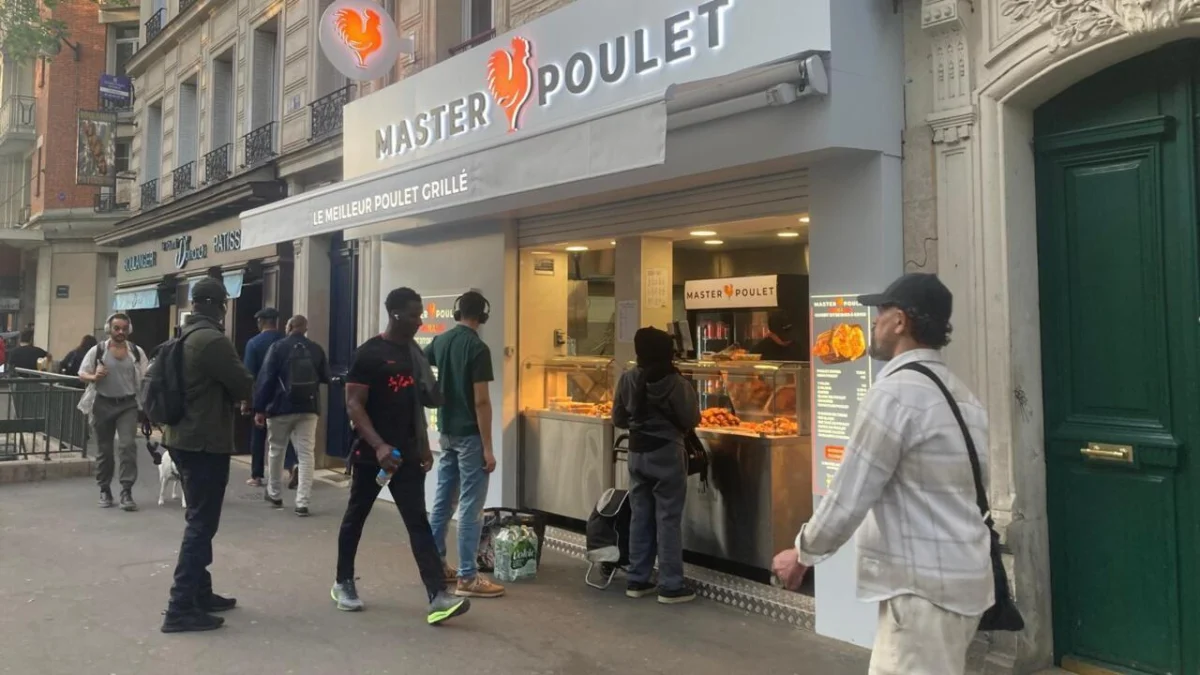
The flashpoint for this debate occurred in the northern suburb of Saint-Ouen, where the arrival of the "Master Poulet" fried chicken chain triggered a sharp confrontation between local political leaders. For Karim Bouamranne, the Socialist mayor of Saint-Ouen, the franchise represented a blight on his ambitious urban renewal project.
Bouamranne, who has staked his reputation on "sprucing up" the town center, viewed the neon-lit fast-food outlet as a direct affront to his vision of a cleaner, more upscale urban environment. His grievances were twofold: aesthetic degradation and the sensory pollution of lingering grease odors that drifted into the night, often until 2:00 AM.
However, the intervention of Bally Bagayoko, the hard-left mayor of the neighboring suburb of Saint-Denis, turned a local zoning spat into a national talking point. Bagayoko, rather than echoing the concerns regarding urban aesthetics, publicly lauded the arrival of the chain. He praised "Master Poulet" for its affordability and convenience—two factors that resonate deeply with the working-class populations of the banlieues.
II. Chronology of a Culinary Conflict
- Mid-2023: The "Master Poulet" franchise secures permits to operate in Saint-Ouen, targeting a high-footfall area near the town center.
- Late 2023: As the smell of deep-frying permeates the local air, Mayor Karim Bouamranne initiates a formal challenge to the establishment, citing public nuisance and urban planning regulations.
- Early 2024: The debate gains traction on social media. Bally Bagayoko enters the fray, characterizing the resistance against the chicken shop as "elitist snobbery" that ignores the economic realities of local residents.
- Spring 2024: The "food fight" becomes a central topic in local news, drawing in urban planners, sociologists, and politicians, all looking toward the horizon of the impending presidential elections.
- Present Day: The feud remains unresolved, serving as a symbolic battleground for the broader "Left vs. Left" ideological divide regarding the standard of living for the working class.
III. Supporting Data: The "Food Desert" Dilemma
The dispute highlights a troubling reality in contemporary France: the proliferation of "food ghettos." Research indicates that in many working-class neighborhoods, access to high-quality, fresh, and nutritious food is becoming increasingly difficult. Conversely, ultra-processed, calorie-dense foods are marketed aggressively and priced for accessibility.
According to recent food security studies, the price of fresh produce—the backbone of the Mediterranean diet—has risen significantly faster than that of processed fast-food items in the Paris metropolitan region. In these neighborhoods, a "food desert" is not necessarily a total lack of grocery stores, but a saturation of low-quality, high-calorie options compared to the relative scarcity of affordable fresh markets.
This creates a systemic inequality where the wealthy can afford to prioritize health, while the working class is economically coerced into relying on franchises like "Master Poulet." The irony is not lost on observers: France, the birthplace of the gastronomic meal of the French (inscribed on the UNESCO Intangible Cultural Heritage list), is effectively forcing its poorest citizens into a dietary lifestyle that mirrors the least healthy aspects of American food culture.
IV. Official Responses and Ideological Fractures
The feud has illuminated a widening rift within the French Left. On one side, the "Green-Socialist" camp, represented by mayors like Bouamranne, argues for a transition toward sustainable urban living, prioritizing public health, environmental hygiene, and the aesthetic uplift of the city. Their argument is rooted in the belief that local government has a responsibility to curate the quality of life for its citizens by limiting the proliferation of low-quality outlets.
On the other side, the "Hard-Left" camp, represented by figures like Bagayoko, argues that the Left has lost touch with the working class. Their position is that until structural inequality is addressed—until the state provides the means for every citizen to afford high-quality nutrition—it is paternalistic and cruel to ban the only affordable food options available to the poor.
"We are asking our citizens to eat like aristocrats on the budget of a pauper," one local community activist remarked during the height of the controversy. This sentiment suggests that the "chicken war" is not merely about poultry, but about the right to dignity in the face of inflation.
V. Implications: The Road to the Presidential Election
As France prepares for the next presidential cycle, the "Master Poulet" incident serves as a bellwether for the broader political landscape. The issue of food justice is becoming inextricably linked to the rural-urban divide.
The Rural-Urban Disconnect
A critical concern is the growing chasm between urban dwellers and the farming community. French farmers, historically the backbone of the nation’s culinary pride, are feeling increasingly marginalized by European environmental regulations and shifting market dynamics. Many in the agricultural sector are drifting toward the far-right, perceiving the "urban elite" as being more interested in the health of the planet than the survival of the rural producer.
Reconciling these two groups is the ultimate challenge for the next administration. Can the state support farmers in a way that makes their produce affordable for city dwellers, while simultaneously ensuring that the rural population feels valued rather than lectured by urbanites?
The Question of "Food Ghettos"
If the government continues to ignore the existence of "food ghettos," it risks further disenfranchising a significant portion of the electorate. The "Left" will continue to tear itself apart over the issue, allowing populist movements to step into the void. When a family in Saint-Denis has to choose between a $5 meal that fills them up and a $20 meal that is nutritionally superior but unaffordable, their political loyalty will naturally gravitate toward those who prioritize their immediate survival over long-term dietary ideals.
Conclusion: Feeding the Future
The "chicken drumstick feud" is, in many ways, a microcosm of the challenges facing 21st-century France. It forces a confrontation with the uncomfortable truth that quality of life is not a uniform experience across the nation.
To resolve these tensions, the French government must move beyond the cosmetic fix of zoning laws and address the underlying economic architecture of the food supply chain. This requires a multi-faceted approach:
- Subsidizing Nutrition: Implementing aggressive programs to subsidize the cost of fresh produce in working-class neighborhoods.
- Supporting the Middle Ground: Fostering local cooperatives that bridge the gap between rural farmers and urban markets, cutting out the middlemen who drive up prices.
- Political Reconciliation: Creating a national discourse that respects the struggles of both the urban working class and the rural agricultural community, rather than pitting them against one another.
As the presidential election looms, the candidates who can provide a coherent answer to the question of "How do we feed the French?" will be the ones who truly understand the stakes. Until then, the neon lights of the fried chicken shops will continue to burn bright, casting long shadows over a nation still trying to find the common ground between its culinary ideals and its socioeconomic reality.
Produced by François Picard, Rebecca Gnignati, Juliette Laffont, Piera Rocco, and Andrew Hilliar.