The global energy landscape is currently navigating a period of profound structural transformation, characterized by a stark divergence in dealmaking activity. While the broader market grapples with the "Groundhog Day" effect of persistent Middle Eastern conflict and sky-high fuel prices, a localized boom is occurring in the infrastructure that connects supply to demand.
As the "all-of-the-above" energy strategy gains bipartisan traction in Washington, the midstream sector—comprising the pipelines, processing plants, and storage facilities that form the backbone of the industry—has become the primary theater for multi-billion-dollar acquisitions. Conversely, the upstream sector, focused on exploration and production, has entered a period of relative hibernation, stifled by valuation gaps and the maturing of the U.S. shale patch.
Main Facts: A Tale of Two Sectors
The current state of energy finance is defined by three primary drivers: geopolitical volatility, the insatiable power demands of the Artificial Intelligence (AI) revolution, and a shift in capital flow between domestic and international markets.
- Midstream Dominance: Unlike the production side of the business, midstream assets are seeing a flurry of activity. This is driven by the urgent need for infrastructure to transport natural gas to Liquefied Natural Gas (LNG) export hubs on the Gulf Coast and to power-hungry data centers across the United States.
- The Valuation Gap: In the upstream sector, geopolitical instability—specifically the ongoing conflict involving Iran—has kept oil prices elevated. This creates a "bid-ask" spread where sellers demand premiums based on current high prices, while buyers remain conservative, looking toward a long-term future where prices may normalize.
- The AI Catalyst: AI is no longer just a tech story; it is an energy story. The massive GPU clusters required for generative AI demand unprecedented levels of reliable baseload power, much of which is being met by natural gas, thereby necessitating new pipeline capacity.
- Legislative Tailwinds: A bipartisan push for permitting reform in the U.S. Senate is promising to expedite the construction of both fossil fuel pipelines and renewable energy transmission lines, potentially unlocking a new wave of investment.
Chronology of Dealmaking: From Mega-Mergers to Infrastructure Roll-ups
The timeline of 2024 energy deals reveals a clear shift in momentum. The year began with massive consolidation in the production sector, but as geopolitical tensions escalated, the focus shifted toward infrastructure and technology.
The Upstream Peak (Early 2024)
In early February, the energy world witnessed one of its last massive upstream consolidations before the current geopolitical chill. Devon Energy acquired Coterra Energy for a staggering $26.5 billion, a deal focused on the Delaware Basin. This transaction occurred just weeks before the onset of heightened hostilities in the Middle East, which subsequently complicated the valuation of production assets. Since then, the only notable upstream deal was Magnolia Oil & Gas paying $4 billion for WildFire Energy’s assets in the Eagle Ford Shale.
The Midstream Flurry (Q3 2024)
As the year progressed, the focus shifted to the "plumbing" of the energy industry. Recent months have seen a rapid succession of midstream deals:
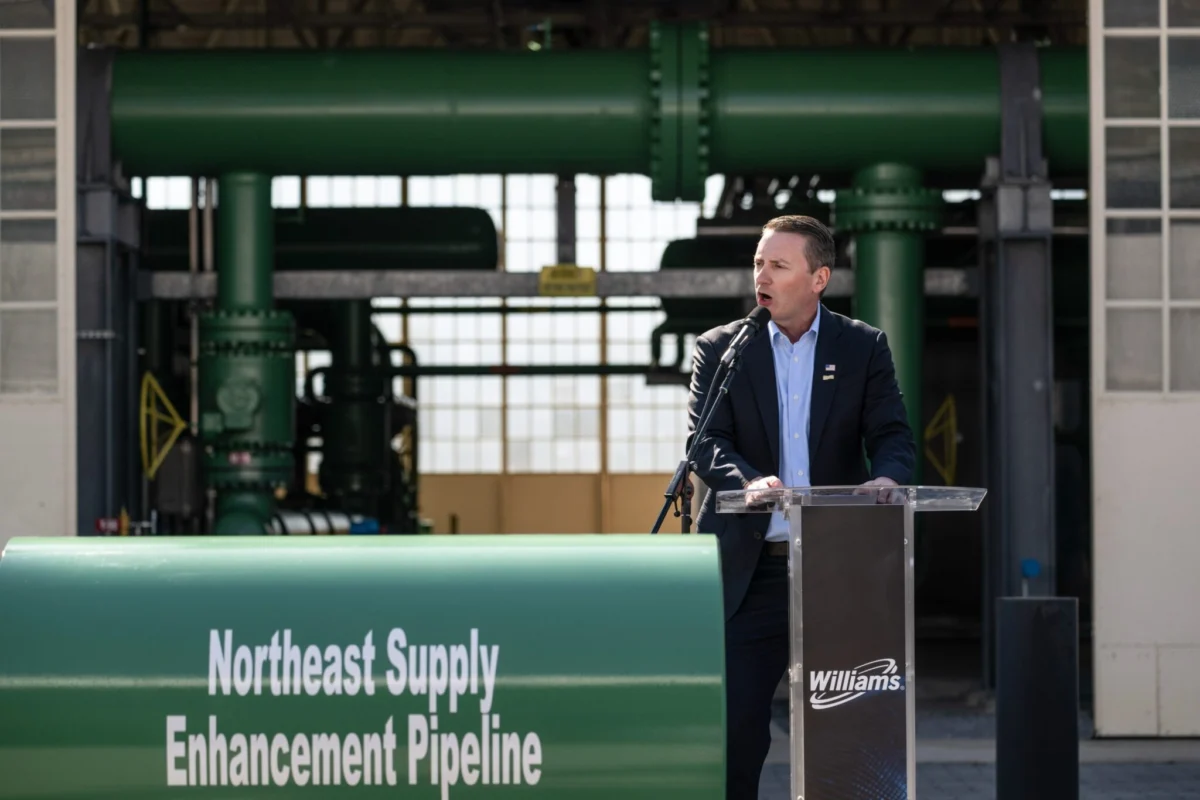
- Williams acquired Momentum Midstream for $5.5 billion, securing critical gathering and processing facilities in Texas and Louisiana.
- ONEOK purchased Brazos Midstream’s Permian Basin assets for $4.42 billion.
- Western Midstream spent $1.6 billion on Delaware Basin facilities.
- Enbridge expanded its crude footprint with a $2.55 billion purchase of Tallgrass Energy’s assets.
- Plains All American Pipeline acquired Silver Creek Midstream in Wyoming for $585 million.
The Emerging Tech and AI Wave
Parallel to the physical infrastructure deals, a massive influx of venture capital has targeted the intersection of energy and computing. In late September, GMI Cloud raised $223 million for AI-focused GPU infrastructure, and CScale secured $145 million for optical interconnect technology designed for AI data centers. These deals underscore the growing reliance of the tech sector on a robust and expanded energy grid.
Supporting Data: The Dollars Behind the Shift
The scale of capital movement in the energy and energy-adjacent sectors highlights the market’s current priorities.
Midstream and Infrastructure Scale
The recent midstream acquisitions represent a "rolling up" of private equity-backed players into large, integrated public companies. According to Andrew Dittmar, principal analyst at Enverus Intelligence Research, the market currently favors these larger systems that can offer end-to-end solutions from the wellhead to the export terminal. The roughly $15 billion spent across the ONEOK, Williams, and Enbridge deals alone demonstrates a high appetite for assets with contracted, fee-based cash flows that are less sensitive to daily commodity price swings than upstream production.
Venture Capital and Private Equity Inflow
The diversification of energy-related investment is evident in the recent venture rounds:
- Hertha Metals ($133.7M): Focusing on high-purity iron and steel for rare-earth magnets, essential for the green energy transition.
- Flow Engineering ($50M): Software for managing complex hardware requirements in energy and aerospace.
- Miter ($40M): AI-powered workforce management for the construction sector, which is currently tasked with building out the new energy infrastructure.
- Nuveen’s Acquisition of Schroders ($13.3B): A massive private equity exit in the asset management space, signaling a broader reshuffling of capital in London and New York.
Official Responses and Expert Analysis
Industry leaders and analysts suggest that the U.S. energy market is entering a "mature" phase, where the easy gains of the shale revolution have been realized, and the focus is now on optimization and international expansion.
Andrew Dittmar, Enverus Intelligence Research:
Dittmar notes that the midstream sector is "pretty busy" because of the fundamental reshaping of the U.S. gas market. "There’s just such a demand for infrastructure right now, particularly on the natural gas side," he stated. He also highlighted a curious trend in capital flow: "It’s interesting that we talk about international capital coming to the U.S. at the same time that U.S. capital is looking to go abroad."
The Legislative Perspective:
The introduction of a bipartisan infrastructure permitting reform bill in the Senate is seen as a rare moment of alignment between traditional energy advocates and green energy proponents. Proponents argue that the bill is necessary to support the "AI boom," which requires both "expediting oil and gas pipelines" and "wind, solar, and electric transmission projects." This "all-of-the-above" rhetoric is aimed at bypassing the bureaucratic hurdles that have historically delayed multi-year infrastructure projects.
Corporate Strategy Shifts:
The recent behavior of global majors like BP illustrates the complexity of the current market. While BP reportedly backed off from acquiring Devon Energy’s Eagle Ford assets, the fact that a global major was even considering U.S. onshore shale assets speaks to the relative attractiveness of the U.S. regulatory environment compared to other global regions, despite "inventory scarcity" in the Permian and Eagle Ford basins.
Implications: A New Energy Paradigm
The decoupling of midstream and upstream activity has several long-term implications for the global economy and the transition to a high-tech energy future.
1. The Energy-AI Nexus
The massive investments in GPU clouds (GMI Cloud) and data center connectivity (CScale) are tethered to the physical reality of the power grid. As data centers become the new "industrial hubs" of the 21st century, midstream companies like Williams and ONEOK are effectively becoming utility-adjacent players. The demand for natural gas to power these centers provides a long-term floor for gas demand, even as the world pushes for decarbonization.
2. The "International Swap" of Capital
We are witnessing a strategic rotation. U.S. exploration and production companies, facing maturing domestic fields, are looking to "international wildcatting" to find the next big discovery. Simultaneously, international players (such as Japan’s Mitsubishi) are willing to pay premiums for U.S. assets to ensure a long-term, stable supply of LNG. This cross-border flow of capital suggests that the U.S. has cemented its role as the world’s "safe haven" for energy supply, while U.S. firms are taking the risks associated with global exploration.
3. The End of the Small Player?
The trend of large public companies rolling up smaller, private equity-backed midstream firms suggests a move toward consolidation. In an environment of high interest rates and complex permitting, scale is a competitive advantage. Small players may find it increasingly difficult to compete with the integrated giants that control the entire value chain from gathering to export.
4. Permitting Reform as a Decisive Factor
The fate of the Senate’s permitting reform bill will likely determine the pace of the energy transition. If passed, it could break the gridlock for both carbon-intensive and carbon-neutral projects. For the midstream sector, it would mean faster completion of pipelines that are currently stalled in legal and regulatory limbo. For the tech sector, it would mean the power grid might finally catch up to the speed of AI innovation.
In conclusion, while the headline-grabbing geopolitical conflicts in the Middle East have created a cautious atmosphere for traditional oil production deals, the underlying "plumbing" of the energy world is undergoing a historic expansion. Driven by the twin engines of LNG exports and AI power demand, the midstream sector is the current engine of energy dealmaking, setting the stage for a more integrated, high-tech, and globally connected energy future.