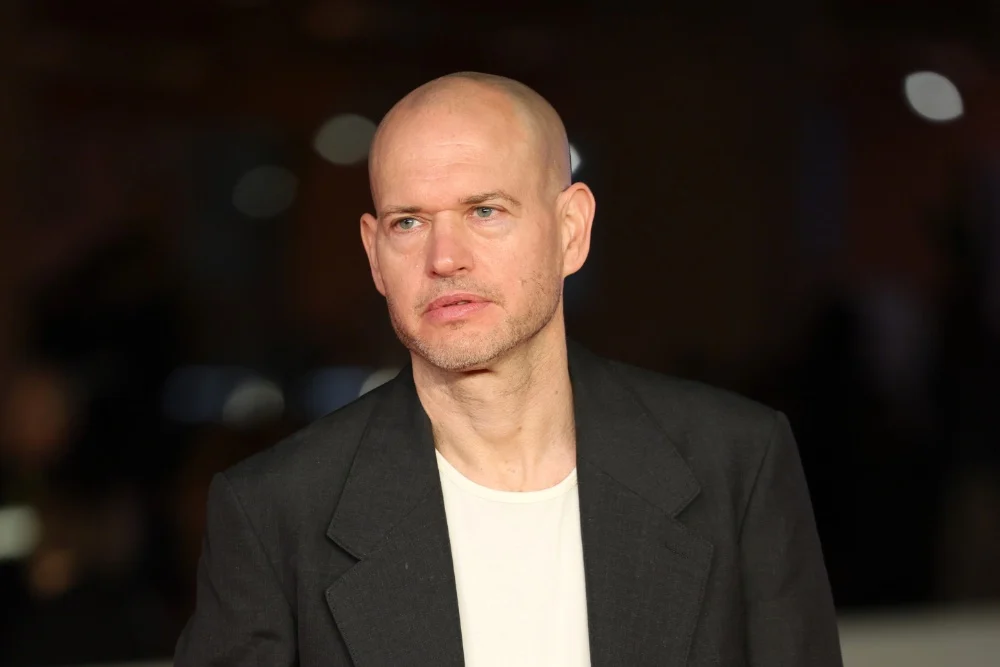
In the rarefied world of international cinema, where artistic statements are often celebrated for their boldness, the recent fallout surrounding Israeli filmmaker Nadav Lapid has exposed a deep, jagged fissure in the industry’s moral architecture. Lapid, a director long recognized for his confrontational, soul-searching critiques of Israeli nationalism, recently found himself at the center of a firestorm when a boycott campaign forced his withdrawal as a juror from the FID Marseille film festival.
What began as a localized dispute over a single invitation quickly metastasized into one of the most polarizing cultural flashpoints of the decade. The controversy drew prominent defenders—including Natalie Portman, Justine Triet, and Jacques Audiard—into a public debate about the limits of artistic protest, the responsibilities of cultural institutions, and the increasingly fraught landscape of political cinema.
The Anatomy of a Boycott: A Chronology of the Dispute
The controversy ignited when organizers of the FID Marseille festival invited Lapid to serve as a juror. The backlash was swift; various film figures moved to withdraw their works in protest, citing the ongoing war in Gaza and a broader opposition to Israeli state institutions.
For Lapid, who has lived in self-imposed exile in France since 2021, the unfolding events were initially surreal. He describes being “astonished” by the sheer scale of the reaction. "I didn’t expect it and didn’t aspire to it," Lapid tells Variety. "It wasn’t a move on my part; I’d gladly have done without it."
As the boycott gained momentum, the festival found itself caught in an impossible position. In an attempt to de-escalate, the institution pivoted away from its initial invitation, a move that Lapid characterizes as an attempt to "sense which way the wind was blowing—a bit like a cartoon character caught between two dangers." The resulting silence from the festival—and the subsequent scrambling to issue public statements—only served to underscore the growing paralysis of European cultural institutions when confronted with the Israeli-Palestinian conflict.
The "Comfortable Option": A Crisis of Institutional Courage
At the heart of Lapid’s critique is a charge of institutional cowardice. He argues that major film festivals, while quick to champion dissidents from Iran or Russia, display a starkly different temperament when faced with the complexities of the Middle East.
"It’s very easy to be brave when there’s no danger," Lapid observes. He points out that backing an Iranian filmmaker carries little material risk for a festival director, as "there aren’t many mullahs at the festival gates." Similarly, criticism of the Kremlin, while politically significant, aligns with a broad, comfortable consensus within Western liberal arts circles.
The Israel-Palestine conflict, by contrast, creates profound societal rifts. Fearing protests, political fallout, or the potential for reputational damage, festival organizers have begun to adopt an "ostrich attitude." By opting for the "comfortable option"—choosing to ignore films that challenge the status quo—these institutions are failing their primary mission, according to Lapid.
"They protect the well-being of their festival—but the festival isn’t the subject," he says. "The subject is cinema, the world, the truth. They never understood their role."
The Financial Web: Artistic Independence vs. State Control
Much of the criticism leveled at Lapid during the boycott centered on the financing of his latest film, Yes. Critics questioned the legitimacy of accepting funding from the Israel Film Fund, with some equating the institution to a government mouthpiece.
Lapid rejects this characterization, noting that the fund is currently an independent body that has historically backed films fiercely critical of Israeli policy—including his own. However, he admits that this independence is hanging by a thread. He describes a process of "fascistization" within Israel, where the space for dissent is rapidly shrinking.
"In a week or two, it may no longer be true," he warns regarding the fund’s autonomy. He recounts how the current Minister of Culture publicly denounced Yes, accusing it of harming the reputation of "pure and sanctified soldiers," and vowed to blacklist him from future public funding.

The paradox is that while the Israeli government attacks his work, some European institutions—the very entities that pride themselves on progressive values—have reportedly engaged in a form of "communist-era censorship." Lapid reveals that when he approached European bodies for support, he was pressured to strip his synopses of charged language. Words like "genocidal" were replaced with "impulse of vengeance," and eventually, even the word "vengeance" was excised.
"The people preoccupied with Israel’s image came from European institutions, not Israeli cinema," he notes. "So the question should be framed differently: how do we finance radical, politically and cinematically bold films today?"
Beyond the Victim Narrative: A Call for Unified Urgency
Despite the intense pressure, Lapid adamantly refuses to cast himself as a victim. He expresses disdain for filmmakers who wear their controversies as a badge of honor, arguing that the fixation on his personal status distracts from the "catastrophe happening right now in Palestine, in Israel, in Gaza, and the rise of the far right almost everywhere."
He views the boycott of his presence as a symptom of a broader "obsession with purity" rather than a genuine pursuit of justice. "Cancelling my masterclass is a pro-Palestinian gesture?" he asks rhetorically. "I’ve been terrified for years by what’s happening in Palestine… I’ve always believed Israel should be sanctioned."
For Lapid, the "duel" between his supporters and those who boycotted him serves only the interests of the political forces he opposes. "The real villains," he says, "rub their hands and laugh." By focusing on symbolic gestures—like excluding an individual artist—the film community avoids the more difficult, necessary work of confronting the systemic realities of the conflict.
The Future of Political Cinema
As the dust settles on the FID Marseille controversy, the broader implications for the film industry remain grim. If the standard for participation in cultural life is a rigid, often performative, form of ideological purity, then the space for nuanced, challenging, and uncomfortable art will continue to vanish.
Lapid, however, remains defiant. He views his films as "wild mixtures" of the personal and the political, insisting that any attempt to separate the two is artificial. His next project is already in development, and he maintains that his commitment to "touching the fire" remains unshaken.
"I was born where it’s always burning," he says.
When asked if he fears that his career might be effectively shuttered by these shifting tides, his response is characteristic of a man who sees cinema not as a luxury, but as a fundamental necessity for truth-telling. "I don’t know how much validity the minister’s statement has, or how long the fund can stay independent," he admits. "Money is always a bit dirty—nobody hands it to you from paradise. As long as I have something to say, I’ll keep making films."
The controversy surrounding Yes has, against its own intentions, revealed the fragility of the cultural ecosystem. It has highlighted a landscape where institutions are terrified of their own audiences, where governments seek to stifle dissent, and where the artistic community is increasingly prone to infighting rather than collective action.
Whether the industry can recover its nerve remains to be seen. But as Lapid points out, the "ostrich attitude" is a temporary shield. The fire he describes—the burning reality of the geopolitical crises of our time—will not be extinguished by silence, nor by the refusal to screen a film. As he continues to work, Lapid’s case stands as a reminder that the most significant role of cinema is not to provide comfort, but to force the world to look directly at the things it would rather ignore.