As atmospheric carbon dioxide concentrations continue their relentless ascent, the global scientific community finds itself at a crossroads. With the window to limit warming to 1.5°C rapidly closing, the once-fringe concept of "geoengineering"—intentional, large-scale interventions in the Earth’s natural systems—is moving into the mainstream. Proponents argue these technologies could act as an emergency brake for a feverish planet, but a groundbreaking study from the University of California, Santa Barbara (UCSB) serves as a stark warning: the cure could be as disruptive as the disease.
The study, published in the journal Earth’s Future, reveals that different methods of solar geoengineering, while sharing the same goal of lowering global temperatures, may trigger vastly different—and potentially catastrophic—consequences for the Earth’s most vital climate systems.
The Mechanics of Cooling: Two Divergent Strategies
To understand the risks, one must first understand the proposed interventions. The research focused on two primary methods of "solar radiation management" (SRM), both designed to reflect incoming sunlight back into space.
Marine Cloud Brightening (MCB)
This technique involves spraying fine sea salt aerosols into the lower atmosphere, specifically above the ocean. These particles act as nuclei for water vapor, creating clouds with smaller, more numerous droplets. Because these clouds are more reflective, or "brighter," they bounce more sunlight away from the Earth’s surface, resulting in localized cooling.
Stratospheric Aerosol Injection (SAI)
In contrast, SAI is a more global approach. It involves injecting sulfate aerosols into the stratosphere—the layer of the atmosphere far above the clouds. Because the stratosphere is relatively stable, these particles spread evenly around the globe, creating a thin, reflective veil that dims the sun’s intensity uniformly across the planet.
The "Heartbeat" of the Pacific: Why ENSO Matters
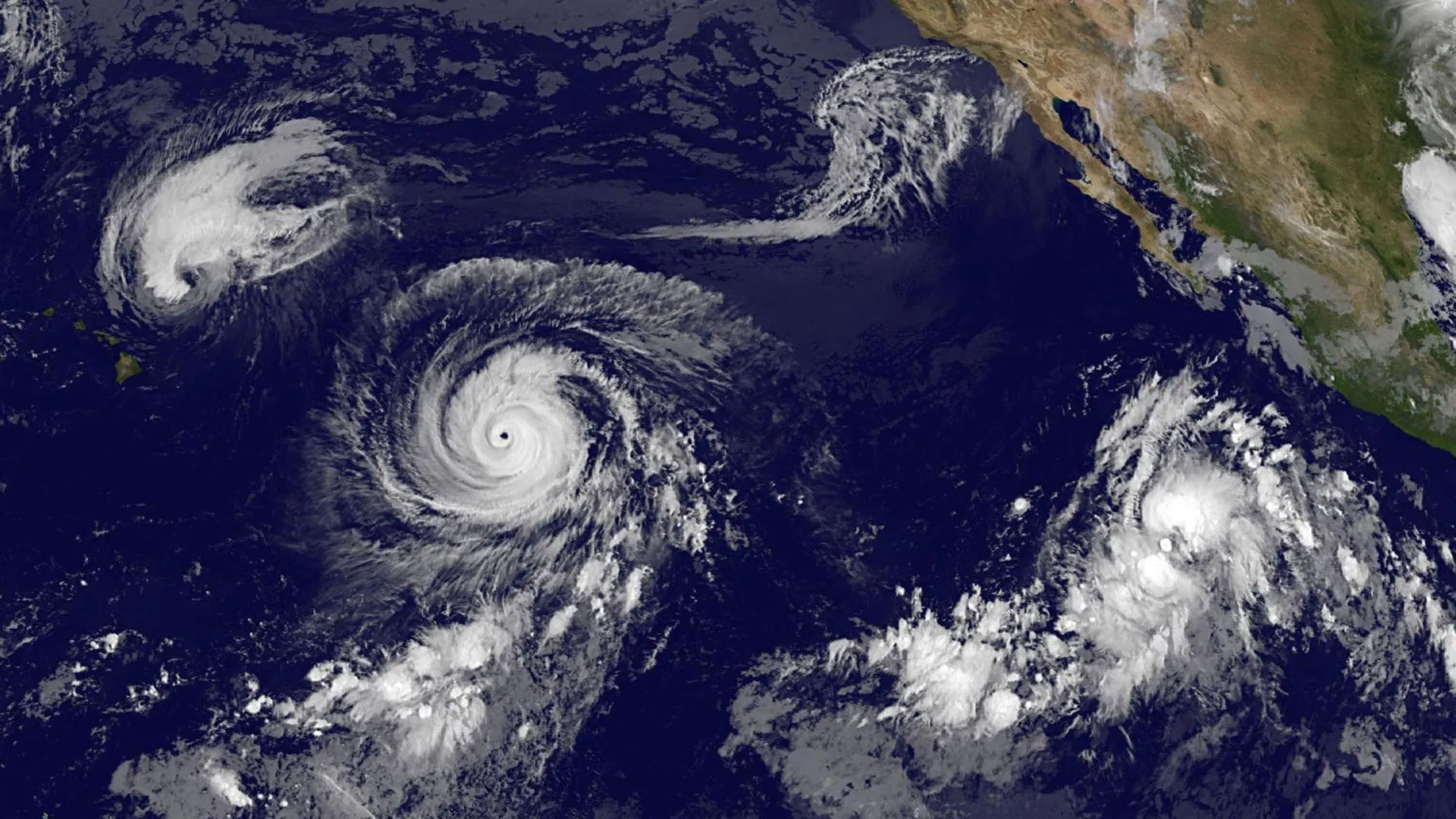
At the center of the UCSB study is the El Niño Southern Oscillation (ENSO), a recurring climate pattern that acts as a global thermostat. ENSO oscillates between two phases: El Niño, which brings warmer waters to the eastern Pacific and often wetter conditions to the Americas, and La Niña, which strengthens trade winds and shifts monsoon rains across Asia.
ENSO is the primary driver of interannual climate variability. It dictates agricultural yields, fisheries productivity, and extreme weather events across the globe. Because it is a natural cycle that shifts heat and moisture, any alteration to its rhythm threatens to destabilize global food security and weather stability.
Chronology of a Climate Simulation
The research project, led by doctoral student Chen Xing and graduate student Cali Pfleger under the guidance of Associate Professor Samantha Stevenson, was born out of a desire to see how these cooling technologies would interact with marine ecosystems.
- Initial Modeling: The team utilized sophisticated Earth System Models (ESMs) to simulate the implementation of both MCB and SAI.
- The MCB Discovery: As the team simulated the deployment of MCB in the subtropical eastern Pacific, they observed a staggering, unexpected result. The cooling effect in that specific region triggered a cascading reaction that essentially choked the ENSO cycle.
- Verification: The team ran the simulations repeatedly to ensure the results weren’t a model error. The findings remained consistent: the amplitude of ENSO was reduced by roughly 61%.
- The SAI Comparison: When the team applied the same parameters to Stratospheric Aerosol Injection, the impact on ENSO was negligible. Because the cooling was distributed globally rather than concentrated in a critical Pacific region, the natural cycle remained largely intact.
Supporting Data: The Physics of Disruption
The data reveals why the two methods produced such disparate outcomes. When marine cloud brightening was deployed in the eastern Pacific, it triggered a precise chain reaction:
- Thermal Shock: The brighter clouds cooled the ocean surface, but because the droplets were too small to form efficient raindrops, local rainfall decreased.
- Atmospheric Stagnation: The resulting cooler, drier air moved into the central Pacific. This shift reduced evaporation, which in turn weakened the atmospheric circulation that drives the Pacific winds.
- The Feedback Loop: With the atmospheric circulation weakened, the trade winds along the equator actually strengthened. This induced an increased upwelling of cold, deep-ocean water, which further cooled the surface.
- The Result: The system, caught in this reinforced cooling loop, effectively "locked" the Pacific in a state that prevented the typical oscillation of ENSO, causing it to collapse by two-thirds of its historical variance.
"It’s hard to get ENSO to change by that much that quickly," Professor Stevenson noted. The speed of this transition—happening over roughly a decade—is unprecedented in the geological record, even under the stress of climate change.
Official Perspectives and Expert Caution
The authors of the study are careful not to characterize their findings as an indictment of geoengineering in its entirety, but rather as a mandate for rigorous regional specificity.
"We’re not saying that all MCB is going to kill ENSO," Stevenson clarified. "We’re just saying that this happens if you do it in this specific region."
The researchers advocate for a paradigm shift in how we evaluate climate interventions. Currently, much of the discourse focuses on "global mean temperature" as the primary metric for success. However, the study suggests that this is a dangerous oversimplification. Two different methods can achieve the same cooling target while creating wildly different regional climates. If a nation or consortium were to deploy MCB to save a local coral reef, they might inadvertently cause a famine in Southeast Asia by disrupting the monsoon patterns that rely on the ENSO cycle.
Implications: The High Stakes of "Climate Engineering"
The implications of these findings are profound for environmental policy and global governance.
The Risk of Inaction vs. The Risk of Intervention
The researchers acknowledge that doing nothing is not a neutral act. Unchecked climate change is already shifting weather patterns and stressing ecosystems. However, the study highlights that geoengineering introduces a new category of risk: "engineered" climate volatility. The speed of the changes observed in the simulation—a 60% drop in ENSO variance in just 10 years—is a speed that nature rarely exhibits, and one to which human societies and ecosystems may be unable to adapt.
The Photosynthesis Problem
Beyond atmospheric cycles, the team raised concerns regarding the biological impact of reflecting sunlight. If we successfully block a portion of the sun’s energy, we inevitably reduce the energy available for photosynthesis. This could have a catastrophic impact on terrestrial agriculture and, more critically, on marine algae. As the base of the ocean food web and the source of approximately 70% of Earth’s atmospheric oxygen, any reduction in algal productivity could lead to a systemic collapse that goes far beyond temperature management.
The Need for Governance
The study highlights that we are entering an era where "the climate" is no longer just a natural phenomenon, but a potential policy variable. This necessitates:
- International Oversight: Because the atmosphere knows no borders, any regional geoengineering attempt could have global repercussions.
- Multi-Metric Assessment: Future proposals must be evaluated on their impact on global rainfall, ocean circulation, and biological productivity, not just temperature.
- Cautionary Implementation: As Chen Xing summarized, "Don’t do MCB over the eastern Pacific Ocean because it might cause super strong chain reactions."
Conclusion: The Question of All Consequences
As the UCSB study concludes, the most critical question facing humanity is not whether we can engineer the climate, but whether we can do so without inadvertently triggering a secondary collapse.
The findings serve as a sobering reminder that our understanding of the Earth’s interconnected systems is still evolving. While the pressure to act against climate change mounts, the "solutions" must be subjected to the same level of scientific scrutiny as the problems they intend to solve. Before we attempt to turn the dial on the Earth’s thermostat, we must ensure we fully grasp the complex, non-linear chain reactions that such an action might ignite. In the delicate, chaotic dance of the Pacific Ocean, a single misstep in geoengineering could lead to a rhythm that the rest of the world is unprepared to follow.