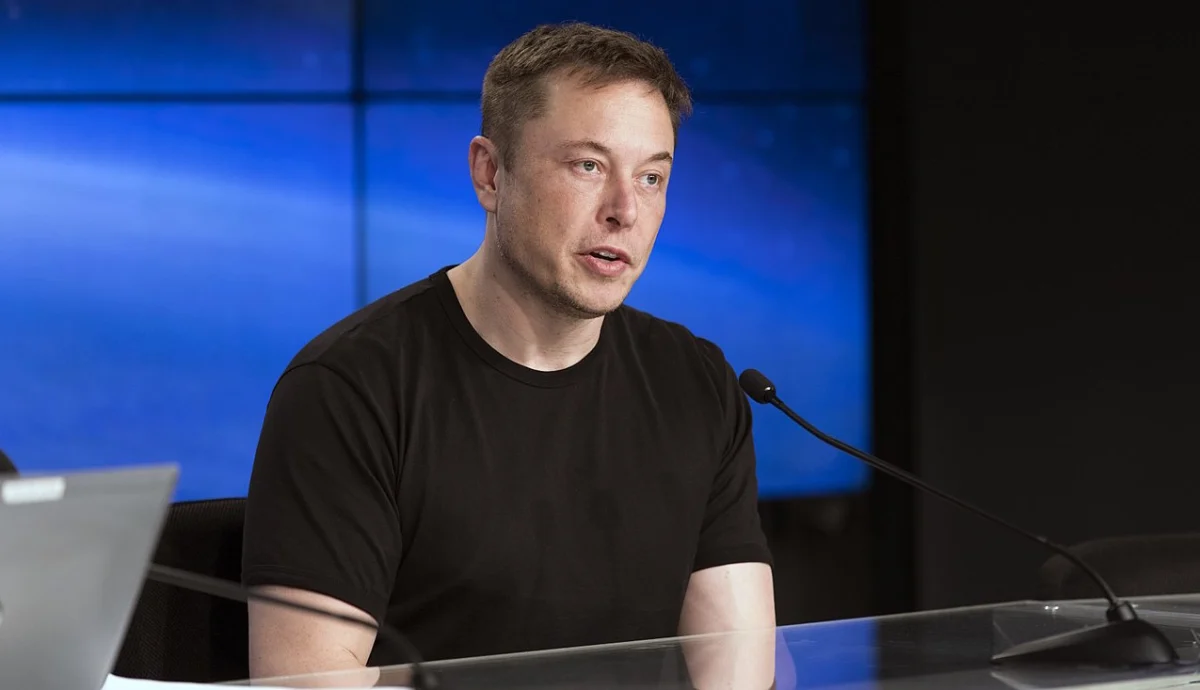
In a landmark development that could reshape the intersection of massive political spending and election integrity, the Wisconsin Elections Commission (WEC) has formally determined that there is probable cause to believe billionaire entrepreneur Elon Musk violated state election bribery statutes. The commission’s decision, finalized during a closed-door session last Thursday, centers on a controversial campaign of million-dollar payouts distributed during the high-stakes 2025 Wisconsin Supreme Court election.
By a 5-1 vote, the commission referred two confidential complaints—filed by voters in Milwaukee and Green Bay—to the Brown County District Attorney’s Office. This referral initiates a high-profile criminal review, tasking local prosecutors with determining whether Musk’s financial incentives crossed the threshold from protected political expression into illegal voter inducement. The District Attorney now has 40 days to report back to the commission, setting the stage for what could become the most significant election law trial in modern American judicial history.
The Genesis of the Allegations
The core of the legal inquiry concerns Wisconsin’s stringent election bribery statute, which explicitly prohibits offering or promising "money or other thing of value" to induce an elector to participate in an election, cast a ballot, or vote for or against a specific candidate or referendum.
The WEC’s finding of probable cause is rooted in a series of digital and physical actions taken by Musk during the lead-up to the 2025 Supreme Court race. Initially, Musk took to the social media platform X (formerly Twitter) to announce an event in Wisconsin, stipulating that attendance would be limited strictly to individuals who had already voted in the Supreme Court election. In that same post—which was later deleted—Musk stated he would personally provide two attendees with $1 million each as a gesture of "appreciation for you taking the time to vote."
Legal experts noted that by explicitly tying the receipt of funds to the act of voting, the offer arguably functioned as a direct inducement. As the legal scrutiny intensified, Musk’s team attempted to pivot the narrative, revising the language of the announcement to frame the payments as compensation for signing a petition organized by America PAC, Musk’s political action committee. Under the revised framing, the recipients were characterized as "spokespeople" for the petition, which ostensibly opposed "activist judges."
Despite this attempt at rebranding, the reality on the ground involved the distribution of life-changing sums of money. Three Wisconsin voters ultimately received $1 million checks, with two of those awards presented during a raucous rally in Green Bay in March 2025. Additionally, America PAC offered smaller, $100 incentives for voters to sign the petition or refer others to do so, further complicating the legal landscape regarding "things of value" distributed in the context of an election.
A Chronology of Conflict
The timeline of this controversy reflects a rapid escalation from online rhetoric to courtroom drama:
- Pre-Election Phase: Musk and his affiliated organizations poured unprecedented sums into the Wisconsin Supreme Court race, eventually totaling over $20 million in support of the conservative-aligned candidate, Brad Schimel.
- March 2025: As the election neared, Musk announced the "$1 million for voters" initiative. Wisconsin Attorney General Josh Kaul immediately filed suit, seeking an emergency injunction to block the payments, arguing that they constituted illegal bribery.
- Judicial Setback: Despite the Attorney General’s intervention, state courts declined to issue an immediate injunction, allowing the payments to proceed while the legal questions remained unresolved.
- The Vote: The Supreme Court election resulted in a decisive victory for Democratic-backed candidate Susan Crawford, who defeated Schimel by a 10-point margin. The outcome secured the court’s liberal majority but left the shadow of the spending controversy hanging over the result.
- Post-Election Legal Action: In June 2025, the Wisconsin Democracy Campaign, joined by individual voters, filed a sweeping civil lawsuit against Musk, America PAC, and "United States of America Inc." The filing alleged not only bribery but also violations of state lottery laws and claims of civil conspiracy and public nuisance.
- The WEC Referral: Following an investigation into the confidential complaints, the Wisconsin Elections Commission voted 5-1 to refer the matter for criminal consideration, marking a transition from civil litigation to potential felony prosecution.
Supporting Data: The Cost of Influence
The 2025 Wisconsin Supreme Court race was not merely a battle over judicial philosophy; it was a financial behemoth. The election stands as the most expensive judicial contest in the history of the United States, with total spending exceeding $100 million.
Musk’s involvement represented a massive injection of capital that sought to shift the ideological balance of the state’s highest court. The $20 million spent by Musk and his network represented a significant portion of the total war chest used to promote Brad Schimel. When coupled with the $1 million giveaways and the $100 referral bounties, the sheer scale of the financial maneuvering provided the basis for the "public nuisance" claims filed by the Wisconsin Democracy Campaign.
The statistics underscore a broader trend: the "privatization" of electioneering. When billionaire-backed PACs deploy direct financial incentives to voters, it challenges the traditional regulatory framework designed to ensure that the sanctity of the ballot box remains free from the influence of direct monetary exchange.
Official Responses and Legal Arguments
The legal defense mounted by Musk’s attorneys has remained consistent throughout the civil proceedings. They argue that the payments were never intended as "bribes" but rather as legitimate compensation for participants in a political movement. According to this defense, the payments were tied to the petitioning process—a form of protected political speech—rather than the act of voting itself. They contend that the state’s effort to regulate these payments infringes upon First Amendment rights to support political causes and engage in grassroots advocacy.
Conversely, the state’s regulators and the plaintiffs in the civil suit view the matter through a stricter lens. They maintain that the timing, the target audience (voters), and the explicit language used in Musk’s original social media posts provide clear evidence of "express advocacy" and a violation of state statutes. Wisconsin Attorney General Josh Kaul has consistently characterized the initiative as an attempt to "buy" electoral participation, which he argues is a fundamental threat to democratic norms.
The Brown County District Attorney now holds the responsibility of weighing these arguments. Should they choose to proceed with criminal charges, the case will likely climb through the state appellate courts, potentially reaching the Wisconsin Supreme Court—the very body whose election sparked the investigation.
Broader Implications for Democracy
The Wisconsin Elections Commission’s decision to pursue criminal investigation sends a powerful message to donors and political organizations nationwide. It asserts that there are limits to how political influence can be exercised, particularly when that influence involves the direct transaction of money to the electorate.
If the Brown County District Attorney moves forward with charges, the resulting trial could set a definitive precedent regarding the legality of "incentivized voting." In an era where political spending has become increasingly opaque and decentralized, the Wisconsin case serves as a test of the state’s ability to enforce basic tenets of election integrity against the world’s wealthiest individuals.
Furthermore, the civil suit pending in Brown County ensures that even if criminal charges do not result in a conviction, Musk and America PAC will continue to face scrutiny. The plaintiffs are seeking not only damages but also permanent injunctions that would prevent similar programs in future Wisconsin elections.
As the 40-day clock for the District Attorney ticks down, the nation watches Wisconsin. The outcome will likely determine whether the "million-dollar giveaway" model of campaigning is a legitimate, albeit aggressive, form of political speech, or a criminal act that undermines the very foundation of the democratic process. In either scenario, the case represents a critical inflection point for American campaign finance law, highlighting the fragility of state-level regulations when confronted with the immense resources of modern super-PACs.