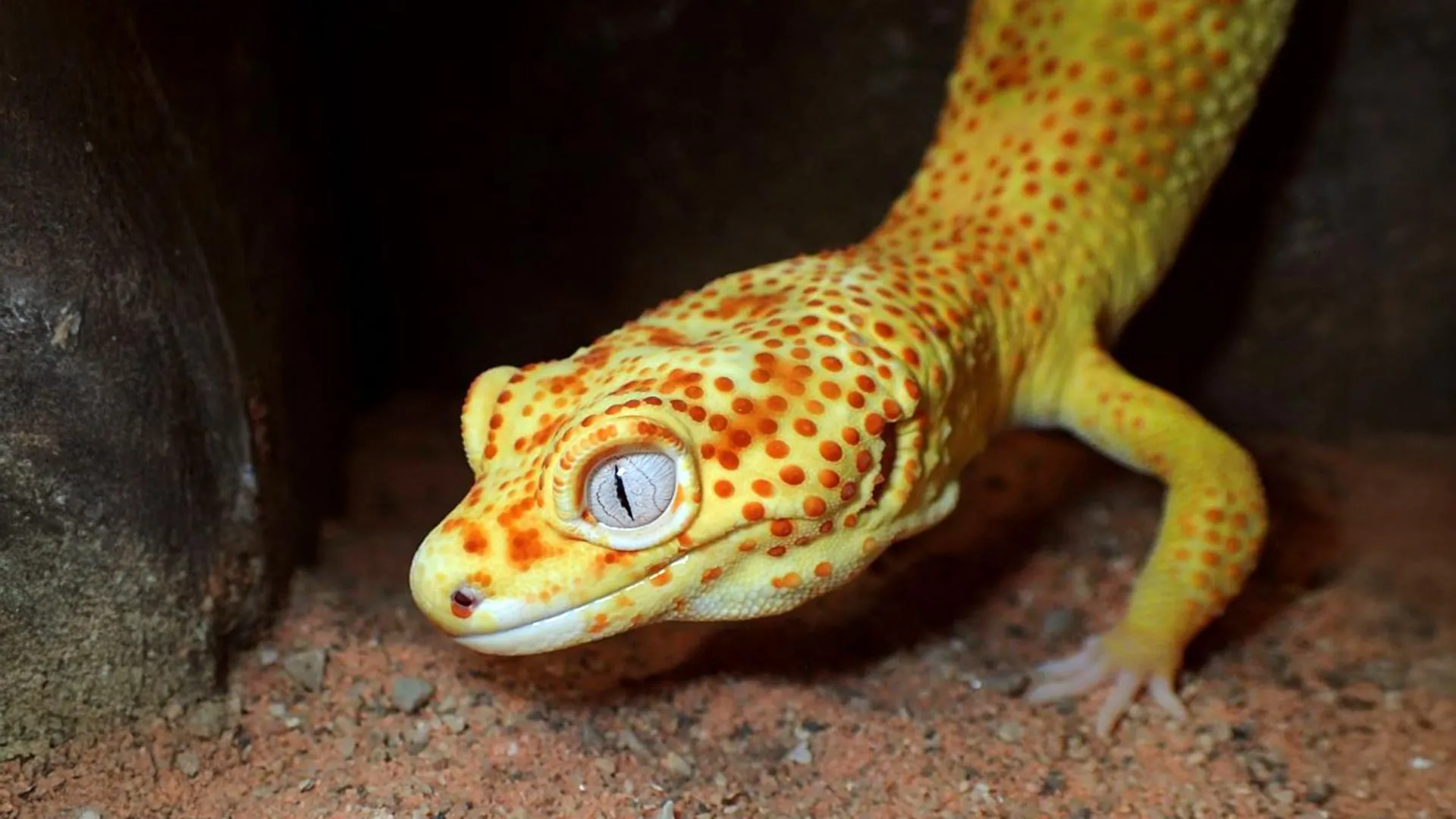
In the niche world of reptile enthusiasts, the "Lemon Frost" leopard gecko has long been celebrated for its ethereal, vibrant yellow-and-white scales—a aesthetic marvel born of selective breeding. Yet, beneath this striking exterior lies a biological tragedy that has inadvertently positioned this creature at the forefront of global oncological research. A landmark study, recently published in the journal BMC Biology, suggests that this specific gecko morph, which suffers from an 80% cancer rate, may hold the key to unlocking new strategies for treating human malignancies.
The Intersection of Biology and Breeding: Main Facts
The Lemon Frost gecko is not a product of natural selection, but rather a consequence of human-driven selective breeding. Originating from a spontaneous genetic mutation, the morph became a prized commodity among collectors. However, breeders soon identified a disturbing correlation: the same genes responsible for the gecko’s brilliant, frost-like coloration were inextricably linked to the development of aggressive iridophoromas—a type of skin tumor.
Unlike traditional laboratory models, such as mice or fruit flies, where cancer is often artificially induced via radiation, chemicals, or genetic engineering, the Lemon Frost gecko develops tumors spontaneously and early in life. This natural progression allows scientists to observe the life cycle of a tumor—from its inception to its inevitable metastasis—in a living organism that has evolved its own unique set of biological defenses and vulnerabilities.
A Timeline of Discovery: From Observation to Genetic Mapping
The journey to understanding the Lemon Frost anomaly began not in a high-tech laboratory, but in the terrariums of private breeders who noticed that their most beautiful specimens were frequently dying of aggressive, spreading cancers.
The Chronology of Investigation
- The Rise of the Morph: Following the emergence of the mutation, the Lemon Frost variant gained immense popularity in the pet trade due to its unique phenotype.
- Early Red Flags: Within a few years of its commercial debut, breeders documented a high incidence of tumor growth, sparking informal discussions within the herpetological community about the health risks associated with the morph.
- Academic Engagement: Recognizing the potential for a new animal model, an international team led by Dr. Ylenia Chiari from the University of Nottingham initiated a comprehensive study to investigate the genetic underpinnings of the disease.
- Genomic Sequencing: The team performed whole-genome sequencing on tumor tissues and compared them to healthy tissues from the same animals.
- Publication: The research, finalized in 2024, formally linked the Lemon Frost mutation to specific oncogenic pathways, providing the first peer-reviewed evidence of the gecko’s utility as a cancer research subject.
Unmasking the Molecular Drivers: Supporting Data
The core of the study lies in the genomic analysis conducted by the international research consortium. By utilizing software typically reserved for human oncology, the researchers were able to identify recurring genetic alterations in the geckos that mirror those found in human patients.
Shared Genetic Pathways
The study revealed that the tumors in Lemon Frost geckos are driven by pathways involving cell cycle regulation, DNA repair, and signaling mechanisms that are remarkably similar to those seen in humans. For instance, the mutation responsible for the gecko’s color is linked to the SPINT4 gene, which is known to influence cell migration and tumor progression.
"The fact that we can take genomic software designed for human clinical data and apply it to a reptile to find meaningful results is a testament to the universality of cancer pathways," said PhD researcher Brandon Hastings. The data shows that these geckos do not merely "happen" to have cancer; they possess a genetic blueprint that essentially guarantees it. This predictability is a "gold mine" for researchers who need to test the efficacy of early-detection protocols.
Official Perspectives: The Scientific Community Weighs In
The international nature of this project underscores the gravity of the findings. The collaborative effort involved experts from the University of Nottingham, the University of Birmingham, Marquette University, the University of Florida, and the University of Trieste.
The Case for Comparative Oncology
Dr. Ylenia Chiari, the lead investigator, emphasized the importance of evolutionary perspective. "By studying why some animals are so susceptible to cancer while others—like turtles and tortoises—are remarkably resistant, we hope to uncover the different ways species have evolved to deal with cancer," Dr. Chiari noted.
Dr. Scott Glaberman, of the University of Birmingham, echoed this sentiment, framing the research as an argument for biodiversity conservation. "We often look inward to solve human problems, but every species has something to teach us. If we lose species to extinction, we are essentially burning the library of life before we have even read the books," Dr. Glaberman stated.
The team highlights that while laboratory mice are essential, they are distant cousins to humans. Reptiles, with their slower metabolic rates and unique immune systems, provide a distinct vantage point on how tumors metastasize—a process that remains the leading cause of cancer-related mortality in humans.
Implications for Future Medical Science
The potential applications of this research are broad, ranging from diagnostic tools to preventative therapies.
1. Advancing Early Detection
Because Lemon Frost geckos develop tumors predictably and early, they serve as an ideal "sentinel" for testing non-invasive screening technologies. Researchers can test whether new liquid biopsies or imaging techniques can detect the onset of cancer in the geckos before the tumors become visibly aggressive.
2. Understanding Metastasis
One of the most profound challenges in cancer treatment is preventing metastasis—the spread of cancer from the primary site to other organs. Because the Lemon Frost gecko’s tumors are inherently prone to metastasis, they provide a real-time laboratory for observing the cellular "hijacking" that allows cancer to move through the body.
3. Rethinking Animal Models
This study challenges the medical community to diversify the "tree of life" when seeking new animal models. By broadening the scope to include reptiles, amphibians, and other non-traditional species, researchers can build a more robust map of cancer’s evolution. This comparative approach could reveal why certain tumor-suppressing genes are more effective in some species than others, potentially leading to gene-therapy breakthroughs in humans.
Ethical Considerations and Biodiversity
While the utility of the Lemon Frost gecko is clear, the research also raises ethical questions regarding the pet trade. The accidental creation of the Lemon Frost morph highlights the dangers of selective breeding for aesthetic traits without regard for health consequences. The researchers argue that this tragedy must serve as a cautionary tale: when we prioritize appearance over biological integrity, we inadvertently create suffering.
However, the team stresses that their research is not intended to encourage the breeding of these geckos, but rather to extract medical knowledge from a situation that has already occurred. "Our goal is to turn a negative into a positive," noted Brandon Hastings. "If these animals are already suffering, the most ethical thing we can do is ensure their condition contributes to a greater understanding that could ultimately save human lives."
Conclusion: A New Frontier in Oncology
The story of the Lemon Frost gecko is a reminder of the unexpected ways in which nature and human curiosity collide. What began as a fashion statement in the world of herpetoculture has evolved into a sophisticated tool for molecular biology.
As the global scientific community continues to grapple with the complexities of cancer, the "Lemon Frost" model stands as a symbol of the importance of interdisciplinary research. By looking beyond the laboratory mouse and into the vast, diverse genetic landscape of the animal kingdom, researchers are finding that the answers to our most persistent medical mysteries may be hidden in the scales of a small, yellow-and-white gecko.
The path forward will involve rigorous clinical studies and a deeper integration of evolutionary biology into cancer research. For now, the Lemon Frost gecko remains a quiet, cold-blooded hero, contributing to a future where cancer is no longer a mystery to be feared, but a mechanism to be understood, managed, and eventually defeated.