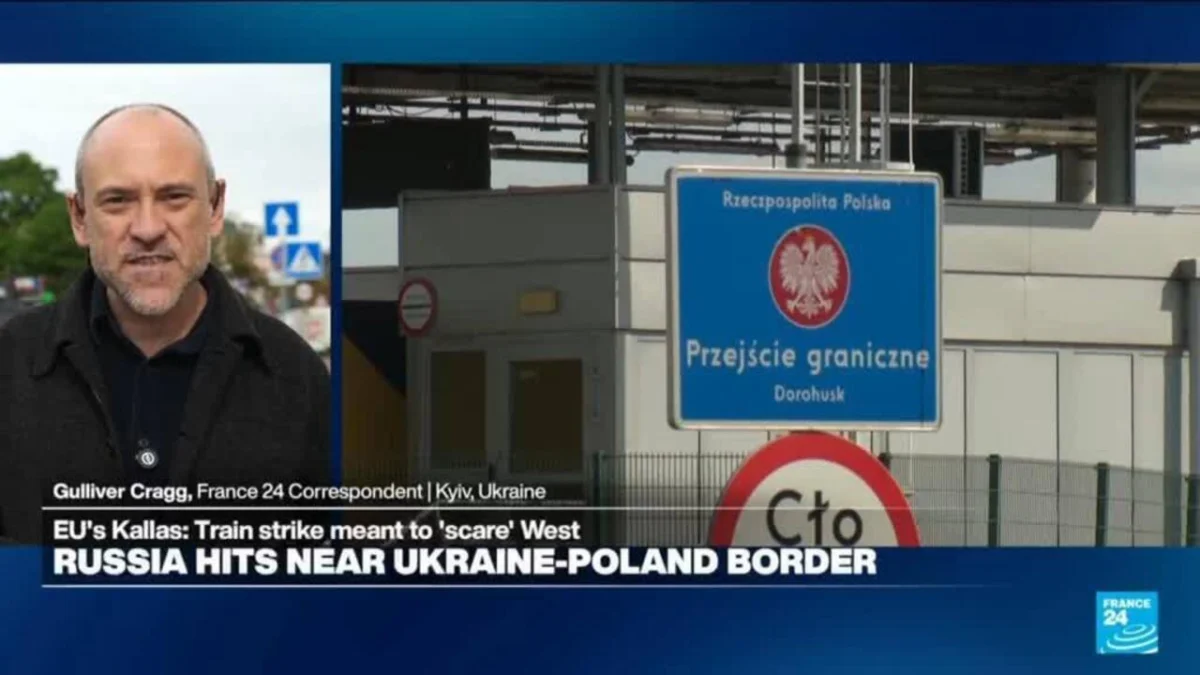
The geopolitical landscape of Eastern Europe has once again been rattled by a high-stakes kinetic event. Recent reports of a precision strike against critical railway infrastructure—a lifeline for logistics and military supply chains in the region—have ignited a firestorm of international debate. While the immediate tactical objective of the strike appears to be the disruption of supply lines, military analysts and intelligence experts are increasingly viewing the event through a more ominous lens: a calculated act of coercive diplomacy designed to test Western resolve and "scare" the international coalition supporting Ukraine.
The Main Facts: Anatomy of an Infrastructure Strike
In the early hours of the morning, a series of high-precision missiles targeted a vital railway hub, effectively severing a key logistics artery. The strike was not merely a tactical maneuver intended to destroy stationary assets; it was a calibrated demonstration of long-range reach. By targeting dual-use infrastructure—railways that serve both civilian commerce and military logistical movements—the strike sent a chilling message to both Kyiv and its Western backers.
For months, the transit of heavy armor, ammunition, and humanitarian aid has relied heavily on the rail network, which remains the most efficient way to transport material across the vast Ukrainian landscape. By striking this node, the aggressor force has signaled that no logistical point, no matter how deep behind the front lines, is immune from interdiction. This development marks a transition in the conflict’s character, shifting from purely battlefield-focused engagements to a systematic effort to degrade the physical and psychological foundations of the state’s resistance.
A Chronology of Escalation
To understand the weight of this event, one must place it within the timeline of recent hostilities:
- Phase I: The Precursor (Three Months Prior): Intelligence reports began surfacing regarding increased reconnaissance activity over critical transport hubs. Drone incursions became more frequent, testing the reaction times of regional air defense batteries.
- Phase II: The Logistics Squeeze (Last Month): Harassment of border crossings and smaller rail junctions suggested a strategy of "attrition by disruption." These smaller strikes were a prelude to a larger, more symbolic attack.
- Phase III: The Event (September 14, 2026): In a coordinated salvo, multiple cruise missiles struck the primary rail terminal, causing massive structural damage and halting all transit for an indefinite period.
- Phase IV: Immediate Aftermath: Regional emergency services initiated rescue operations, while international monitors began assessing the long-term impact on supply chains.
- Phase V: Global Reaction: Within hours, Western capitals issued statements of condemnation, while Moscow’s state-aligned media outlets characterized the strike as a "necessary preventative measure."
Supporting Data: The Logistics of Attrition
The reliance on rail in this theater is not incidental; it is a necessity dictated by geography. Data from regional transport ministries indicates that nearly 70% of heavy military equipment provided by Western allies has been moved via the rail network.
- Capacity Disruption: The strike resulted in a total cessation of cargo movement in the sector. Analysts estimate that every day of downtime forces a shift to road transport, which is estimated to be 400% less efficient and significantly more vulnerable to asymmetric interference.
- Economic Impact: Beyond the military implications, the destruction of this hub has severed regional trade routes, leading to a spike in commodity prices and a tightening of the humanitarian supply chain for displaced persons in the vicinity.
- Air Defense Saturation: The strike effectively exploited gaps in regional air defense coverage. Technical post-mortems suggest the use of decoy munitions alongside the primary payload, indicating a sophisticated approach to overwhelming modern interception systems.
Official Responses: A Divided Narrative
The aftermath of the strike has seen a stark divergence in diplomatic rhetoric.
The Western Coalition
The response from the Western coalition has been one of unified concern. NATO officials, speaking on condition of anonymity, described the strike as a "reckless provocation" that threatens to widen the scope of the conflict. There is a growing consensus that the strike was intended to intimidate nations contemplating further military aid packages. "This is not just about a train station," one high-ranking diplomat remarked. "This is about testing the limits of how far the international community will go to support a partner under fire."
The Kremlin’s Perspective
Conversely, Moscow has maintained a posture of strategic ambiguity. State outlets have framed the operation as a legitimate targeting of "foreign-supplied war materiel." By labeling the railway a "legitimate military target," the Kremlin attempts to create a legalistic justification for striking infrastructure that inevitably impacts the civilian population. This rhetoric is widely viewed by international legal scholars as a deliberate blurring of the lines between combatants and civilians.

The Strategic Implications: Fear as a Weapon
The most disturbing aspect of the rail strike is the psychological warfare element. By striking a target that serves as a symbol of connectivity and resilience, the aggressor is attempting to generate a sense of inevitability among Western policymakers.
1. The Coercion Factor
The strike serves as a "signaling" event. In the language of military strategy, this is often called "compellence"—forcing an opponent to change their behavior through the threat or application of pain. By attacking the logistics chain, the aggressor is telling the West: "Your aid is vulnerable, and the cost of delivering it will only increase."
2. Testing the "Red Lines"
There is a profound fear that this strike is a litmus test for the West’s threshold of tolerance. If the international community fails to provide an adequate response—either through enhanced air defense support or increased diplomatic pressure—it may signal that the aggressor has more "room to maneuver" in future strikes against critical infrastructure.
3. The Future of Humanitarian Access
As the rail network becomes a target, the ability to facilitate the movement of food, medical supplies, and civilian evacuees is severely compromised. This creates a secondary crisis, forcing the international community to divert resources toward managing a humanitarian fallout that was, in many ways, an intended consequence of the strike.
Conclusion: The Path Forward
The strike on the rail infrastructure is a sobering reminder that this conflict is far from static. It is evolving into a war of endurance where logistics, infrastructure, and psychological resolve are as important as the ammunition fired on the front lines.
For the Western coalition, the challenge is clear: they must find a way to harden logistics, improve regional air defense, and—perhaps most importantly—demonstrate that the policy of "scaring" the West into retreat will not yield the desired result. As the smoke clears from the latest incident, the international community finds itself at a crossroads. The choice is between continuing the current trajectory of incremental support or fundamentally reassessing the security architecture required to protect not just military assets, but the very infrastructure that keeps a nation breathing.
The silence following the strike is temporary. The question remains whether this event will serve as a catalyst for a more robust defense strategy or a chilling harbinger of further, more devastating strikes to come. One thing is certain: in the high-stakes game of regional hegemony, the tracks may be broken, but the geopolitical momentum is only accelerating.