Introduction
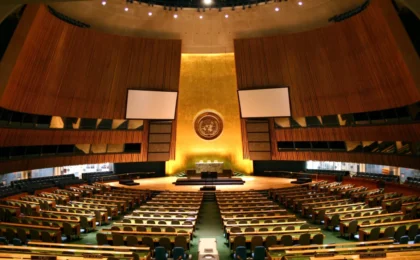
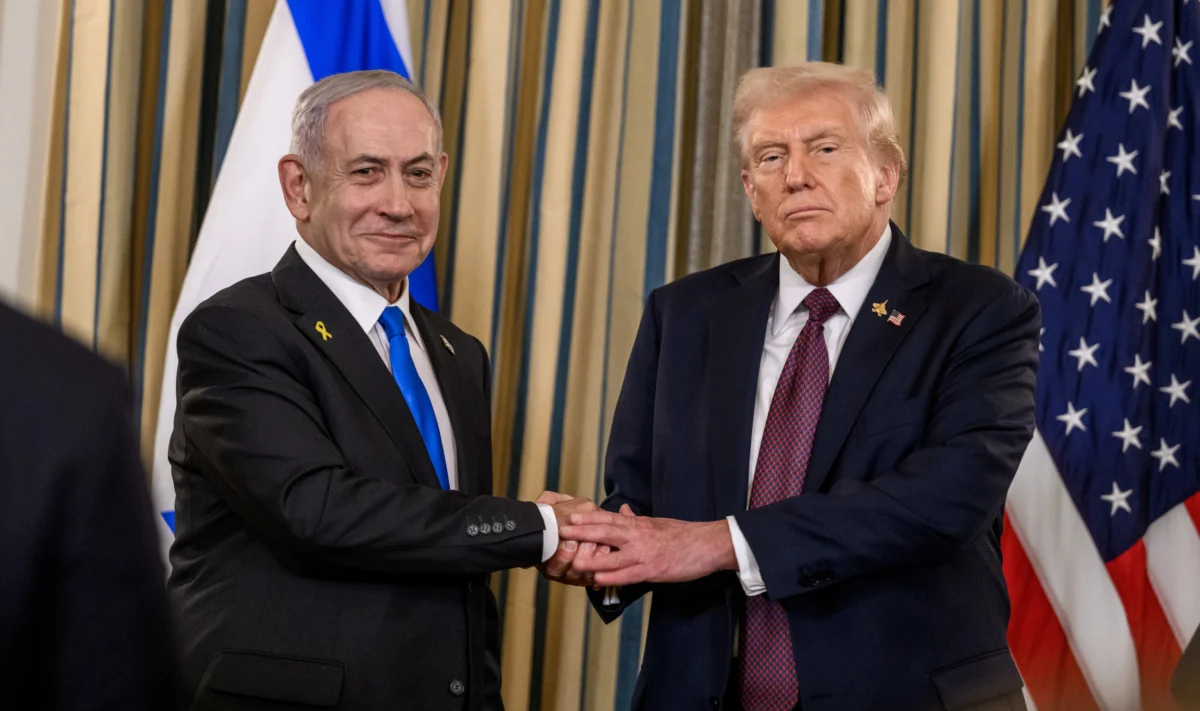
A profound geopolitical collision is unfolding between the halls of power in Washington, D.C., and the judiciary of the International Criminal Court (ICC) in The Hague. The friction point: an arrest warrant issued for Israeli Prime Minister Benjamin Netanyahu. On Monday, President Donald Trump issued an unequivocal guarantee that the Prime Minister would not face arrest on American soil, signaling a hardening of the U.S. stance against the tribunal. This declaration, while consistent with decades of American policy, arrives at a moment of heightened volatility, fueled by a provocative pledge from New York City Mayor Zohran Mamdani to enforce the ICC’s warrant should Netanyahu visit the city for the upcoming UN General Assembly.
The standoff highlights the widening chasm between the aspirational mandates of international criminal law and the reality of national sovereignty and diplomatic immunity. As the United States initiates a robust, "whole-of-government" campaign to challenge the ICC’s legitimacy, the intersection of local municipal politics and international high-stakes diplomacy has turned New York City into the epicenter of a global constitutional crisis.
Chronology: From Gaza to the UN Headquarters
The current crisis traces its origins to November 2024, when the ICC’s Pre-Trial Chamber issued warrants for the arrest of Benjamin Netanyahu and former Defense Minister Yoav Gallant. The court alleged that both individuals bore criminal responsibility for war crimes and crimes against humanity committed during the protracted conflict in Gaza.
- November 2024: The ICC formalizes its warrant, triggering immediate condemnation from Jerusalem, which decries the tribunal as a "kangaroo court" lacking jurisdiction.
- January 2026: Zohran Mamdani assumes the office of Mayor of New York City, having campaigned on a platform that included the explicit promise to use local police to execute the ICC warrant against Netanyahu during his annual UN visit.
- July 2026 (Early): Secretary of State Marco Rubio announces a comprehensive U.S. strategy to "dismantle" the ICC, citing it as an existential threat to American sovereignty.
- July 18, 2026: Mayor Mamdani doubles down on his campaign pledge in a New York Times Magazine interview, stating, "I believe that Prime Minister Netanyahu belongs in The Hague."
- July 20, 2026: U.S. Ambassador to the UN Mike Waltz labels the Mayor’s threats "pure political theater," asserting federal primacy in foreign affairs.
- July 20, 2026: President Trump issues his social media decree, declaring that Netanyahu will face no risk of arrest within the United States.
The Legal Landscape: Sovereignty vs. The Rome Statute
The fundamental tension in this dispute rests on the conflicting interpretations of the Rome Statute and the nature of international jurisdiction.
The ICC’s Jurisdictional Reach
The ICC is a court of last resort, designed to prosecute individuals for genocide, crimes against humanity, and war crimes. While neither Israel nor the United States is a member state, the ICC asserts jurisdiction over the Netanyahu case based on the territoriality of the alleged crimes—specifically, that they occurred within the Palestinian territories, which the court recognizes as having acceded to the Rome Statute.
The U.S. Stance: A History of Non-Participation
The United States has maintained a frosty relationship with the ICC since its inception. Although President Bill Clinton signed the Rome Statute in 2000, the treaty was never submitted to the Senate for ratification. In 2002, the Bush administration formally notified the UN that the U.S. would not become a party. This was followed by the American Service-Members’ Protection Act, which effectively prohibits the U.S. government from cooperating with the ICC, often referred to as the "Hague Invasion Act" for its stringent limitations on American support for the court.
The "Headquarters Agreement" and Diplomatic Immunity
Mayor Mamdani’s proposal faces a formidable legal barrier: the 1947 UN Headquarters Agreement. This treaty mandates that the U.S. must not impede the travel of delegates to the UN. Furthermore, customary international law—affirmed by the International Court of Justice in the 2002 Arrest Warrant case—grants sitting heads of state absolute personal immunity from the jurisdiction of foreign courts. In the United States, foreign policy is the exclusive domain of the federal government, and any attempt by a local official to interfere with the movement of a foreign head of state would almost certainly be struck down by federal courts as an unconstitutional encroachment on executive authority.
Official Responses: A War of Words
The rhetoric surrounding the incident has been nothing short of inflammatory.
The Executive Branch’s "Whole-of-Government" Offensive
Secretary of State Marco Rubio’s recent announcement regarding the ICC marks a shift from passive non-cooperation to active opposition. By describing the administration’s goal as dismantling the court "brick by brick," the State Department has signaled that the U.S. is prepared to deploy the full arsenal of American power—including sanctions and visa revocations—to protect its allies and its own personnel from the reach of the ICC.
The Mayor’s Dilemma
Mayor Mamdani, for his part, has attempted to thread a narrow needle. While asserting his moral belief that Netanyahu is a war criminal, he has simultaneously signaled an awareness of his legal constraints. "Whatever the law allows me to do in New York City, that’s what we will do," he stated, seemingly walking back the logistical feasibility of his campaign promise while maintaining his political stance.
Israel’s Defiance
The Prime Minister’s Office has maintained a consistent posture of total rejection. By labeling the warrants "bogus," the Israeli government has signaled that it views the ICC not as a neutral arbiter of justice, but as a politicized weapon aimed at delegitimizing Israel’s right to self-defense against regional adversaries, specifically Iran.
Implications: The Erosion of the Global Order
The consequences of this standoff extend far beyond the streets of New York.
1. The Death of Universal Jurisdiction?
If the U.S. succeeds in its campaign to neutralize the ICC, it may signal the end of the post-Cold War era of international humanitarian law. If the world’s most powerful democracy can successfully ignore or dismantle a global tribunal, the incentive for other nations to respect international legal norms diminishes significantly.
2. Federalism and Foreign Policy
The conflict between New York City and the federal government serves as a case study in the dangers of "localizing" foreign policy. The prospect of local police attempting to enforce international warrants creates a chaotic precedent that could paralyze the conduct of diplomacy. If mayors across the globe began asserting their own interpretations of international criminal law against visiting diplomats, the system of international relations would quickly become untenable.
3. The Future of the ICC
The ICC finds itself in an existential trap. By issuing a warrant for the leader of a U.S. ally, the court has provoked the wrath of the world’s only superpower. If the court fails to enforce the warrant, it risks appearing weak and irrelevant. If it continues to press the issue, it risks being starved of resources and support by a U.S.-led coalition.
Conclusion
The assurance provided by President Trump that Benjamin Netanyahu will not be arrested in the United States provides a temporary reprieve for the Israeli leader and a clear directive to local authorities. However, it does not resolve the underlying tension. As the U.S. prepares to dismantle the ICC "brick by brick," the international community watches with bated breath. This crisis is not merely about one man or one arrest; it is a fundamental battle over who defines the rules of global conduct—the international courts in The Hague, or the sovereign powers in Washington. For now, the sovereignty of the nation-state remains the dominant force in global politics, casting a long shadow over the aspirations of international justice.