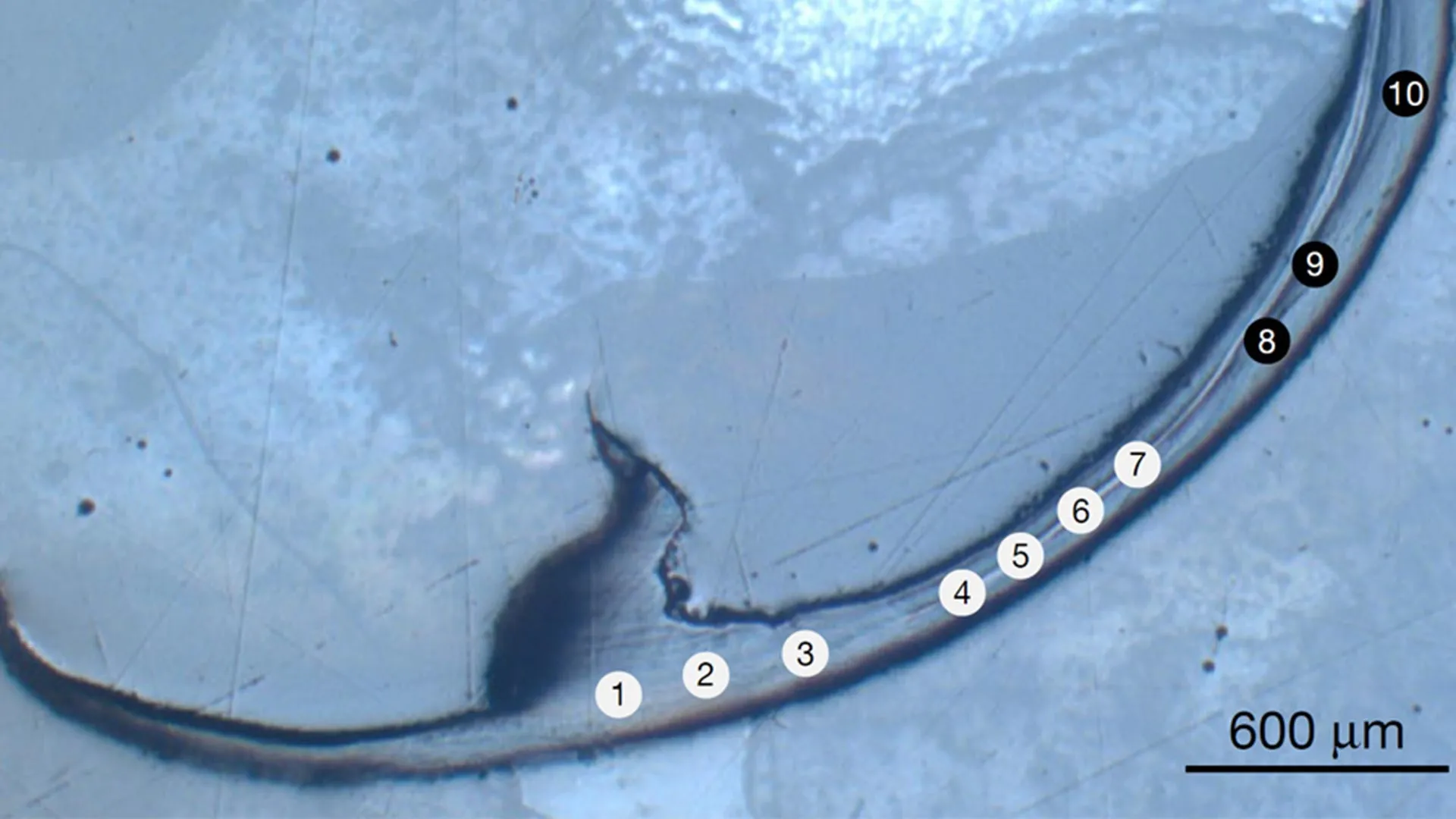
If you were to play a high-stakes game of "20 Questions" and were asked to categorize the jaw of a marine predator, you might instinctively reach for the traditional trifecta: animal, vegetable, or mineral. However, for the ancient sea worm Perinereis cultrifera, that taxonomy falls short. These resilient creatures, which have navigated Earth’s oceans for millions of years, possess mouthparts that challenge our fundamental understanding of materials science.
By integrating structural proteins with metallic ions, these worms have engineered biological tools that mimic the strength, conductivity, and mechanical resilience of forged steel. Researchers have now coined a new term for this phenomenon: "bio-metals." This emerging field of biophysical research suggests that nature has been practicing advanced metallurgy long before humans ever struck a hammer against an anvil.
The Dawn of a New Material Classification
For decades, scientists have used descriptive, albeit imprecise, terminology to characterize biological substances that exhibit metallic properties—terms like "metallike biomaterials" or "biomaterials with metallic-like characteristics." While useful, these descriptors lacked the rigorous definition required for modern engineering and material science.
A landmark study published in Biophysics Reviews, an AIP Publishing journal, has provided the scientific community with a definitive framework for "bio-metals." Led by researchers from TU Wien (Vienna University of Technology) and the University of Vienna, the study proposes that a substance qualifies as a bio-metal only if it meets three distinct criteria: specific hardness thresholds, a unique response to strain, and a highly organized structure composed of both protein scaffolds and metal ions. This classification is not merely academic; it provides a roadmap for synthesizing new, sustainable materials that could eventually replace the energy-intensive alloys used in modern manufacturing.
Chronology of Discovery: From Observation to Analysis
The journey to understanding Perinereis cultrifera began with the observation of its feeding habits. As a predatory bristle worm, the species relies on a jaw system capable of crushing, biting, and processing prey with surgical efficiency.
- Initial Characterization (Historical): Earlier biologists noted the unusual coloration and density of bristle worm jaws, correctly identifying them as organic-inorganic hybrids. However, the exact mechanical properties remained a mystery for years.
- Nano-Scale Investigation (Recent Years): Using advanced nanoindentation techniques—a process where a microscopic probe exerts precise pressure on a surface—scientists began to map the internal architecture of the jaws.
- The Breakthrough (Current Study): By combining chemical analysis, X-ray imaging, and nano-mechanical testing, the TU Wien team successfully mapped the gradient of metal ions across the jaw’s surface. They discovered that the distribution of these ions is not uniform, but rather strategically concentrated to reinforce the most vulnerable parts of the jaw.
- Mathematical Modeling (Ongoing): The current phase of research involves developing complex mathematical models that simulate how proteins and ions interact at the atomic level, effectively bridging the gap between biology and mechanical engineering.
The Science Behind the Strength: Supporting Data
The research team’s findings reveal a sophisticated level of biological engineering. When the researchers performed nanoindentation at varying depths, they observed the "Nix-Gao effect." In conventional materials science, the Nix-Gao effect refers to a phenomenon where smaller indentations require more pressure than larger ones, as the material becomes "harder" at the microscopic scale due to the interlocking of atomic defects.
In the sea worm, this effect is pronounced. The concentration of metal ions—primarily zinc and copper—is significantly higher at the tips of the jaws than in the central or base regions. This gradient ensures that the tip remains sharp and rigid for piercing, while the rest of the jaw maintains the flexibility required for rapid movement.
However, the team discovered a surprising twist: Perinereis cultrifera does not behave exactly like copper or silver. While standard metals exhibit a uniform crystalline structure, the worm’s jaws demonstrate "size-dependent elasticity." This means the jaws can deform under stress and return to their original shape in a way that traditional, rigid metals cannot. This hybrid elasticity suggests that the protein matrix acts as a shock absorber, preventing the brittle failure often seen in pure metallic structures.
Official Responses and Expert Perspective
Professor Christian Hellmich, one of the lead authors of the study, views these findings as a turning point in how we perceive natural structures.
"Bristle worm jaws showed size-dependent elasticity, which is a distinguishing feature of bio-metals when compared to standard crystalline metals like copper or silver," Hellmich stated. He emphasized that the research team is currently in the early stages of decoding the "biological manual" for these materials.
According to Hellmich, the beauty of the system lies in its elegance. The worm does not require a blast furnace or high-pressure casting; it creates these materials through genetic expression and metabolic processes. "We are only beginning to understand these natural materials," Hellmich noted. "The goal is to move beyond mere observation and toward an understanding of the fundamental mechanics that allow biology to surpass the limitations of conventional synthetic manufacturing."
Implications: The Future of Bio-Inspired Engineering
The implications of the study extend far beyond marine biology. By decoding how Perinereis cultrifera builds its jaws, engineers could potentially replicate these processes to create "smart" materials.
1. Sustainable Manufacturing
Current metallurgy relies on high heat and significant carbon emissions. If we can develop manufacturing processes that use biological templates to organize metal ions at room temperature, we could drastically reduce the energy footprint of the global materials industry.
2. Genetic Interventions
Perhaps the most ambitious aspect of the research involves the potential for genetic intervention. Hellmich and his colleagues are investigating whether it is possible to link specific genetic codes to the "material design space." If we can identify the genes responsible for the deposition of metal ions in the worm’s jaw, we could potentially engineer organisms or synthetic systems that "grow" custom-made tools or structures.
3. Medical and Aerospace Applications
Bio-metals offer a unique combination of strength and biocompatibility. In medicine, this could lead to a new generation of implants that are as durable as metal but possess the elastic properties of human bone, reducing the risk of rejection or structural mismatch. In aerospace, these insights could lead to lighter, more resilient materials capable of withstanding extreme strain without the fatigue that plagues traditional aluminum or titanium alloys.
Conclusion: Nature’s Refined Elegance
The study of Perinereis cultrifera serves as a humbling reminder of nature’s ingenuity. For millions of years, this simple sea worm has solved complex engineering problems that humans are only now beginning to quantify. As we move forward, the "bio-metal" framework will likely become a cornerstone of materials science, encouraging a shift away from the brute-force methods of the industrial revolution toward the refined, elegant, and efficient methodologies practiced by the natural world.
As Professor Hellmich put it, the researchers are driven by "true excitement about the beauty, elegance, and refinement found in and produced by nature." Whether we are looking at the tip of a worm’s jaw or the hull of a future starship, the lessons learned from this ancient predator may well define the next era of technological advancement.