Introduction: The Stewardship of Academic Excellence
In the high-stakes ecosystem of American higher education, the relationship between a university president and their executive cabinet is the fulcrum upon which institutional success balances. Recently, long-time collaborators Rachel Toor, a professor and contributing editor at Inside Higher Ed, and E. Gordon Gee, a veteran of five university presidencies, sat down to dissect the intricacies of building and maintaining a leadership team.
The conversation, sparked by recent reflections on administrative turnover, offers a candid look at the "hidden" side of academia—a world where the traditional search committee process is increasingly viewed as a bureaucratic relic, and where the chemistry of a cabinet can either propel an institution toward greatness or consign it to stagnation.
The Fragility of Leadership: A Chronology of Turnover
The discussion begins with a stark reality: the volatility of the executive team. Toor notes that in her conversations with sitting presidents, the consensus is that few, if any, members of an executive cabinet remain in their posts for more than two years after a new leader assumes the presidency.
The "New Broom" Effect
Historically, the transition of power in the academy was a slow, consensus-driven process. However, the modern administrative landscape has shifted.
- The Early Tenure Phase: Upon arrival, a president must immediately assess the existing apparatus. As Gee notes, the provost position is the most precarious. Often, the sitting provost is a candidate who vied for the presidency; their retention, while sometimes stable, frequently creates a dynamic of unspoken friction.
- The Audit Period: During the first six to 12 months, the president evaluates institutional loyalties. Are the current leaders aligned with the incoming administration’s strategic vision, or are they anchored to the policies of the past?
- The Restructuring Phase: When a disconnect is identified, the president must decide between remediation or replacement.
Supporting Data: Why Traditional Searches Fail
The academic community has long adhered to the "traditional search process"—a public, committee-led endeavor designed to ensure transparency and diversity of thought. However, both Toor and Gee argue that this process is frequently ineffective for filling senior-level executive roles.
The "Second Choice" Trap
Gee, drawing on his four decades of experience, identifies a fatal flaw in the standard search procedure: the reliance on a shortlist of three candidates.
- The Superior Candidate: The search committee identifies a clear frontrunner.
- The Rejection: The preferred candidate declines the offer.
- The Mistake: The institution pivots to the "second choice."
Gee characterizes this as a fundamental error in judgment. "They were your second choice because they were not as good a fit," he explains. His alternative? The "one-man search committee." By bypassing formal committees and engaging in direct, discreet outreach to the most talented individuals in the nation, a president can secure a partner who truly complements their leadership style rather than settling for a consensus pick.
The "Kabuki Dance" of Public Searches
The demand for public transparency in hiring at public institutions often turns candidates into "piñatas," subject to public scrutiny before they have even signed a contract. This process, according to Gee, signals a lack of confidence in the institution’s ability to recruit top-tier talent. By favoring smaller, private advisory groups, leaders can conduct a more honest assessment of a candidate’s fit without the performative pressure of a public search.
Official Perspectives: The Philosophy of Cabinet Management
For a president, the goal is not to curate a collection of "yes-men" or sycophants. Rather, it is to build a high-performance team that operates as a singular unit.
Command and Control vs. Collaborative Excellence
Gee rejects the "command and control" model of leadership. Instead, he advocates for a framework of high expectations and accountability. His criteria for a successful cabinet member include:
- Expertise in Value Articulation: The ability to explain the university’s value to skeptical legislators, donors, and the public.
- Commitment to the "Symphony": A refusal to engage in internal rivalries. The cabinet must be able to debate candidly behind closed doors but speak with one voice in the public sphere.
- Gap-Filling Capacity: A leader must recognize their own limitations and hire individuals who possess the skills they lack.
Implications: The Hardest Duty of the Presidency
Perhaps the most sensitive topic discussed is the "moving along" of senior staff. In the culture of higher education, there is an enduring myth that administrators are rarely, if ever, fired.
The Cost of Mediocrity
Toor and Gee agree that while the process is gut-wrenching, the inability to manage personnel is a disqualifying trait for a president. "You cannot tolerate mediocrity," Gee asserts. If a cabinet member believes they are the smartest person in the room, they are, by definition, the wrong person for that room.
The evolution of Gee’s management style reflects a maturation of leadership. In his younger years, he equated "blood on the floor" with effective leadership. Today, he views such tactics as "stupid." The goal is to facilitate departures with grace and dignity, ensuring the institution moves forward without leaving the president’s fingerprints on the exit of a departing colleague.
The Myth of Work-Life Balance
The conversation shifts to the nature of the work itself. For senior academic leaders, the 9-to-5 model is non-existent. The demands of a university presidency are all-encompassing, unpredictable, and intense.
Toor suggests that when an individual finds their "calling," the concept of work-life balance is replaced by "work-life harmony." If the work is integrated into one’s life, it ceases to be a burden and becomes a symphony. However, this carries a caveat: if a leader accepts the role, they must be prepared to meet the extraordinary expectations that accompany it. Failure to do so is a failure of the institution.
Conclusion: The Legacy of Mentorship and Friendship
The discourse between Toor and Gee serves as more than a manual for academic administration; it is a meditation on the human element of leadership. Amidst the discussions of CVs, legislative lobbying, and the "bus" of institutional progress, there remains a core theme of connection.
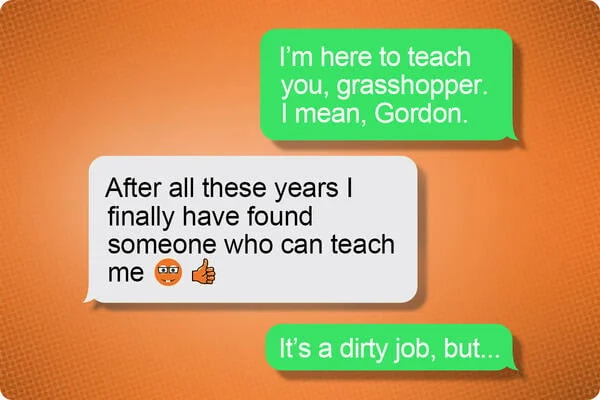
The "odd couple" pairing of Toor, a creative writing professor with a sharp eye for the absurd, and Gee, a seasoned executive with a career spanning 45 years, highlights the potential for civil discourse in an era of division. Their dialogue suggests that understanding, alignment, and respect are not just organizational goals—they are the requirements for any team that hopes to sustain a "national treasure," whether it be a beloved country icon like Dolly Parton or a major American university.
As Gee concludes, the ultimate success of any cabinet is the ability to work with people who inspire, challenge, and make one another laugh. In the complex, often thankless world of higher education administration, that human connection is the only thing that keeps the music playing.
About the Participants
- Rachel Toor is a contributing editor at Inside Higher Ed, co-founder of The Sandbox, and a professor of creative writing. Her work focuses on the intersection of academic culture and personal narrative.
- E. Gordon Gee is one of the most prominent figures in modern higher education. Over a 45-year career, he has served as president of five different universities, including two stints at the helm of prominent institutions. He retired from the presidency in July 2025, continuing his legacy as a mentor and commentator on the future of the American university.